
Blog
Hybrid Cannabis Strains Explained: What Makes a Strain Balanced?

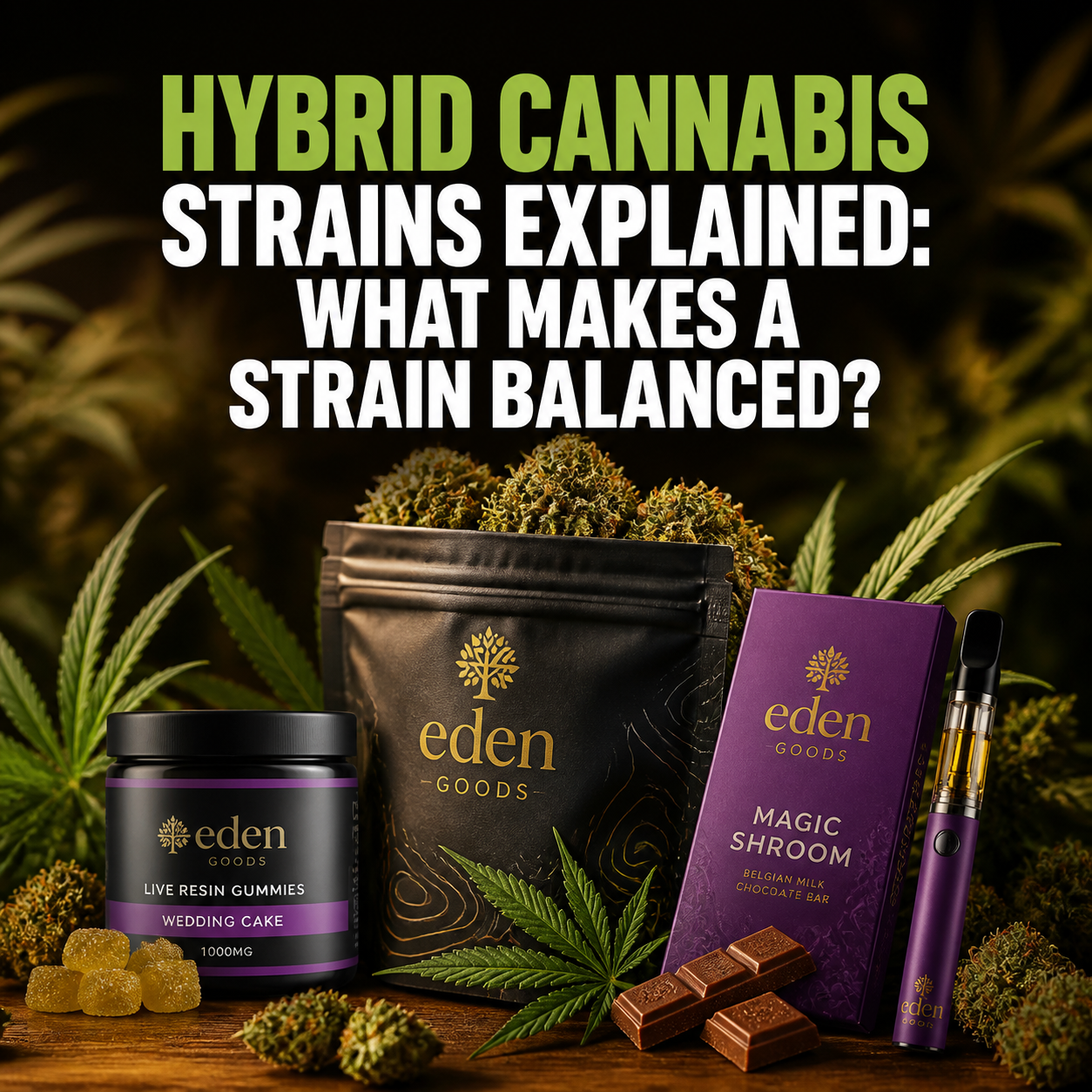
Hybrid Cannabis Strains Explained: What Makes a Strain Balanced?
Hybrid cannabis strains combine genetic traits associated with different cannabis lineages. However, the word hybrid does not guarantee a precise experience. Nor does “balanced” always mean a perfect 50/50 split between indica and sativa.
A strain’s likely characteristics depend on several factors. These include its cannabinoid content, terpene profile, genetics, growing conditions, harvest timing, and the individual using it. Two flowers sold under the same strain name may therefore look, smell, and feel different.
This guide explains what hybrid cannabis strains are, what balance means in practical terms, and how to compare products using more useful information than strain labels alone.
What Are Hybrid Cannabis Strains?
A hybrid strain comes from crossing cannabis plants with different genetic backgrounds. Growers make these crosses to preserve or combine selected characteristics, such as aroma, plant structure, cannabinoid production, flowering time, or resistance to environmental stress.
Most cannabis varieties available today have undergone some degree of crossbreeding. As a result, the term “hybrid” covers a very broad category. It can describe anything from a strain that strongly expresses one parental lineage to a cultivar selected for more evenly distributed traits.
Hybridization may influence:
- The concentration and ratio of cannabinoids such as THC and CBD
- The presence of aromatic compounds called terpenes
- Flower density, color, and resin production
- Flavor and aroma
- Plant height, yield, and flowering cycle
- The consistency of traits across different plants
These qualities matter more than a simple indica-versus-sativa percentage. A hybrid label is best viewed as a starting point, not a complete prediction.
What Makes a Hybrid Cannabis Strain Balanced?
In everyday cannabis terminology, “balanced” can have several meanings. Sellers may use it to describe genetics, cannabinoid ratios, or an experience that consumers perceive as neither heavily stimulating nor strongly sedating.
These definitions are not interchangeable. A product described as a balanced hybrid may still contain much more THC than CBD. Likewise, a flower with a balanced THC-to-CBD ratio does not necessarily have equal indica and sativa ancestry.
Balanced genetics
A breeder may describe a strain as balanced when it draws recognizable characteristics from both sides of its lineage. Some retailers express this as a 50/50 indica-sativa split.
Such percentages should be interpreted cautiously. Cannabis ancestry is complex, and commercial categories are not standardized scientific measurements. A percentage on a label may summarize breeding history or expected plant traits rather than verified chemical composition.
Balanced cannabinoid content
Balance can also refer to the relationship between THC and CBD. A flower containing comparable amounts of both may be marketed as a balanced cannabinoid strain.
THC is intoxicating and can impair attention, judgment, coordination, and reaction time. CBD is not intoxicating in the same way, but it can still cause unwanted effects and interact with medicines. The presence of CBD does not automatically cancel THC’s impairment or make a product risk-free.
A balanced perceived experience
Some people use “balanced” to describe an experience that seems to fall between energizing and relaxing. This description is subjective. The same product may affect two people differently, and an individual’s response may change according to context.
Experience can vary with tolerance, amount used, consumption method, mood, sleep, food intake, and concurrent use of alcohol or medication. Marketing terms cannot account for all these variables.
| Type of balance | What it usually describes | Main limitation |
| Genetic balance | Traits inherited from different cannabis lineages | Ancestry percentages do not reliably predict effects |
| Cannabinoid balance | The measured relationship between THC, CBD, and other cannabinoids | Potency and individual sensitivity still matter |
| Terpene balance | A profile without one overwhelmingly dominant aroma compound | Terpene effects in humans remain difficult to predict |
| Experiential balance | A consumer-reported mix of uplifting and relaxing qualities | Reports are subjective and may not transfer to another person |
Indica-Dominant, Sativa-Dominant, and Balanced Hybrids
Retail menus commonly divide hybrid cannabis strains into three broad groups. These labels can help organize a selection, but they should not replace information from the product’s laboratory report.
Indica-dominant hybrids
An indica-dominant hybrid is bred or marketed as expressing more traits traditionally associated with indica varieties. Descriptions often emphasize dense flowers, earthy aromas, relaxation, or evening use.
These associations are not guarantees. An indica-dominant label does not establish how much THC, CBD, myrcene, or any other compound is present. A potent product can also produce unexpected or uncomfortable effects regardless of its category.
Sativa-dominant hybrids
Sativa-dominant hybrids are generally presented as expressing more characteristics linked with sativa lineages. Product descriptions may mention bright aromas, alertness, creativity, or daytime use.
Again, these are broad commercial conventions. Some people may feel restless, anxious, or tired instead. Chemistry, potency, personal sensitivity, and setting offer more meaningful context than the word “sativa” alone.
Even or 50/50 hybrids
A 50/50 hybrid is intended to represent an even genetic contribution or a middle-ground experience. It does not necessarily contain equal amounts of THC and CBD. It also does not mean every plant or harvest will produce identical flowers.
If you want a particular cannabinoid ratio, check batch-specific test results rather than relying on the 50/50 claim.
How Cannabinoids Shape Hybrid Cannabis Strains
Cannabinoids are compounds produced by the cannabis plant. THC and CBD receive the most attention, although flower may contain smaller amounts of other cannabinoids.
THC
Delta-9-tetrahydrocannabinol, usually called THC, is the main intoxicating cannabinoid in cannabis. Higher THC content generally raises the possibility of stronger intoxication and adverse effects. These may include dizziness, anxiety, confusion, altered perception, impaired coordination, or a rapid heart rate.
Potency deserves particular attention for new consumers, older adults, and people who have previously experienced anxiety or discomfort with cannabis. Product strength should never be inferred from the strain name alone.
CBD
Cannabidiol, or CBD, does not cause the same type of intoxication as THC. Its presence may change how a product is experienced, but results vary. Claims that CBD consistently neutralizes THC are too simplistic.
CBD may interact with prescription and non-prescription medicines. Anyone taking regular medication should speak with a doctor or pharmacist before using a cannabinoid product.
Minor cannabinoids
Laboratory reports may also list compounds such as CBG, CBC, THCV, or CBN. Their concentrations in flower are often lower, and research into their individual and combined effects continues.
A long list of cannabinoids does not prove that a product will deliver a specific benefit. Treat therapeutic claims with caution, especially when they are unsupported by clear evidence.
Why Terpenes Matter
Terpenes are aromatic compounds found in cannabis and many other plants. They contribute citrus, pine, floral, herbal, peppery, and earthy notes. Genetics influence terpene production, but cultivation, drying, storage, and age can alter the final profile.
Common cannabis terpenes include:
- Myrcene: often described as earthy, musky, or herbal
- Limonene: associated with citrus aromas
- Pinene: linked with pine-like notes
- Caryophyllene: often peppery or spicy
- Linalool: commonly described as floral
- Terpinolene: associated with fresh, herbal, or lightly fruity aromas
Terpenes may contribute to the overall experience, but aroma alone cannot reliably predict an effect. The idea that cannabis compounds work together is often called the “entourage effect.” It remains an active area of research and should not be treated as a guarantee of therapeutic benefit.
Terpene data are still useful when comparing batches. They can help consumers identify preferred aromas and recognize differences between products carrying the same strain name.
Why the Same Hybrid Strain Can Vary
A strain name may suggest shared genetics, but cannabis is an agricultural product. Natural variation occurs, and production choices influence the finished flower.
Phenotype and genetic expression
Seeds produced from the same cross can develop into plants with different characteristics. These variations are known as phenotypes. Growers may select a particular phenotype and reproduce it through cloning to improve consistency.
Even clones can respond differently when the environment changes. Light, temperature, humidity, nutrients, plant stress, and harvest timing can affect cannabinoid and terpene production.
Processing and storage
Drying and curing influence aroma, texture, and smoothness. Poor storage may expose flower to excessive heat, air, light, or moisture. This can reduce quality and alter volatile compounds.
Consumers should look for intact packaging, a clear batch identifier, a testing date, and storage guidance. Cannabis flower should remain secured, away from children and pets.
Different producers and markets
Strain names are not always standardized across breeders, producers, and legal markets. Two products with the same name may have different parentage or chemical profiles.
For this reason, compare the actual batch rather than relying on past experience with a name. Explore the available [[LIEN_INTERNE: cannabis flower]] selection with this distinction in mind.
How to Compare Hybrid Cannabis Flower
A careful comparison starts with verifiable product information. Attractive names and broad promises should come second.
- Check the cannabinoid panel. Review total THC and CBD, paying attention to the units used.
- Look for batch-specific testing. Results should correspond to the product being sold, not only to a general strain description.
- Review the terpene profile. Use it mainly to understand aroma and compare batches.
- Confirm the source. Choose products from transparent sellers operating within applicable laws.
- Inspect packaging information. Look for the producer, batch number, testing date, net weight, and warnings.
- Avoid guaranteed-effect claims. No label can promise an identical response for every person.
Appearance can provide clues about handling, but it cannot establish safety or potency. Colorful flower, visible trichomes, and a strong aroma do not replace contaminant screening or cannabinoid testing.
| Information to check | Why it matters |
| THC and CBD content | Provides a clearer indication of potency and cannabinoid balance |
| Batch or lot number | Connects the package to production and testing records |
| Test date | Helps assess whether the report applies to the current batch |
| Contaminant screening | May cover substances such as pesticides, heavy metals, microbes, or residual solvents, depending on local rules |
| Producer identity | Supports traceability and accountability |
| Terpene results | Helps compare aroma profiles and variation between batches |
Safety Considerations Before Using Cannabis
Cannabis is not suitable for everyone. Legal requirements, age restrictions, and product standards vary by location. Always follow the rules that apply where you live.
Do not drive, cycle in traffic, operate machinery, or perform safety-sensitive work while impaired. Avoid combining cannabis with alcohol or other substances that affect alertness unless a qualified healthcare professional has advised otherwise.
It is recommended to seek medical advice before using cannabis if you:
- Are pregnant, planning a pregnancy, or breastfeeding
- Take prescription or non-prescription medication
- Have a heart, liver, neurological, or psychiatric condition
- Have a personal or family history of psychosis
- Have experienced panic, severe anxiety, or an adverse cannabis reaction
- Are considering cannabis for pain, sleep, anxiety, or another health concern
Older adults may face additional concerns related to balance, falls, confusion, cardiovascular effects, and medicine interactions. A doctor or pharmacist can assess these risks according to the person’s health and treatment plan.
Seek urgent medical assistance if cannabis use is followed by severe chest pain, breathing difficulty, loss of consciousness, extreme confusion, dangerous behavior, or other alarming symptoms.
Common Misconceptions About Hybrid Cannabis Strains
“A balanced hybrid contains equal THC and CBD”
Not necessarily. “Balanced hybrid” may refer to lineage or a reported experience. Only the cannabinoid analysis can show the measured THC-to-CBD relationship.
“Indica always relaxes, while sativa always energizes”
This rule is unreliable. The terms may describe broad genetic or plant characteristics, but they do not account for potency, terpenes, personal sensitivity, or context.
“A higher THC percentage means better quality”
THC content is one product characteristic, not a complete quality score. Freshness, cultivation, curing, aroma, traceability, and contaminant testing also matter. Higher potency may increase unwanted effects.
“The same strain name always means the same flower”
Strain names can vary between producers. Phenotype, environment, harvest, processing, and storage can also change the finished product. Batch-specific results offer a more dependable comparison.
“CBD makes THC harmless”
CBD does not remove all risks related to THC. A product containing both may still impair driving and judgment. It may also cause side effects or interact with medication.
Frequently Asked Questions About Hybrid Cannabis Strains
What is a hybrid cannabis strain?
A hybrid is created by crossing cannabis plants from different genetic lineages. Breeders select crosses for characteristics such as aroma, cannabinoid production, flower structure, or growth pattern.
What does a 50/50 hybrid mean?
It usually refers to an intended balance between indica- and sativa-associated genetics or traits. It does not automatically mean equal THC and CBD.
Are hybrid strains stronger than indica or sativa strains?
Not inherently. Strength depends mainly on cannabinoid content, amount used, consumption method, and individual sensitivity. Check the batch’s laboratory results.
How can I identify a balanced THC and CBD strain?
Review the cannabinoid panel for measured THC and CBD values. Do not rely on the hybrid label or strain name alone.
Do terpenes determine how a hybrid will feel?
Terpenes contribute aroma and may influence the overall experience, but they cannot predict an individual response with certainty.
Can two flowers with the same strain name be different?
Yes. Genetics, phenotype, cultivation, processing, storage, and producer practices can create meaningful differences between batches.
Are hybrid cannabis strains safe for medical use?
A hybrid label does not establish medical suitability. If you are considering cannabis for a symptom or condition, discuss it with a qualified healthcare professional.
Choosing Hybrid Cannabis Strains With Better Information
Hybrid cannabis strains are best understood through their measurable characteristics rather than a simple indica-sativa label. Genetics provide useful background, while cannabinoid content, terpene results, batch testing, and producer transparency give a clearer picture of the actual flower.
A balanced strain may refer to ancestry, a THC-to-CBD ratio, or a subjective middle-ground experience. Clarifying which definition a seller uses can prevent confusion. No strain name can guarantee an effect, and cannabis should never replace appropriate medical assessment or treatment.
To compare carefully selected options, discover the Sphère Santé products and review each product description, cannabinoid profile, and available quality information before making a choice.