

Blog
Fresh Cannabis vs Cured Cannabis: Why Curing Changes Aroma, Texture and Smoothness

Fresh Cannabis vs Cured Cannabis: Why Curing Changes Aroma, Texture and Smoothness
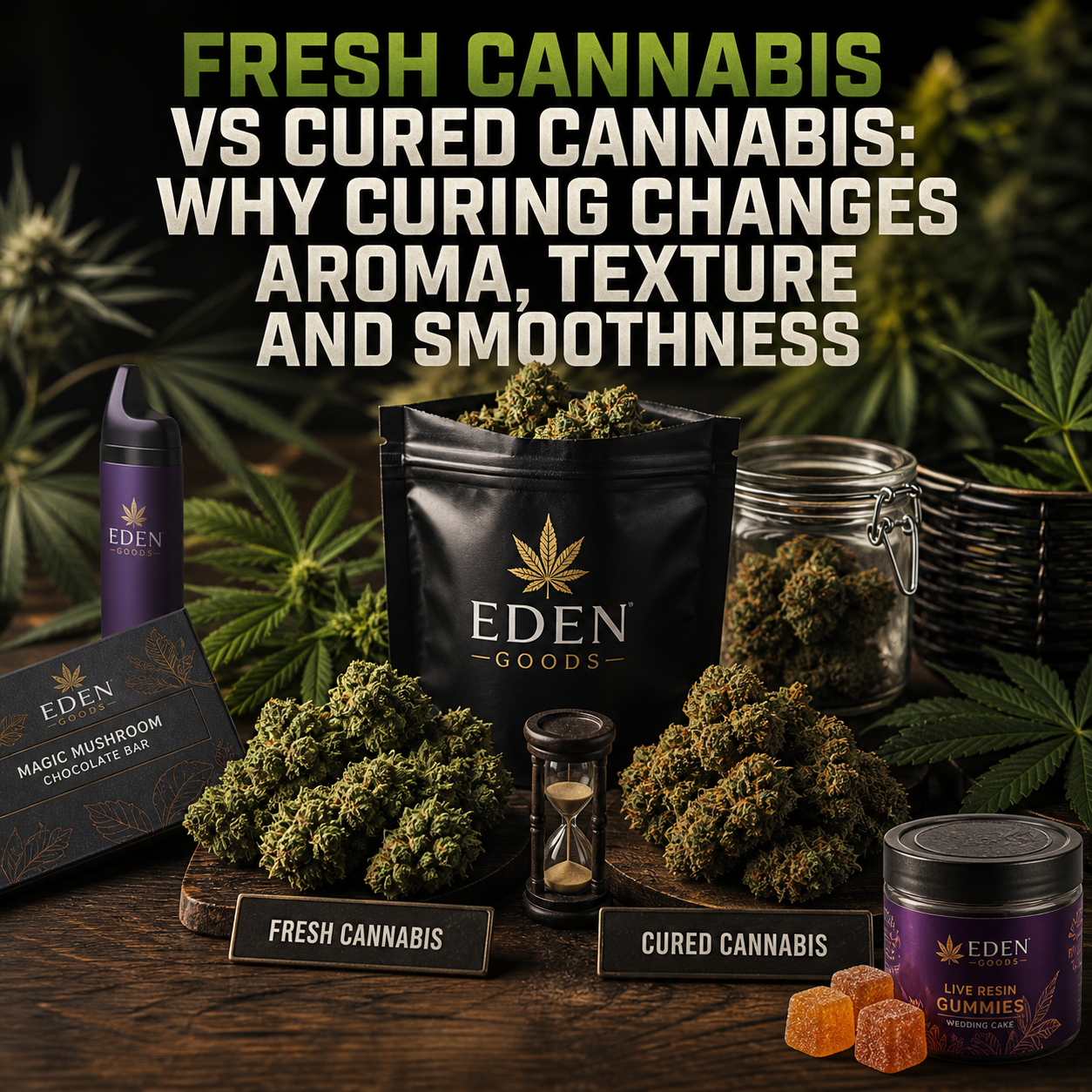
The difference between fresh cannabis vs cured cannabis goes far beyond age. Freshly harvested flower contains a large amount of moisture and active plant material. Properly cured cannabis has passed through controlled drying and storage stages that stabilize the flower and refine its sensory qualities.
These changes can affect aroma, texture, flavor, combustion and perceived smoothness. Curing does not automatically make cannabis stronger or safer, however. The original flower quality, handling conditions and storage environment remain essential.
This guide explains what happens after harvest, how to recognize common quality indicators and why cured flower usually provides a more consistent experience than flower used immediately after cutting.
Fresh Cannabis vs Cured Cannabis at a Glance
In this context, fresh cannabis means flower that has just been harvested and has not completed drying and curing. It should not be confused with recently purchased flower that was properly cured before packaging.
Cured cannabis has already lost much of its harvest moisture. It has then rested under managed conditions, allowing moisture inside the buds to become more evenly distributed. This process can preserve desirable aromas while reducing harsh, grassy characteristics.
| Characteristic | Freshly harvested cannabis | Properly cured cannabis |
| Moisture | High and uneven | Lower and more balanced |
| Texture | Soft, wet or spongy | Slightly springy with a drier exterior |
| Aroma | Green, vegetal or faint | More defined and cultivar-specific |
| Combustion | Difficult and inconsistent | Generally more even |
| Smoke quality | Often hot or harsh | May feel smoother when properly processed |
| Storage stability | Highly perishable | More stable when stored correctly |
| Mold risk | High if kept wet | Reduced, but not eliminated |
These are general tendencies rather than guarantees. Poor drying can damage excellent flower, while curing cannot repair mold, contamination, immature harvesting or low-quality starting material.
Drying and Curing Are Not the Same Process
People often use the terms drying and curing as if they described one step. They are connected, but they serve different purposes.
What happens during drying?
Drying begins after harvest. Its immediate purpose is to remove enough water from the plant tissue to make the flower more stable and manageable. Fresh buds cannot simply be sealed in a container because retained moisture may support mold and bacterial growth.
Drying also changes how the flower smells, feels and burns. As water leaves, buds become smaller and firmer. The sharp scent of newly cut plant material often starts to fade, allowing other aromatic notes to become easier to detect.
What happens during curing?
Curing follows initial drying. During this stage, moisture remaining inside the buds gradually moves toward the drier exterior. Appropriate ventilation and storage conditions help prevent excess humidity from becoming trapped.
Curing is therefore not just prolonged drying. It is a stabilization period. It may improve aroma integration, texture and smoking characteristics, but results depend on careful handling. Excessive heat, air, light or dryness can reduce quality rather than improve it.
To explore flower formats and product information, visit [[LIEN_INTERNE: cannabis flower]].
Why Fresh Cannabis Smells Different
Cannabis aroma comes largely from volatile compounds known as terpenes, together with other aromatic molecules. Cultivar, growing conditions, maturity and post-harvest handling all influence the final scent.
Immediately after harvest, the plant still contains substantial water. Fresh vegetal aromas may dominate, sometimes resembling cut grass, leaves or herbs. This does not necessarily mean the flower lacks terpenes. Moisture and other plant compounds can simply make its characteristic profile harder to perceive.
Curing can reveal a more distinct aroma
As flower dries and stabilizes, green or grassy notes may become less prominent. Depending on the cultivar, citrus, pine, floral, earthy, fuel-like, spicy or fruity characteristics may become clearer.
Curing does not create every aromatic compound from nothing. Instead, it changes the balance of volatile substances and the way the aroma reaches the nose. Some transformations continue after harvest, while other delicate compounds may evaporate or degrade.
More curing is not always better
Curing has limits. Leaving flower exposed to air for too long may cause terpene loss. Heat and light can also accelerate deterioration. Overly old cannabis may smell muted, dusty or dominated by a generic hay-like note.
A strong smell alone is not proof of quality or safety. Added aromas, poor storage and contamination cannot always be identified by scent. Consumers should rely on transparent product information and regulated testing where available.
How Curing Changes Cannabis Texture
Texture offers useful clues about moisture, although touching a bud cannot provide an exact measurement. Fresh cannabis often feels heavy, damp and very flexible. Properly cured flower usually feels dry on the surface but retains some resilience when gently handled.
Signs of balanced moisture
- The bud is not wet, slimy or cold with trapped moisture.
- It gives slightly under gentle pressure instead of flattening into a dense mass.
- The exterior does not crumble immediately into powder.
- Smaller stems may bend or snap depending on their thickness and moisture level.
- The flower separates without feeling soggy.
No single texture test proves that cannabis was cured correctly. Dense buds can retain hidden moisture even when their surfaces feel dry. Conversely, delicate or loosely structured flowers may feel crisp despite acceptable handling.
What overdried cannabis feels like
Overdried flower is often brittle. It may break apart with minimal pressure and produce excessive dust during handling. Very dry material tends to lose aroma quickly because volatile compounds escape more easily when plant structures deteriorate.
Adding uncontrolled moisture to dry cannabis is not risk-free. Fruit peel, bread and other household items can introduce microorganisms or create damp pockets. Purpose-designed humidity control products are generally more predictable, but they cannot restore terpenes that have already disappeared.
Why Cured Cannabis May Feel Smoother
Many consumers describe well-cured cannabis as smoother than freshly dried or poorly processed flower. Several factors may contribute to that perception.
First, balanced moisture supports more consistent combustion. Very wet cannabis struggles to stay lit and can produce dense, unpleasant smoke. Extremely dry flower may burn too quickly and feel hot.
Second, post-harvest changes reduce some of the sharp vegetal character associated with fresh plant tissue. Curing may also allow the smoke or vapor profile to feel more coherent because the flower has stabilized.
However, smoothness is subjective. It can vary with inhalation method, temperature, serving size, individual sensitivity and respiratory health. Smooth smoke is not harmless smoke. Combustion produces irritating substances, regardless of how carefully the cannabis was cured.
Harshness can signal several problems
- Flower that is too wet or too dry
- Incomplete or rushed post-harvest processing
- High inhalation temperature
- Large or frequent inhalations
- Residues, dust, mold or other contamination
- Personal sensitivity or an existing respiratory condition
Anyone who develops wheezing, chest pain, persistent coughing, breathing difficulty or another concerning symptom should stop use and seek medical advice. A healthcare professional can provide guidance based on personal health and medication use.
Does Curing Make Cannabis More Potent?
Curing does not simply increase potency. Cannabis chemistry is more complex than that. Fresh flower mainly contains cannabinoid acids, including THCA and CBDA. Heat converts some of these compounds into forms such as THC and CBD through decarboxylation.
Some chemical change may occur slowly during drying, curing and storage, but curing is not a reliable method for dramatically increasing cannabinoid content. The plant’s genetics, cultivation, harvest timing and laboratory-tested composition matter more.
Extended or poor storage can reduce quality. THC can degrade over time, especially with exposure to oxygen, heat and light. Therefore, an older cure should not automatically be interpreted as a stronger cure.
Appearance, stickiness and aroma also cannot reveal exact potency. Only appropriate laboratory analysis can quantify cannabinoid levels with reasonable confidence.
Fresh Flower, Fresh Frozen Cannabis and Live Products
One common confusion involves the word fresh. In cannabis retail and processing, it can describe several different things.
Freshly harvested flower
This is wet plant material recently cut from the living plant. It has not completed conventional drying or curing. Because of its water content, it is generally unsuitable for normal flower storage or combustion.
Fresh frozen cannabis
Fresh frozen material is typically frozen soon after harvest instead of being dried and cured first. Producers may use it to make certain concentrates. Freezing aims to preserve features of the living plant, especially its aromatic profile.
Fresh frozen cannabis is not the same as cured flower placed in a household freezer. Specialized processing, safe handling and controlled temperatures matter. Home freezing may damage trichomes, introduce condensation or create storage problems.
Live resin and similar extracts
Terms such as live resin generally refer to extracts made from fresh frozen cannabis. They do not mean that the product contains living cannabis. These concentrates also differ greatly from dried flower in potency, formulation and use.
Consumers should read the label carefully and avoid assuming that live, fresh or cured describes strength. Product categories require separate comparison.
How to Assess Cured Cannabis Quality
A consumer cannot verify every quality factor at home. Still, several observations can help identify obvious concerns before use.
- Read the label. Check the product name, batch information, packaging date, cannabinoid content and available testing details.
- Inspect through the packaging when possible. Look for unusual discoloration, web-like material, excessive moisture or damaged seals.
- Check the aroma after opening. A cultivar-specific scent is expected. Strong ammonia, mildew or a damp basement odor may indicate a problem.
- Assess the texture gently. The flower should not feel wet, slimy or excessively powdery.
- Consider the source. Regulated, traceable products provide more accountability than unverified cannabis.
White material is not always mold because cannabis naturally carries resinous trichomes. Mold can appear fuzzy, dusty, web-like or deeply embedded, but visual inspection is not a laboratory test. When in doubt, do not inhale or consume the product. Contact the retailer or producer according to local rules.
Storing Cured Cannabis Without Damaging It
Even well-cured flower can deteriorate after purchase. The goal of storage is to limit exposure to the main causes of degradation: heat, light, oxygen, excess humidity and physical damage.
- Keep cannabis in a clean, sealed container designed for storage.
- Store it in a cool, dark and dry location.
- Avoid direct sunlight, radiators and hot vehicles.
- Do not repeatedly leave the container open.
- Keep different cultivars separate if preserving their aromas matters.
- Keep all cannabis locked away from children, teenagers and pets.
A refrigerator is not always ideal because repeated temperature changes can create condensation. Freezing may make trichomes brittle and requires controlled handling. For routine household storage, stable conditions are usually preferable to extreme temperatures.
Always follow local laws and product-specific instructions. Dispose of spoiled or unwanted cannabis in a way that prevents accidental access.
Fresh Cannabis vs Cured Cannabis: Which Is Better?
For conventional dried flower, properly cured cannabis is usually the more practical option. It is easier to store, handle and use. It also tends to offer a more recognizable aroma, balanced texture and consistent burn.
Fresh cannabis still has value as a raw material for specialized processing. It may be selected for fresh frozen extraction or other controlled applications. That does not make it a direct substitute for cured flower.
The word better therefore depends on the intended product. For retail flower, curing is an essential quality stage. For certain extracts, preserving freshly harvested material may support a different aromatic goal.
Neither category is automatically safe, potent or high quality. Proper cultivation, contaminant control, testing, packaging and legal compliance remain important throughout the supply chain.
Health and Safety Considerations
Cannabis can cause unwanted effects, including impaired attention, anxiety, dizziness and changes in coordination. Products containing THC may affect driving and the use of machinery. Effects vary with dose, potency, route of administration and individual sensitivity.
People who are pregnant or breastfeeding, have cardiovascular or respiratory conditions, take prescription medicines or have a personal or family history of mental health problems should discuss cannabis use with a qualified healthcare professional. Medical guidance is also recommended for older adults and anyone at increased risk of falls or drug interactions.
This quality comparison does not replace medical advice. Curing can influence sensory properties, but it does not make cannabis medically appropriate for every person.
Frequently Asked Questions
Can you smoke freshly harvested cannabis?
Freshly harvested cannabis contains too much water for reliable combustion. It usually burns poorly and may taste harsh or vegetal. Improper storage of wet flower can also encourage mold.
How can you tell if cannabis is cured?
Properly cured flower usually has a dry exterior, slight resilience and a defined aroma. These signs are useful but cannot confirm processing quality or laboratory safety.
Why does fresh cannabis smell like grass?
Fresh plant tissue contains water and many volatile compounds. Green, leafy aromas may dominate immediately after harvest and become less prominent during controlled drying and curing.
Does longer curing always improve cannabis?
No. Excessive exposure to oxygen, heat or light can reduce aroma and cannabinoid quality. Curing works best as a controlled stabilization process, not indefinite aging.
Is sticky cannabis always fresh or potent?
No. Stickiness may reflect resin, moisture, cultivar traits or handling. It does not provide a reliable measurement of freshness, potency or safety.
Can cured cannabis still develop mold?
Yes. Cured flower can develop mold if it retains excess internal moisture or is exposed to humid storage conditions. Do not use cannabis that appears or smells moldy.
Is fresh frozen cannabis the same as fresh flower?
No. Fresh frozen cannabis is harvested material preserved at low temperature for specialized processing. Fresh flower simply describes cannabis that has not completed drying and curing.
Conclusion
Understanding fresh cannabis vs cured cannabis helps explain why post-harvest handling matters. Fresh flower is moist, perishable and strongly vegetal. Controlled drying removes excess water, while curing balances remaining moisture and can refine aroma, texture, flavor and perceived smoothness.
Curing cannot correct contamination or guarantee potency. Product origin, testing, packaging and storage are equally important. Choose traceable products, examine flower carefully and avoid anything that appears damp, moldy or unusually degraded.
For additional product information and carefully selected options, discover the Sphère Santé product range and compare products according to your needs, preferences and local regulations.