


Blog
Cannabis Syrup vs Tincture: Texture, Measurement and Routine Compatibility

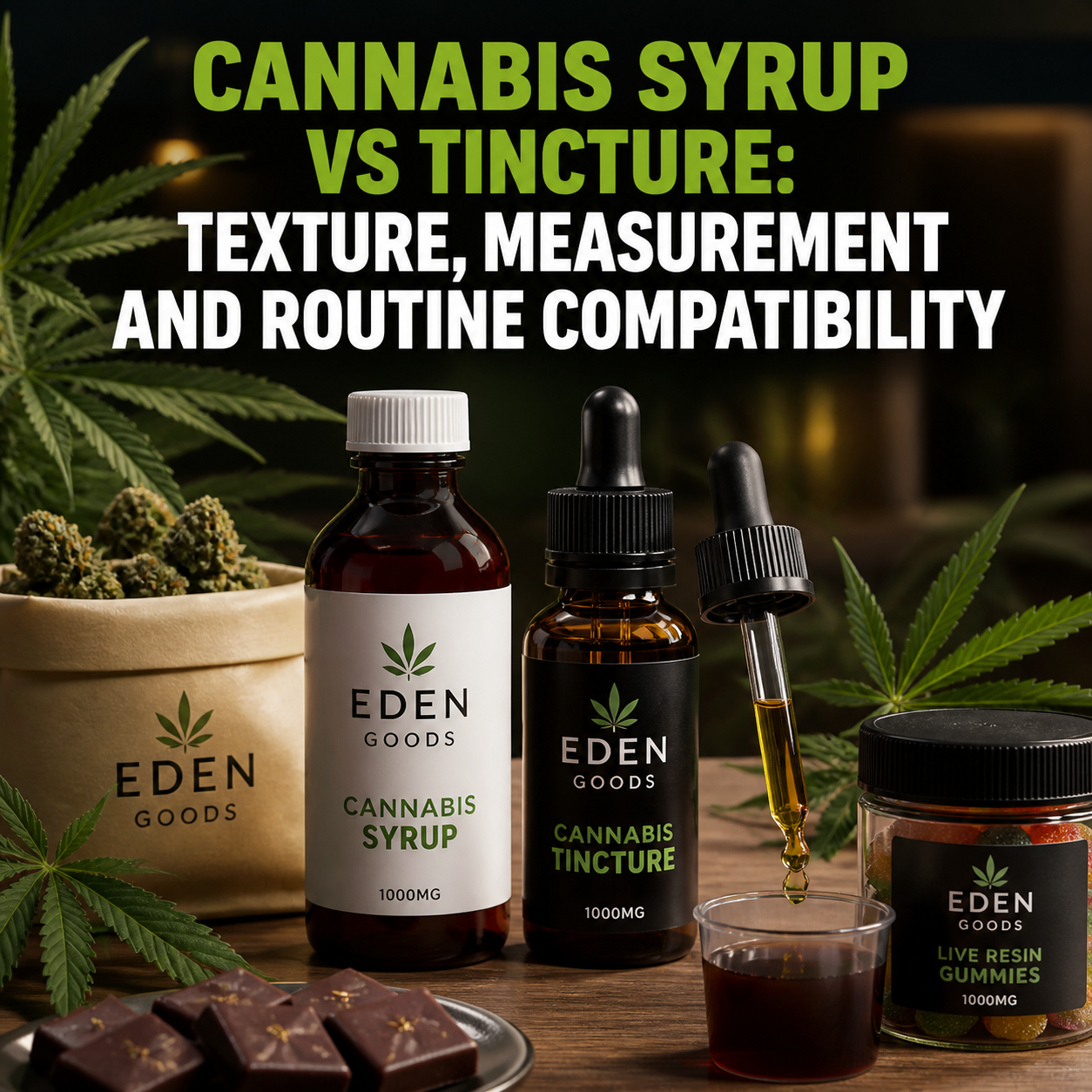
Cannabis Syrup vs Tincture: Texture, Measurement and Routine Compatibility
Choosing between cannabis syrup and tincture involves more than selecting a flavor or bottle size. These liquid cannabis products differ in texture, ingredients, serving method, portability, and how easily they fit into a routine.
The simplest distinction is that cannabis syrup is usually a sweet, viscous liquid designed to be swallowed or mixed into a drink. A cannabis tincture is a thinner extract that may be placed under the tongue or swallowed. The cannabinoid content matters more than the product name, so the label should guide every comparison.
This cannabis syrup vs tincture guide explains how each format works, how to compare concentrations, and which practical details deserve attention. It does not replace advice from a physician or pharmacist, especially if you take medication or use cannabis for a health-related reason.
Cannabis Syrup vs Tincture at a Glance
| Feature | Cannabis syrup | Cannabis tincture |
| Texture | Thick and syrup-like | Thin, oily, or alcohol-based |
| Typical use | Swallowed directly or added to a beverage | Placed under the tongue or swallowed |
| Taste | Usually sweet and flavored | May taste herbal, bitter, oily, or sharp |
| Measurement | Measured with a marked cup, syringe, or dropper | Usually measured with a marked dropper |
| Routine fit | Works well as part of a planned drink or evening routine | Often more discreet and portable |
| Common ingredients | Sweeteners, flavorings, emulsifiers, and preservatives may be present | Cannabis extract with alcohol, oil, or glycerin |
| Main measurement risk | Estimating a pour instead of measuring it | Counting drops or assuming every dropper holds the same amount |
Neither format is automatically stronger, safer, or more predictable. A low-concentration syrup may contain less THC per milliliter than a concentrated tincture, while another syrup may contain much more. Compare milligrams of each cannabinoid per milliliter, not the visual size of the serving.
What Is Cannabis Syrup?
Cannabis syrup is a flavored liquid containing cannabinoids such as THC, CBD, or a combination of both. Manufacturers may create the liquid with cannabis extract, sweeteners, water, flavoring agents, and ingredients that keep the extract evenly dispersed.
Most products are intended for oral consumption. A person may measure a serving and swallow it or mix it into a nonalcoholic beverage. Once swallowed, it generally behaves more like an edible than a product used only in the mouth.
Texture and taste
The thicker consistency is one of the format’s defining features. It can feel familiar to people who already use flavored liquid supplements. Sweetness may mask some of the plant flavor, but it also adds ingredients that may not suit every diet.
Check the ingredient list if you limit sugar, use sugar substitutes cautiously, have food allergies, or experience digestive sensitivity. A label such as sugar-free does not mean the formula is appropriate for everyone.
Cannabis syrup is not prescription cough syrup
The term cannabis syrup can cause confusion. A regulated cannabis syrup is not the same as prescription cough medicine, and it should never be mixed with prescription sedatives for recreational purposes. Product names, packaging, and slang can blur this distinction, so read the complete label rather than relying on appearance.
Combining cannabis with alcohol, opioids, sleep medicines, or other substances that cause drowsiness may increase impairment or other risks. A physician or pharmacist can help assess possible interactions.
What Is a Cannabis Tincture?
A cannabis tincture is a concentrated liquid extract. Traditional tinctures use alcohol as the carrier, but many products sold under the same name use carrier oils or glycerin. This difference affects flavor, mouthfeel, storage directions, and sometimes how people choose to take the product.
Tinctures commonly come in small bottles with droppers. The dropper may have volume markings, often in milliliters. Those markings are more useful than counting individual drops because drop size can change with the dropper, liquid viscosity, and dispensing angle.
Sublingual use versus swallowing
Some tinctures are designed to remain under the tongue briefly before swallowing. This allows part of the product to contact tissues in the mouth. Effects may be noticed sooner than when the entire serving is swallowed, but the experience varies by formulation, technique, food intake, and individual physiology.
If a tincture is immediately swallowed or added to food, it follows a digestive route similar to an edible. The word tincture alone does not guarantee a particular onset. Follow the manufacturer’s directions and avoid taking more simply because effects are not immediate.
Cannabis Syrup vs Tincture: Texture and Sensory Experience
Texture often determines whether a product feels convenient enough for consistent use. Syrup coats the mouth more noticeably and may leave a sweet aftertaste. A tincture spreads quickly and may feel oily or produce a brief warming sensation when alcohol-based.
Consider the following preferences:
- Syrup may suit you if: you prefer sweet flavors, dislike holding liquid under your tongue, or want to mix a measured serving into a drink.
- Tincture may suit you if: you prefer a small liquid volume, want less sweetness, or need a bottle that is easy to store and carry.
- Neither may suit you if: you struggle to measure liquids, dislike strong flavors, or need packaging that is easier to handle.
People with swallowing difficulties should not assume a liquid is automatically safe or easy to consume. Texture requirements can be highly specific. A speech-language pathologist or another qualified clinician should guide choices when swallowing safety is a concern.
How to Compare Dose Measurement
Accurate measurement is one of the most important parts of the cannabis syrup vs tincture decision. The front label may advertise total THC or CBD in the bottle, but that number does not always show how much is present in one milliliter.
Focus on milligrams per milliliter
Look for three pieces of information:
- The total volume of liquid in the bottle
- The total amount of THC, CBD, and other listed cannabinoids
- The defined serving size in milliliters
If a 30 mL bottle contains 300 mg of CBD, dividing 300 by 30 gives a concentration of 10 mg of CBD per mL. This is only a measurement example, not a recommended amount. Appropriate use depends on the cannabinoid, product, individual, legal market, and clinical context.
Do not compare servings by volume alone
One milliliter of one tincture may contain a very different cannabinoid amount from one milliliter of another. The same applies to syrups. A full dropper is not a universal serving, and droppers from different bottles should not be exchanged.
Use the measuring device supplied with the product. Place it on a stable, well-lit surface and check the marking at eye level. Avoid using a kitchen spoon because household spoons vary in capacity.
Shake only when the label instructs you to
Some syrups and emulsified liquids require shaking so their contents remain evenly distributed. Other formulations may not. Follow the label rather than applying one rule to every liquid cannabis product.
If the liquid separates unusually, changes color, develops an unexpected odor, or has passed its expiration date, do not guess whether it remains suitable. Contact the manufacturer or retailer for product-specific guidance.
Onset, Duration, and Predictability
People often assume liquids work immediately. That is not always true. A syrup that is swallowed generally needs to move through the digestive system. A swallowed tincture does as well. Food intake, metabolism, cannabinoid content, prior cannabis exposure, and other factors may affect the experience.
A tincture used according to sublingual directions may be noticed sooner than a fully swallowed product, but it can still be partly swallowed. Exact timing cannot be guaranteed. The safest approach is to follow the product label and allow adequate time before considering any additional amount.
Taking more too soon can produce an unexpectedly intense or prolonged experience, particularly with THC. Possible unwanted effects include anxiety, confusion, dizziness, nausea, poor coordination, and excessive drowsiness. Seek urgent medical help for severe symptoms, loss of consciousness, breathing difficulty, chest pain, or any situation that feels dangerous.
Which Format Fits Your Routine?
A product is easier to use consistently when its preparation and measurement fit naturally into daily life. Think about where, when, and how you would use it rather than choosing only by flavor.
At home
Syrup can fit a planned routine when measuring tools and a suitable beverage are readily available. However, pouring directly into a drink without measuring makes it difficult to know the amount consumed. Residue left in a cup may also make the actual intake less clear.
A tincture requires less preparation. It may work better for someone who wants a small volume and a clearly marked dropper. Alcohol-based formulas can have a strong taste, while oil-based products may leave a coating in the mouth.
Travel and portability
Tincture bottles are usually compact, but glass bottles can leak or break. Syrup bottles may be larger and more conspicuous. Both products need secure closure and storage away from heat, light, children, and animals.
Cannabis laws vary between jurisdictions. A product that is lawful where you purchased it may be restricted elsewhere. Do not cross borders or travel with cannabis without confirming all applicable rules.
Discretion
A tincture often requires less preparation, but it may still have a recognizable smell. Syrup can look like an ordinary beverage ingredient, which creates a different safety concern: someone else could consume it accidentally.
Keep the original label attached. Never transfer cannabis syrup into an unmarked drink bottle or food container. Child-resistant packaging reduces risk but does not replace locked storage.
Ingredients and Dietary Considerations
The carrier and added ingredients can matter as much as the cannabinoid profile. Cannabis syrups may contain sugar, artificial or natural flavors, coloring, preservatives, emulsifiers, or sugar alcohols. Some sweeteners can cause digestive discomfort in sensitive individuals.
Tinctures may contain ethanol, medium-chain triglyceride oil, hemp seed oil, olive oil, glycerin, flavorings, or other carriers. People avoiding alcohol should verify the formula because the term tincture does not reveal the base.
Review the label for:
- Known allergens and cross-contact warnings
- Added sugar and sweeteners
- Alcohol or carrier oils
- THC and CBD content per serving
- Storage and refrigeration requirements
- Expiration or best-before information
- Batch identification and available testing information
Choose products from lawful, accountable sources that provide complete labeling. Avoid liquids with unclear cannabinoid content, missing ingredient lists, damaged seals, or claims that they can cure diseases.
THC, CBD, and Product Type Matter More Than Format
Comparing syrup with tincture is useful, but the cannabinoid profile is the more important distinction. A THC-dominant syrup can impair judgment and coordination. A CBD-dominant tincture may not produce the same intoxication, although CBD can still cause side effects and interact with medicines.
Full-spectrum, broad-spectrum, and isolate are common label terms, but their use is not always consistent across markets. Review the actual cannabinoid panel rather than relying on a marketing category. Trace amounts of THC may also matter for workplace testing or situations where any THC exposure is a concern.
Do not drive, cycle in traffic, operate machinery, cook over an open flame, or perform safety-sensitive tasks while impaired. Effects may last longer than expected after an oral product.
Health and Medication Precautions
Cannabis products are not appropriate for everyone. Speak with a physician or pharmacist before use if you take prescription or nonprescription medication, have a significant medical condition, or are considering cannabis for pain, sleep, anxiety, nausea, or another symptom.
Professional guidance is especially important for older adults, people with liver or heart conditions, those with a history of psychosis or substance use problems, and anyone taking medicines that cause sedation or have a narrow safety range.
Cannabis use during pregnancy or breastfeeding may present risks. It is recommended to discuss this directly with a qualified healthcare professional rather than relying on product marketing. Keep all cannabis products away from children, teenagers, and pets.
How to Choose Between Cannabis Syrup and Tincture
Use a practical checklist rather than searching for one universally superior option:
- Read the cannabinoid panel. Confirm the amount of THC, CBD, and other cannabinoids per milliliter.
- Review the ingredients. Check sweeteners, alcohol, oils, allergens, and dietary compatibility.
- Examine the measuring device. Clear milliliter markings support more consistent measurement.
- Consider the intended route. Decide whether you prefer swallowing, mixing, or following sublingual directions.
- Assess portability. Think about leakage, refrigeration, legal restrictions, and discreet storage.
- Check your routine. Choose a format you can measure carefully without rushing.
- Discuss health concerns. Ask a clinician about symptoms, medicines, and possible interactions.
Syrup may be more compatible with a beverage-based routine and a preference for sweet flavors. Tincture may be more compatible with portability, small serving volumes, and sublingual use. The best choice remains the one with transparent labeling, suitable ingredients, and a measurement system you can use reliably.
Frequently Asked Questions
Is cannabis syrup stronger than tincture?
Not necessarily. Strength depends on milligrams of THC, CBD, or other cannabinoids per milliliter. Compare label concentrations rather than product format.
Can cannabis syrup be used under the tongue?
Only use it as the manufacturer directs. Most syrups are designed to be swallowed or mixed into a beverage, not held under the tongue.
Can tincture be added to a drink?
Some tinctures can be mixed into drinks, but oil-based products may separate. Swallowing a tincture can also change how quickly its effects are noticed. Follow the label.
Why should I avoid counting drops?
Drop size varies with the liquid, dropper, angle, and pressure. Marked milliliter measurements are generally more consistent than counting drops.
Does cannabis syrup work like an edible?
When swallowed, cannabis syrup generally follows the digestive route associated with edibles. Its effects may therefore take time and vary between individuals.
Which option contains less sugar?
Tinctures often contain little or no added sugar, but formulas differ. Check the ingredient and nutrition information instead of assuming.
Can I use cannabis syrup or tincture with medication?
Possible interactions depend on the cannabinoids, dose, medication, and health history. Ask a physician or pharmacist before combining them.
Conclusion: Cannabis Syrup vs Tincture
In the cannabis syrup vs tincture comparison, syrup offers a thick, sweet format that can blend into a planned beverage routine. Tincture offers a smaller volume, easier portability, and the possibility of sublingual use when the label supports it.
Neither option is automatically stronger or better. Concentration, ingredients, measurement accuracy, intended route, and individual health factors matter more than the product name. Read the complete label, measure every serving, avoid rapid repeat use, and store the bottle securely.
If you use medication, manage a medical condition, or want cannabis for a specific symptom, speak with a qualified healthcare professional. Careful product selection can improve routine compatibility, but it cannot replace individualized medical guidance.