


Blog
Best Humidity for Cannabis Flower Storage: A Practical Moisture Guide

Best Humidity for Cannabis Flower Storage: A Practical Moisture Guide
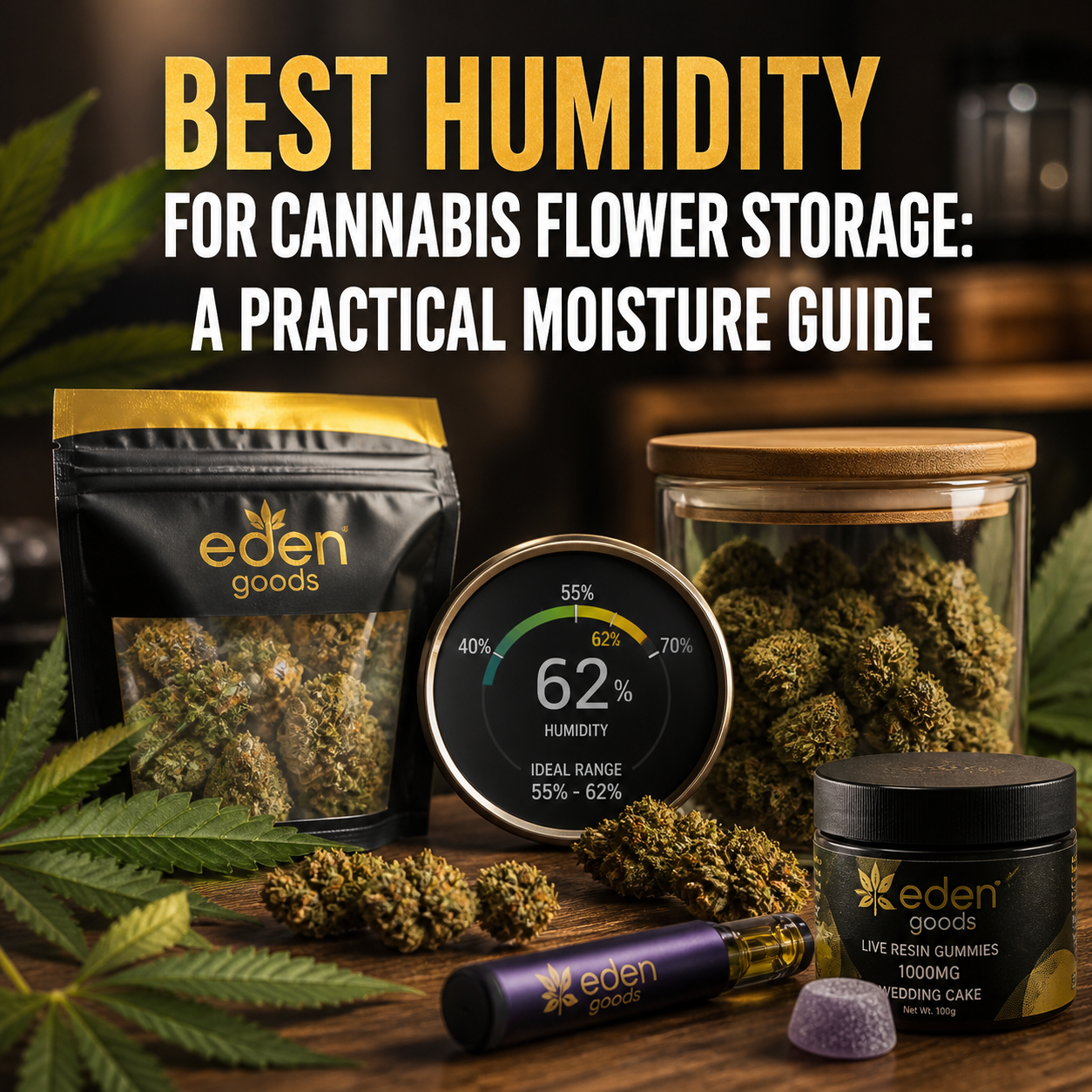
The best humidity for cannabis flower storage is generally between 55% and 62% relative humidity inside an airtight container. Many people prefer a narrower range of 58% to 62% for maintaining texture, aroma, and overall quality. The right target depends on how long you plan to store the flower and whether you prefer it slightly soft or relatively dry.
Humidity control is only one part of proper storage. Temperature, light, air exposure, cleanliness, and container choice also matter. This guide explains how to manage each factor, recognize moisture problems, and protect cannabis flower without relying on unsafe home remedies.
What Is the Best Humidity for Cannabis Flower Storage?
For properly dried and cured flower, an internal container reading of 55% to 62% RH is a practical storage range. RH means relative humidity. It describes how much moisture the air holds compared with the maximum it could hold at the same temperature.
| Relative humidity | Likely condition | Recommended response |
| Below 50% | Very dry, brittle flower with faster aroma loss | Use a regulated humidity pack if the flower shows no signs of contamination |
| 50% to 54% | Dry texture and a harsher experience may occur | Acceptable for some preferences, but not ideal for preserving texture |
| 55% to 62% | Balanced moisture and good texture | Suitable for routine storage |
| 63% to 65% | Moist flower with less margin for error | Monitor closely and reduce humidity if it continues to rise |
| Above 65% | Greater risk of mold and microbial growth | Inspect carefully and correct the storage conditions promptly |
These numbers are practical guidelines rather than guarantees. A hygrometer measures the air in the container, not every part of a dense flower. Moisture can also be distributed unevenly. Cannabis stored at an apparently acceptable RH may still have hidden damp areas, especially if it was not dried correctly before storage.
Is 58% or 62% humidity better?
Both targets can work. A 58% environment usually produces a slightly drier feel and offers a little more distance from conditions that favor mold. A 62% environment may preserve a softer texture, but it requires reliable measurement and stable temperatures.
For long-term storage, cautious users often choose 58%. Those who prefer a more pliable flower may choose 62%. Neither setting can repair poor curing, reverse age-related degradation, or make contaminated flower safe.
Why Humidity Matters for Cannabis Flower
Cannabis flower continues to respond to its environment after drying and curing. When the surrounding air is too dry, moisture leaves the plant material. When the air is too humid, the flower absorbs moisture. An airtight container eventually moves toward moisture equilibrium, although dense buds may take time to stabilize.
Correct moisture management can help protect several qualities:
- Texture: Well-stored flower should not crumble into dust or feel wet and spongy.
- Aroma: Proper storage can slow the loss of volatile aromatic compounds.
- Consistency: Stable humidity reduces repeated drying and rehydration cycles.
- Handling: Balanced flower is generally easier to inspect and prepare.
- Safety: Avoiding excessive moisture reduces conditions that can support mold growth.
Humidity does not preserve flower indefinitely. Oxygen, heat, and light contribute to chemical and sensory changes over time. Even under good conditions, aging continues.
Relative Humidity, Flower Moisture, and Room Humidity
A common source of confusion is the difference between room humidity and the RH inside a storage container. Your room may be at 40% RH while a sealed jar remains at 60%. Once closed, the container develops its own microclimate based largely on the moisture in the flower and any humidity-control product inside it.
For that reason, place a small hygrometer inside the container when possible. A weather station or wall-mounted room sensor cannot tell you the actual storage RH.
Humidity changes with temperature
Relative humidity depends on temperature. If a container cools down, its RH reading may rise even if no new moisture enters. If it warms, the reading may fall. This is why stable storage conditions matter and why a single measurement taken immediately after moving the jar can be misleading.
Allow the sealed container and hygrometer to stabilize before judging the result. Avoid frequent movement between warm and cold locations.
Storage is not the same as curing
Curing is a controlled process that follows drying. Storage begins after the flower has reached a stable condition. Sealing freshly harvested or insufficiently dried cannabis in a jar can trap too much moisture and create unsafe conditions.
A humidity pack is a maintenance tool, not a substitute for proper drying and curing. If the RH rises sharply after sealing, do not assume the pack will solve the underlying problem.
How to Measure Humidity Accurately
A compact digital hygrometer provides a convenient estimate of the humidity inside a jar. Consumer models are not always perfectly accurate, so consistency and calibration matter more than an impressive display.
- Choose a clean, airtight container large enough to avoid compressing the flower.
- Place the hygrometer inside without burying it deeply.
- Close the container and keep it at a stable room temperature.
- Wait several hours before checking the result. A full day may provide a more useful reading.
- Watch the trend over several days rather than reacting to every small fluctuation.
If you use several containers, compare their sensors side by side before filling them. Large differences indicate that at least one device may need calibration or replacement. Follow the manufacturer’s instructions, since not every electronic hygrometer can be adjusted.
Do not rely only on touch
Texture can provide clues, but it is subjective. The outside of a bud may feel dry while the center retains excess moisture. Conversely, naturally dense flower may feel firm without being damp. Combine visual inspection, smell, texture, and a reliable RH reading.
Choosing the Right Storage Container
Airtight glass jars are a practical choice for cannabis flower. Glass does not readily absorb odors, and it allows easy cleaning. Choose a jar with a sound lid and an intact seal.
The container should fit the amount being stored. Too much empty space leaves more oxygen inside. Overfilling, however, can crush trichomes, restrict inspection, and create pockets where flower presses tightly together. A useful goal is a comfortably filled jar with enough room to move the contents gently.
Glass, plastic, and storage bags
Plastic bags offer limited protection from crushing, temperature changes, and air exchange. Static may also cause delicate surface material to cling to the bag. Food-safe plastic containers can work for short periods, but glass is generally preferable for longer storage.
Clear glass does not block damaging light. Keep clear jars in a closed cabinet or other dark place. Opaque or ultraviolet-resistant containers can add light protection, but they do not replace humidity monitoring.
Should cannabis be vacuum sealed?
Vacuum sealing may reduce oxygen exposure, but strong compression can damage flower and make routine inspection difficult. It can also preserve an existing moisture problem inside the package. Only properly dried, stable flower should be considered for sealed long-term storage.
Humidity Packs: What They Can and Cannot Do
Two-way humidity packs are designed to release or absorb moisture to help maintain a stated RH. Common options for cannabis storage include 58% and 62% packs. Select the pack size recommended for the amount of flower and the container volume.
Humidity packs can help:
- Reduce normal moisture fluctuations
- Maintain an established humidity range
- Limit over-drying in a well-sealed container
- Make storage conditions more consistent
They cannot safely rescue wet, moldy, or badly stored cannabis. They also cannot fully restore volatile compounds that have already disappeared from old, overdried flower. Replace a pack when the manufacturer recommends it or when it becomes hard and no longer regulates effectively.
Avoid fruit peel and bread
Orange peel, apple slices, bread, lettuce, and similar household methods introduce uncontrolled moisture, microorganisms, odors, and food residues. They can increase contamination risk quickly. Use a purpose-made humidity-control product instead.
Temperature, Light, and Air Exposure
The best humidity for cannabis flower storage works only when the rest of the environment is appropriate. Keep the container in a cool, dark, and stable location. A cupboard away from appliances, exterior walls, and direct sunlight is often suitable.
A temperature near 60°F to 70°F, or about 16°C to 21°C, is a practical range for many homes. More important than selecting an exact number is avoiding heat and frequent temperature swings. High temperatures can accelerate deterioration and affect aromatic compounds.
Do not store flower near a stove, radiator, sunny window, or hot attic. Bathrooms and damp basements are also poor choices because humidity and temperature can fluctuate significantly.
Should cannabis flower be refrigerated?
Routine refrigeration is usually unnecessary. Refrigerators experience temperature shifts when the door opens, and condensation may develop if a cold container is opened in warm air. Food odors and high humidity can create additional problems.
Freezing requires specialized packaging and careful handling. Frozen trichomes can become brittle, while condensation can form during thawing. For ordinary household storage, a cool and dark cabinet is simpler and less risky.
How to Fix Cannabis That Is Too Dry
Dry flower may crumble easily, lose aroma, and feel harsh. If it remains clean and shows no sign of mold, place it in an airtight jar with an appropriately sized two-way humidity pack.
- Inspect the flower under good light.
- Discard it if you notice suspicious growth or musty odors.
- Add a 58% or 62% humidity pack according to its instructions.
- Seal the container with a hygrometer inside.
- Check the RH after 12 to 24 hours and then daily.
Rehydration should be gradual. Do not spray water onto the flower. Surface wetting creates uneven moisture and may encourage microbial growth. Extremely dry flower may regain some flexibility, but lost aroma and other age-related changes may not be reversible.
What to Do When Cannabis Is Too Moist
If the sealed container remains above 65% RH, act promptly. Remove the flower and inspect it in bright light. A clean surface such as unprinted paper can allow limited air exposure in a cool, dark room. Recheck frequently rather than leaving it unattended for hours.
Do not use an oven, microwave, hair dryer, heater, or direct sunlight. Rapid heating can damage the flower, create uneven drying, and introduce a fire risk.
If the RH rises again soon after resealing, moisture may remain trapped inside dense buds. Continued instability suggests that the flower was not ready for storage. When in doubt, prioritize safety rather than trying to preserve the product.
Signs of possible mold
- White, gray, or unusual fuzzy growth
- Web-like material that differs from normal trichomes
- A musty, damp-basement, or ammonia-like smell
- Unexpected dark, soft, or decaying areas
- Visible powder or spores released when handled
Do not smell suspicious flower closely or attempt to remove only the visible affected section. Mold can extend beyond what you can see. Discard contaminated cannabis and clean the container thoroughly. If exposure causes respiratory symptoms or you have a weakened immune system, seek advice from a qualified healthcare professional.
A Simple Cannabis Storage Routine
A consistent routine makes humidity control easier and reduces unnecessary handling.
- Confirm that the flower is properly dried and cured before storage.
- Use a clean, dry, airtight glass container.
- Add a tested mini hygrometer.
- Use a correctly sized 58% or 62% two-way humidity pack if needed.
- Keep the jar in a cool, dark, stable location.
- Check it after the first day, several days later, and periodically thereafter.
- Open the main container only when necessary.
For larger amounts, divide the flower into several smaller jars. This reduces repeated air exposure and limits the impact of a problem in one container. Label each jar with the variety and storage date, where lawful.
Common Cannabis Storage Mistakes
- Using room RH as the storage reading: Measure inside the sealed container instead.
- Sealing flower too early: A jar cannot correct an incomplete drying process.
- Opening the container repeatedly: Each opening changes the internal environment.
- Keeping jars in direct light: Light can accelerate quality loss.
- Adding food to restore moisture: This introduces uncontrolled contamination risks.
- Ignoring temperature: Heat and temperature swings affect RH and stability.
- Trusting smell alone: Use several inspection methods and err on the side of caution.
- Storing cannabis within reach of children or pets: Use secure, child-resistant storage and follow local laws.
Frequently Asked Questions
What is the ideal RH for storing cannabis buds?
A sealed-container RH of 55% to 62% is generally suitable. Many people choose either 58% or 62%, depending on their preferred texture and storage conditions.
Is 65% humidity too high for cannabis?
It leaves little margin for error and may increase mold risk, especially with warm temperatures or unevenly dried flower. Reduce the RH and inspect the flower carefully.
Can cannabis get moldy at 62% RH?
Yes. No RH reading guarantees safety. Hidden wet spots, inaccurate sensors, contamination, warmth, and poor initial drying can still lead to mold.
How long should a hygrometer stay in the jar?
It can remain in the jar throughout storage. Wait at least several hours after sealing before relying on the reading, and observe the trend over time.
Does a humidity pack make old cannabis fresh again?
It may improve flexibility and stabilize moisture, but it cannot replace lost aromas, reverse aging, or make contaminated flower safe.
Should cannabis be stored at 55% or 62% RH?
Both can be appropriate. The lower end offers a drier texture, while 62% keeps flower more pliable. Accurate monitoring is more important than chasing one exact number.
How long can cannabis flower be stored?
There is no universal limit. Quality gradually declines even under good conditions. Store only lawful amounts, inspect periodically, and discard flower that develops suspicious changes.
Conclusion
The best humidity for cannabis flower storage is usually 55% to 62% RH, with 58% and 62% serving as common practical targets. Use an airtight glass container, a reliable hygrometer, and a purpose-made humidity pack when needed.
Keep the container cool, dark, and away from frequent temperature changes. Never use fruit peel, direct water, or intense heat to correct moisture. Most importantly, treat humidity as one part of a complete storage system. Careful inspection, clean equipment, stable conditions, and prompt action when something looks wrong can help preserve quality and reduce avoidable risks.