


Blog
Cannabis Concentrate Textures Explained: Wax, Budder, Crumble, Sauce and Shatter

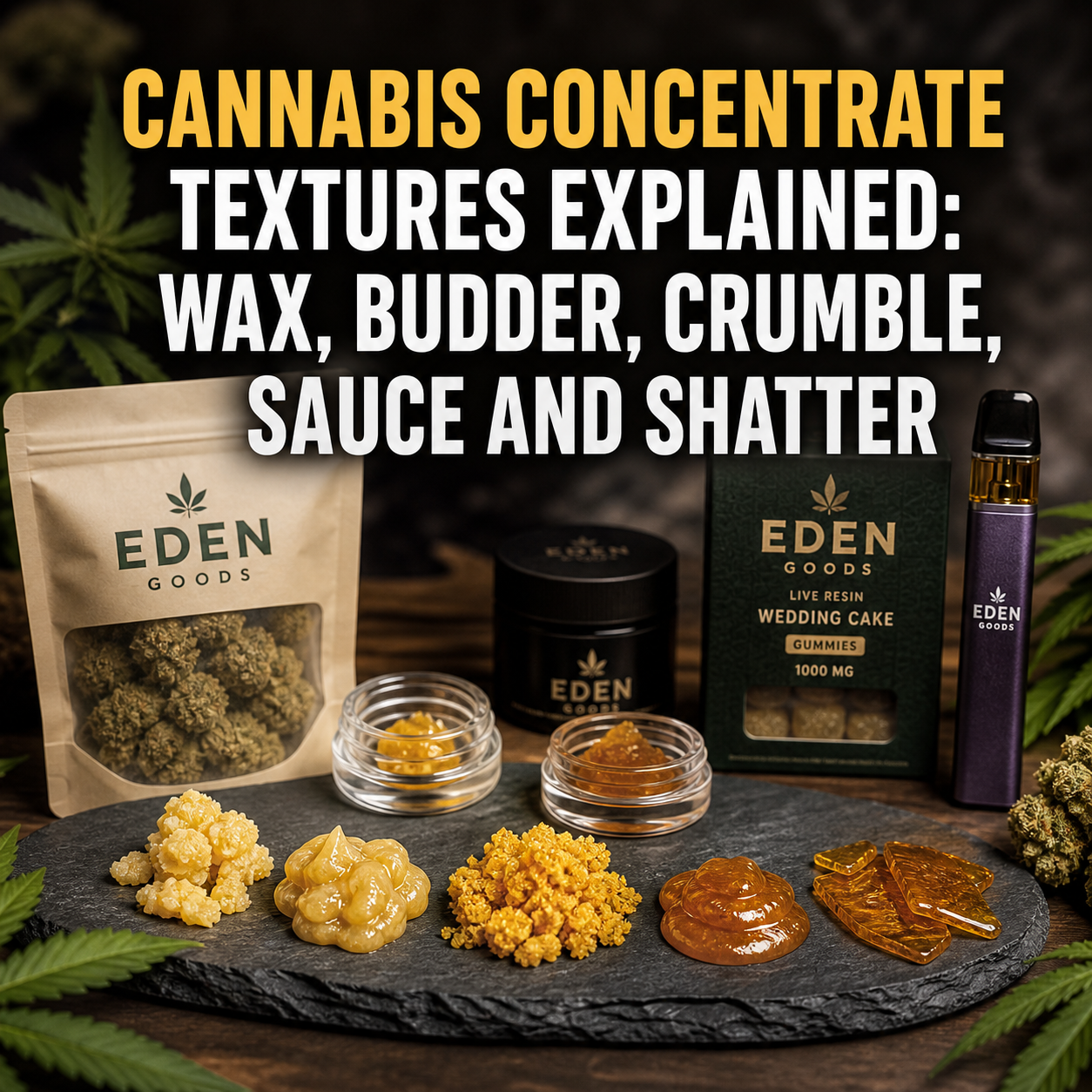
Cannabis Concentrate Textures Explained: Wax, Budder, Crumble, Sauce and Shatter — A Cannabis Concentrate Texture Guide
Cannabis concentrates can look like glass, cake batter, honey, or dry crumbs. These differences are not merely cosmetic. Texture affects how easily a product can be portioned, handled, stored, and used. It may also offer clues about its composition and processing, although appearance alone never proves quality or potency.
This cannabis concentrate texture guide explains the practical differences between wax, budder, crumble, sauce, and shatter. You will learn what each term usually means, why textures change, and how to select a consistency that fits your preferences. Laws vary by location, so purchase and possess cannabis products only where they are legal and from regulated, licensed sources.
Quick Cannabis Concentrate Texture Guide
The names used for concentrates describe consistency more often than chemical composition. Two products with different textures may contain similar cannabinoids, while two products that look alike may have very different potency, aroma, purity, or ingredients.
| Texture | Typical appearance | Handling | Main consideration |
| Wax | Soft, opaque, wax-like | Usually easy to collect with a suitable tool | Consistency varies widely |
| Budder | Creamy, smooth, whipped | Easy to portion when kept cool | May soften in warm conditions |
| Crumble | Dry, porous, honeycomb-like | Easy to break apart but may scatter | Can become messy if handled carelessly |
| Sauce | Glossy liquid with possible crystals | Sticky and less convenient to portion | Components may separate in the container |
| Shatter | Translucent, glass-like sheet | Can snap when cool and stretch when warm | Highly sensitive to temperature |
These descriptions are general rather than universal standards. Product names can differ between brands and markets. The label and certificate of analysis, when available, provide more useful information than texture alone.
What Determines Cannabis Concentrate Texture?
A concentrate’s final consistency results from several interacting factors. The source material matters, but processing, temperature, agitation, moisture, storage, and the product’s natural chemical profile can all change what you see in the container.
Cannabinoids and terpenes
Cannabinoids and aromatic compounds do not all behave in the same way. A concentrate rich in crystallized cannabinoids may become firm or grainy. A higher proportion of fluid aromatic compounds may produce a softer or more liquid consistency. The exact result depends on the complete formulation, not on a single compound.
Terpenes contribute to cannabis aroma, but a strong smell does not automatically indicate safety, freshness, or superior quality. Added terpenes may also affect consistency. Consumers should check whether the label identifies cannabis-derived or other added ingredients.
Temperature and physical agitation
Heat usually makes concentrates softer. Cold conditions can make the same product firm, brittle, or easier to snap. Repeated warming and cooling may change texture over time. Stirring or whipping during professional processing can also encourage an opaque, creamy consistency instead of a transparent one.
Post-processing and storage
Purging, filtration, curing, whipping, and crystallization influence the finished product. Storage then continues to affect it. Light, oxygen, warmth, and moisture may alter aroma, color, viscosity, and stability. A changed texture is not always evidence of spoilage, but unexpected odor, visible contamination, damaged packaging, or an uncertain source are reasons not to use the product.
Wax: A Broad and Versatile Category
Cannabis wax is usually soft, opaque, and slightly sticky. It may resemble candle wax, thick frosting, or a dense balm. The term also serves as a broad commercial category for several non-glassy concentrates. As a result, one brand’s wax may look similar to another brand’s budder or crumble.
Wax is often selected because it is relatively straightforward to collect and portion with a clean concentrate tool. It tends to stay on the tool better than a runny sauce. However, very soft wax can smear, while firmer wax can break into uneven pieces.
What wax texture does not tell you
An opaque appearance does not prove that a wax is more potent, more natural, or less refined. Color is equally unreliable as a stand-alone quality test. Cannabis variety, age, processing, and storage can all influence color. Review the cannabinoid content, ingredient list, batch details, testing information, and licensed source instead.
Explore related options in [[LIEN_INTERNE: cannabis concentrates]].
Budder: Smooth, Creamy, and Easy to Portion
Budder, sometimes written as badder or batter, has a whipped and creamy consistency. Depending on the producer, these terms may describe slightly different textures. In everyday retail use, however, they often overlap. A budder may be smooth like soft butter, while a batter may appear looser or more cake-like.
Many consumers appreciate budder because a small amount can be separated without the splintering associated with shatter. Its texture can make controlled handling easier, but users should never estimate cannabinoid content by eye. Concentrates may contain much more THC than dried flower, and visual size is an unreliable measure.
Temperature sensitivity
Budder can become runny in a warm room and firmer under cooler conditions. Keeping the container upright and avoiding prolonged heat can limit mess and preserve consistency. If refrigeration is permitted by the manufacturer, allow the sealed container to approach room temperature before opening it. This may reduce condensation reaching the product.
Crumble: Dry, Porous, and Fragile
Crumble has a dry, airy, or honeycomb-like structure. It breaks apart with little pressure and usually feels less sticky than wax or budder. This can make it convenient for people who dislike handling tacky products.
Its main disadvantage is fragility. Small fragments may scatter or cling to surfaces. Work over a clean, stable area and keep the container close. Avoid touching the concentrate with bare hands, as body heat and skin oils can affect texture and hygiene.
Is crumble weaker than wax?
No reliable potency comparison can be made from texture names. Crumble is not automatically weaker than wax, budder, sauce, or shatter. Check the labeled cannabinoid concentration and serving information. Laboratory results from a regulated market can also show tested potency and screened contaminants, subject to local testing requirements.
For more product education, visit [[LIEN_INTERNE: concentrate guides]].
Sauce: A Terpene-Rich, Fluid Consistency
Cannabis sauce is typically glossy, sticky, and more fluid than wax. It may contain visible cannabinoid crystals suspended in a liquid portion. Products marketed as diamonds and sauce commonly combine solid crystals with an aromatic liquid fraction, although formulas and naming conventions vary.
Sauce can be difficult to portion evenly. Crystals and liquid may not have identical cannabinoid profiles, so collecting only one part can produce an inconsistent experience. Follow the producer’s instructions. Do not assume that stirring is appropriate, as some containers or formulations may not be designed for it.
Does more aroma mean more terpenes?
A pronounced aroma may reflect a terpene-rich formulation, but scent cannot verify the amount or source. The product label and available test results are better references. An unusually chemical, burnt, rancid, or otherwise concerning odor should not be ignored. Contact the retailer or manufacturer rather than trying to mask it.
Shatter: Firm, Translucent, and Glass-Like
Shatter usually comes as a thin, translucent sheet. When cool, it may snap into pieces like brittle glass. When warm, it can bend, stretch, or become sticky. Its clarity helped make it one of the most recognizable concentrate textures, but transparency is not a guarantee of purity.
Handling can be less predictable than its solid appearance suggests. A cold piece may splinter, making accurate portioning difficult. A warm piece may adhere to tools or packaging. Handle it gently over a clean surface and avoid forcing a brittle sheet with bare fingers.
Why does shatter turn into sugar or wax?
Shatter may become cloudy or develop a grainy, sugary structure over time. Temperature changes, agitation, storage conditions, and the product’s composition may contribute to crystallization. This change is sometimes called sugaring.
Sugaring does not automatically make a concentrate unsafe. It can, however, alter handling, aroma, and uniformity. If the product also shows signs of contamination, packaging failure, moisture, or an unexpected odor, stop using it and ask the licensed seller for guidance.
Wax vs Budder vs Crumble vs Sauce vs Shatter
The best texture is the one that suits your handling preferences, storage conditions, and intended compatible device. Texture should come after more important considerations such as legality, verified source, ingredients, cannabinoid profile, and laboratory testing.
| If you prioritize | A texture often considered | Keep in mind |
| Smooth portioning | Budder or wax | Both can soften in heat |
| A drier consistency | Crumble | Fragments can scatter |
| A fluid, aromatic product | Sauce | It is sticky and may separate |
| A firm sheet | Shatter | It may splinter when cold |
| Visible crystals and liquid | Diamonds and sauce | The portions may not be chemically uniform |
Names alone cannot tell you whether a concentrate was produced with solvents, without solvents, from fresh material, or from cured material. Terms such as live resin, rosin, and hash describe production approach or source material more directly than final texture. A rosin, for example, can be sold as fresh press, badder, or another consistency.
How to Evaluate a Cannabis Concentrate Safely
A responsible purchase involves more than choosing the most appealing appearance. Concentrates can be highly potent, and unregulated products may carry avoidable risks. Use the following checks where adult cannabis is legal.
- Choose a licensed retailer: Avoid products with an unknown origin or unverified packaging.
- Read the complete label: Check THC, CBD, ingredients, batch identification, warnings, and storage directions.
- Review testing information: Requirements differ by jurisdiction, but regulated testing may cover potency and specified contaminants.
- Inspect the package: Do not use a leaking, opened, damaged, or improperly sealed product.
- Check device compatibility: Not every concentrate works with every vaporizer or accessory.
- Store it securely: Keep all cannabis locked away from children, teenagers, pets, and anyone who could use it unintentionally.
Texture cannot reveal residual solvents, pesticides, heavy metals, microorganisms, or every additive. These concerns require appropriate production controls and testing. Home extraction with flammable solvents presents serious fire, explosion, and poisoning hazards and should never be attempted.
Handling and Storing Concentrate Textures
Always follow the instructions supplied by the manufacturer. In general, concentrates benefit from limited exposure to heat, direct light, air, and moisture. Keep them in their original child-resistant container so that warnings and batch information remain available.
- Close the container promptly after use.
- Keep it upright, especially when storing sauce or soft wax.
- Use a clean tool intended for concentrates.
- Avoid direct contact with fingers or shared tools.
- Do not leave concentrates in a hot car or near a window.
- Keep the storage location locked and inaccessible to children and pets.
Cold storage may help some products retain their consistency, but it is not appropriate for every formulation or container. Follow the label. When removing a sealed concentrate from cold storage, waiting before opening may help prevent condensation from forming inside.
Responsible Use and Health Considerations
Cannabis concentrates may deliver substantial amounts of THC in a small volume. Effects can vary with potency, individual sensitivity, tolerance, medications, health conditions, and method of use. Start cautiously and follow locally required serving guidance. Avoid rapid repeat use before the effects are clear.
Do not drive, cycle on public roads, operate machinery, or perform safety-sensitive work while impaired. Keep cannabis away from alcohol and other intoxicants. Pregnant or breastfeeding individuals should seek medical advice and avoid cannabis unless specifically directed by a qualified clinician.
Talk with a doctor or pharmacist before using cannabis if you take medication or live with a cardiovascular, respiratory, psychiatric, neurological, or other significant condition. Cannabis is not a substitute for professional diagnosis or treatment. Seek urgent medical help for severe chest pain, breathing difficulty, loss of consciousness, extreme confusion, or other alarming symptoms.
Common Misconceptions About Cannabis Concentrate Texture
Lighter color always means better quality
Color reflects many variables and cannot establish purity. Very light material can still contain unwanted substances, while a darker concentrate may reflect its source material or processing rather than poor quality.
Clear shatter is always the purest concentrate
Clarity is a physical property, not a complete safety test. Transparent shatter still requires accurate labeling, regulated production, and relevant contaminant screening.
Sauce is always more potent
Sauce may be aromatic and may contain cannabinoid crystals, but potency varies by product and by the portion collected. Check the label rather than judging the liquid or crystal ratio.
All wax is made the same way
Wax is a consistency category, not one standardized recipe. Feedstock, extraction, refinement, formulation, and post-processing can differ significantly between producers.
Frequently Asked Questions
What is the easiest concentrate texture to handle?
Many people find budder or medium-firm wax easier to portion because it is neither runny nor brittle. Temperature and individual products still make a difference.
Are wax, budder, and badder the same?
They overlap, but sellers may use the terms differently. Wax is often broader, while budder and badder usually describe whipped, creamy consistencies.
Does concentrate texture affect potency?
Texture alone does not determine potency. Products with the same consistency can contain very different cannabinoid levels. Use the labeled test results as your guide.
Why did my shatter become sticky?
Warm temperatures can soften shatter. Its composition and storage history may also affect stability. Follow the manufacturer’s storage directions and keep the container sealed.
Can cannabis sauce separate?
Yes. Liquid and crystalline components may shift or separate. Follow product instructions rather than assuming it should be mixed.
How can I tell whether a concentrate is safe?
Appearance cannot confirm safety. Buy from a licensed source, check the seal and label, review available testing, and avoid products with an unknown origin.
Is crumble less potent than shatter?
Not necessarily. Crumble and shatter describe physical consistency. Either can have a higher cannabinoid concentration, depending on the tested product.
Conclusion: Use Texture as One Part of Your Decision
This cannabis concentrate texture guide shows that wax, budder, crumble, sauce, and shatter mainly differ in physical consistency and handling. Wax is soft, budder is creamy, crumble is dry, sauce is fluid, and shatter is glass-like. None of those traits proves potency, purity, or overall quality.
Choose legal, regulated products with clear labels and relevant testing information. Consider storage needs, device compatibility, and ease of portioning. Use cannabis responsibly, and speak with a qualified healthcare professional when health conditions or medications could affect your situation.
Continue exploring educational resources and carefully selected products through [[LIEN_INTERNE: cannabis concentrates]]. You can also discover the available Sphère Santé products in the relevant product section to identify options suited to your needs.