


Blog
Kief vs Hash: Texture, Potency, Production and the Main Differences

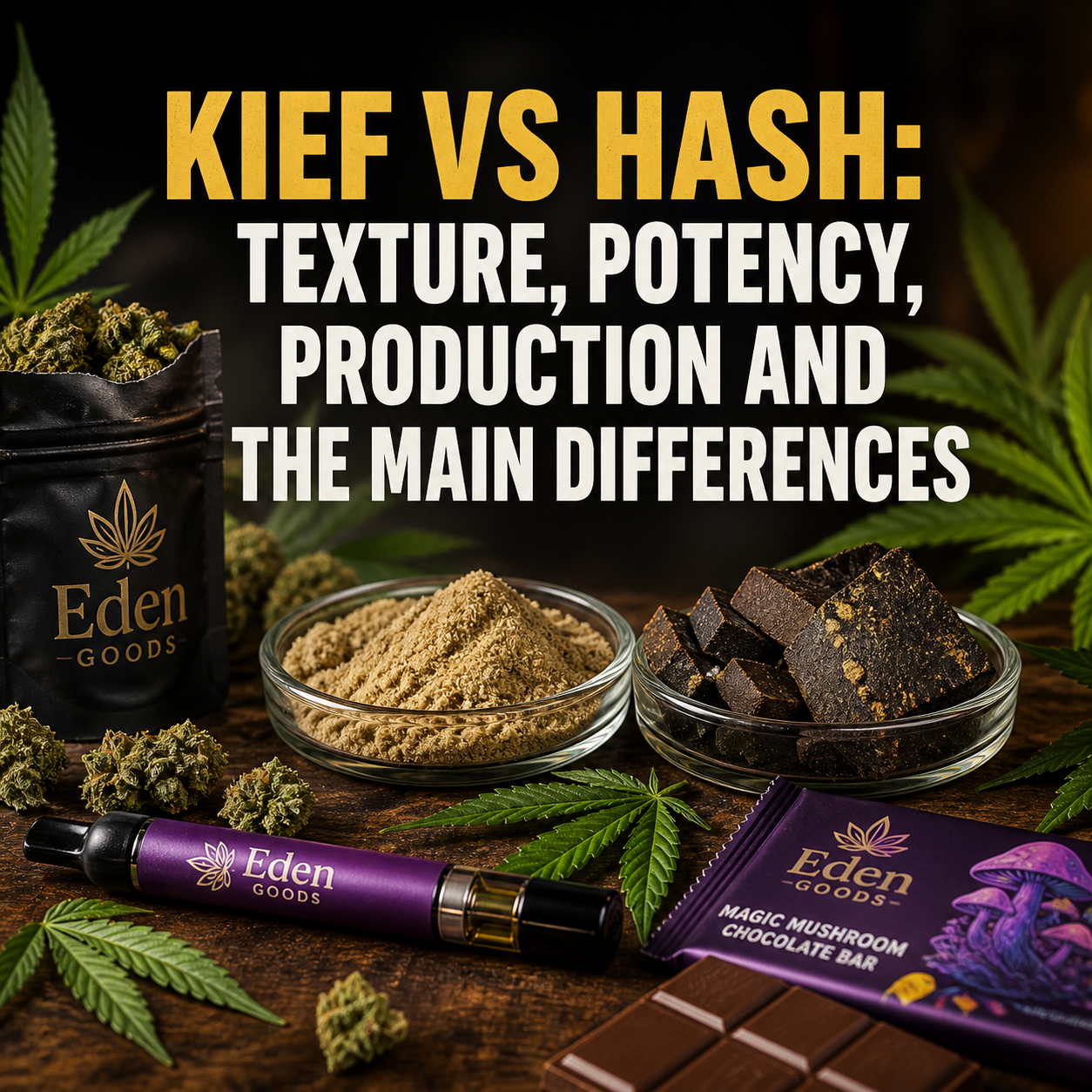
Kief vs Hash: Texture, Potency, Production and the Main Differences
The main difference in the kief vs hash comparison is simple: kief consists of loose cannabis trichomes, while hash is a concentrate made by collecting and compressing trichomes. They come from the same resin glands, but their processing gives them different textures, handling properties and levels of concentration.
Kief usually looks like a fine, slightly sticky powder. Hash may be soft and pliable, firm and crumbly, or dense and dark. Although hash is often more concentrated, appearance alone cannot confirm potency or quality. The plant material, production method, storage conditions and laboratory results all matter.
This guide explains how kief and hash differ, what they have in common and which details deserve attention when comparing cannabis concentrates. Cannabis laws vary by location. Products containing THC can impair judgment and may not be appropriate for everyone.
Kief vs Hash at a Glance
| Feature | Kief | Hash |
| Basic definition | Loose trichomes separated from cannabis flowers | Collected trichomes formed into a concentrated mass |
| Typical texture | Powdery, sandy or slightly sticky | Soft, crumbly, firm, waxy or dense |
| Processing | Usually sifted or mechanically separated | Separated, then pressed, kneaded or otherwise consolidated |
| Potency | Generally higher than cannabis flower | Often more concentrated than loose kief, but not always |
| Plant material | May contain small amounts of leaf matter | Purity varies with the starting material and production method |
| Handling | Loose and easy to spill | Usually easier to portion and transport |
| Storage concern | Air, heat, light and moisture | Heat, oxidation, excess moisture and mold |
These are broad characteristics rather than fixed rules. Kief can be highly refined, while poorly made hash may contain considerable plant material. A regulated product label and an independent laboratory analysis provide more useful information than color, smell or texture alone.
Explore related products and educational resources in [[LIEN_INTERNE: cannabis concentrates]].
What Is Kief?
Kief is the collection of tiny resin glands found mainly on cannabis flowers. These glands are called trichomes. They contain cannabinoids, aromatic terpenes and other naturally occurring compounds. When the fragile trichome heads separate from dried plant material, they form a powder that ranges from pale gold to greenish brown.
A grinder with a screened lower chamber can collect small amounts over time. Commercial producers use controlled mechanical separation or fine screens to process larger quantities. The objective is to separate resin-rich trichomes while limiting fragments of leaf, stem and other plant material.
Why Does Kief Vary in Color?
Light tan or golden kief often contains a greater proportion of resin heads and less green plant matter. A green tint may indicate that fine leaf particles passed through the screen. However, color is not a complete quality test. Cannabis variety, maturity, oxidation, lighting and storage can all influence appearance.
Very dark kief may be older, oxidized or produced from naturally darker material. It is not automatically unsafe or ineffective. At the same time, visible fuzz, an ammonia-like odor or signs of moisture can indicate contamination. A questionable product should not be used.
What Does Kief Feel Like?
Kief is generally dry and powdery, but fresh resin can make it slightly sticky. High-quality material may clump when pressed because the trichome contents soften with warmth and pressure. Kief with more plant particles often feels drier, grainier and less cohesive.
Its loose consistency makes it easy to lose through spills or air movement. Frequent handling also exposes more surface area to oxygen, warmth and moisture. Clean tools and a suitable container can reduce waste and contamination.
What Is Hash?
Hash, also called hashish, is a cannabis concentrate made from collected trichomes. In many forms, kief or another trichome-rich material serves as the starting point. Producers apply pressure, controlled warmth, agitation or a combination of techniques to consolidate the resin.
This processing breaks or softens some resin glands and allows them to bind together. The resulting hash may appear as a block, ball, slab or irregular piece. Its color can range from sandy blond to reddish brown or almost black.
Common Categories of Hash
- Dry-sift hash: trichomes are separated through screens and then collected or pressed.
- Water-separated hash: cold water and agitation help separate trichomes, which are filtered and thoroughly dried.
- Hand-worked hash: resin is gathered and shaped through manual contact and friction.
- Pressed hash: loose trichomes are compacted into a denser and more stable form.
These categories can overlap. For example, water-separated material may later be pressed. Production names do not guarantee purity, potency or safety. Drying and storage are especially important because retained moisture can encourage microbial growth.
Kief vs Hash: How Production Changes the Material
Kief is primarily the result of separation. Hash adds a second stage: consolidation. That extra processing changes the physical structure even when both products come from the same cannabis flowers.
Dry sifting uses mesh screens to separate trichomes according to size. Gentle handling may reduce unwanted plant matter. More aggressive processing can increase the amount collected, but it may also introduce broken leaf particles. This creates a trade-off between yield and refinement.
Hash production brings separated resin together. Pressure and mild warmth may rupture trichome membranes and release sticky oils. Water-based separation takes advantage of the density and brittleness of chilled trichomes before filtration. The final character depends on the source material, filtration, handling, drying and storage.
Neither term identifies a single standardized product. Two samples labeled kief can differ greatly, just as two types of hash can have different cannabinoid and terpene profiles. Regulated testing remains the most reliable way to compare them.
Kief vs Hash Potency: Is Hash Always Stronger?
Hash is often more concentrated than kief, but it is not automatically stronger. Both usually contain more cannabinoids by weight than ordinary cannabis flower because much of the non-resinous plant material has been removed.
Several factors influence potency:
- The cannabinoid profile of the original cannabis plant
- The maturity and condition of its trichomes
- The amount of leaf material in the concentrate
- The separation and filtration method
- Exposure to heat, oxygen and light
- The age and storage history of the product
Pressing kief into hash does not create THC. It changes the density and structure of the existing resin. A clean, well-sifted kief can therefore test higher than hash made from lower-quality material. Product density can also make a portion of hash look deceptively small.
Do not judge strength from darkness, softness or aroma. When available, review the label for total THC, total CBD, serving information and testing details. People with little or no tolerance can experience pronounced effects from small amounts of a concentrate.
Why Concentrates Require Extra Caution
THC can affect coordination, reaction time, attention and short-term memory. It may also cause anxiety, dizziness, nausea, confusion or a rapid heart rate. Risks can increase with high-potency products, large amounts or simultaneous use of alcohol and other substances.
Do not drive, cycle, operate machinery or perform safety-sensitive tasks while impaired. Keep cannabis away from children and pets. If someone develops severe confusion, chest pain, breathing difficulty, loss of consciousness or another alarming symptom, seek urgent medical assistance.
Pregnant or breastfeeding people should discuss cannabis exposure with a qualified healthcare professional. Anyone taking medication or living with a cardiovascular, psychiatric, neurological or respiratory condition should also ask a clinician for individualized guidance.
Texture, Aroma and Flavor Differences
Texture
Kief resembles fine sand, pollen or powdered sugar, although it is not plant pollen. It remains loose unless pressure and resin content cause it to clump. Hash has a wider range of textures. It may bend when warm, snap when cool, crumble between clean tools or remain dense and firm.
Texture reflects processing, moisture, temperature, resin composition and age. It cannot prove that a product is fresh or free of contaminants.
Aroma and Flavor
Both products can retain the source plant’s terpenes, which contribute to aroma. Kief may have a light, recognizable scent. Hash can smell richer because the resin is concentrated, though processing and storage may reduce volatile compounds.
A strong aroma does not necessarily mean high THC. Terpenes and cannabinoids are different groups of compounds. Likewise, a faint smell does not reveal exact potency. Laboratory data is needed for a meaningful chemical comparison.
Color
Kief is often blond, tan or pale green. Hash can be blond, brown, red-brown or dark on the outside, with a different interior color. Darkening may result from oxidation, heat, pressure or the original material. Black color alone does not establish quality.
How Kief and Hash Are Commonly Used
In jurisdictions where adult cannabis use is legal, kief may be added to cannabis flower or used in equipment designed for concentrates. Hash may be crumbled, portioned or used with a compatible device, depending on its consistency. Not every vaporizer or accessory can safely handle every concentrate.
Combustion produces smoke and respiratory irritants. Vapor does not make cannabis risk-free, and unregulated devices or contaminated products can introduce additional hazards. Avoid improvised equipment and follow the instructions supplied with any legally sold device.
Edible preparations present a separate concern. Their effects can be delayed and may last longer than expected, which increases the risk of taking too much before the first amount has fully taken effect. Homemade preparations can also contain uneven concentrations. Clearly labeled, regulated products offer more predictable information, although individual responses still vary.
Kief vs Hash: Which One Is Better?
Neither is universally better. The appropriate choice depends on local law, desired texture, product testing, experience and personal circumstances. Kief may appeal to someone who wants a loose, minimally processed concentrate. Hash may be preferred for its compact form, distinct texture and traditional production styles.
Consider the following points:
- Testing: choose products with clear cannabinoid information and contaminant screening where regulated testing exists.
- Predictability: avoid relying on appearance or informal claims about strength.
- Handling: kief spills easily, while hash is generally more compact.
- Device compatibility: use only products suitable for the intended equipment.
- Personal risk: health conditions, medications and previous reactions may change what is appropriate.
- Legal status: possession, purchase and use rules differ between countries and regions.
If cannabis has caused anxiety, faintness, palpitations or other concerning effects in the past, it is recommended to avoid further exposure until you have spoken with a healthcare professional.
Storage and Quality Considerations
Light, heat, air and moisture can alter both kief and hash. Store legal cannabis products in their original child-resistant packaging when possible. Keep the container closed, upright and in a cool, dark, dry place. It should remain locked away from children, teenagers, visitors and animals.
Avoid bathrooms, vehicles and sunny windowsills, where temperature and humidity fluctuate. Do not handle concentrates with wet fingers or return used material to the storage container. Labeling the package can help prevent confusion with food, tobacco or other household products.
Warning Signs to Take Seriously
- Visible fuzzy or web-like growth
- An unusual ammonia, mildew or chemical odor
- Unexpected wetness or condensation
- Damaged or unsealed retail packaging
- No traceable label in a regulated market
- Unexpected debris or foreign material
Do not try to rescue material that appears moldy or contaminated. Discard it in a way that prevents access by children and animals, following local waste guidance. Smell and appearance cannot detect every pesticide, microbe, solvent or adulterant, which is why regulated testing matters.
Common Misconceptions About Kief and Hash
Kief Is Not Cannabis Pollen
Kief is sometimes called pollen because of its powdery appearance. Botanically, this is inaccurate. Kief consists largely of resinous trichomes, while true pollen comes from male reproductive structures.
Hash Is Not Necessarily Solvent-Based
Traditional hash can be produced through mechanical or water-based separation without chemical solvents. This distinguishes many forms of hash from extracts such as certain oils, waxes and shatters. However, product terminology is not always used consistently.
Darker Does Not Mean Stronger
Color cannot measure cannabinoid content. Dark hash may be excellent, aged, oxidized or overheated. Pale material can also vary widely. Testing is more informative than visual inspection.
Natural Does Not Mean Risk-Free
Both kief and hash come from plant resin, but concentrated THC can still cause adverse effects and impairment. Natural origin does not remove health risks, interactions or the possibility of contamination.
Frequently Asked Questions About Kief vs Hash
Is kief the same as hash?
No. Kief is loose, separated trichome material. Hash is made by collecting and consolidating trichomes into a denser concentrate.
Is hash stronger than kief?
Hash is often more concentrated, but not always. Purity, source material, processing and storage determine the final cannabinoid content.
Can kief be turned into hash?
Yes. Kief is a common starting material for hash. Pressure and controlled processing allow its resin glands to bind into a cohesive mass.
Why is some kief green?
A green tint often comes from small pieces of leaf material. Plant variety, lighting and processing can also affect the visible color.
Does pressing kief increase its THC?
Pressing changes density and texture but does not create additional THC. Laboratory percentages may differ between samples because of purity and processing.
Which stays fresh longer, kief or hash?
Hash may expose less surface area to air because it is compact, but neither form lasts indefinitely. Packaging, temperature, light, oxygen and moisture are important.
How can you tell whether hash is safe?
Appearance alone is not enough. Prefer sealed, traceable products tested under local regulations, and avoid material with mold, strange odors or damaged packaging.
Are kief and hash legal everywhere?
No. Cannabis and concentrate laws vary widely. Check the rules that apply to possession, purchase, transport and use in your location.
Conclusion
In the kief vs hash comparison, both products begin with cannabis trichomes. Kief remains loose and powdery, while hash undergoes further processing that creates a compact concentrate. Hash is often denser and may be more potent, but neither texture nor color can confirm cannabinoid content or quality.
Choose only legal, traceable products where regulated access exists. Review testing information, store concentrates securely and avoid mixing cannabis with alcohol or safety-sensitive activities. If you have a medical condition, take medication or experience unwanted effects, speak with a doctor or pharmacist rather than relying on general online guidance.
Continue exploring the Eden Goods selection through [[LIEN_INTERNE: cannabis concentrates]]. For additional everyday care and comfort needs, you can also discover the products available from Sphère Santé.