


Blog
510 Battery vs Pod System: Compatibility, Portability and Long-Term Value

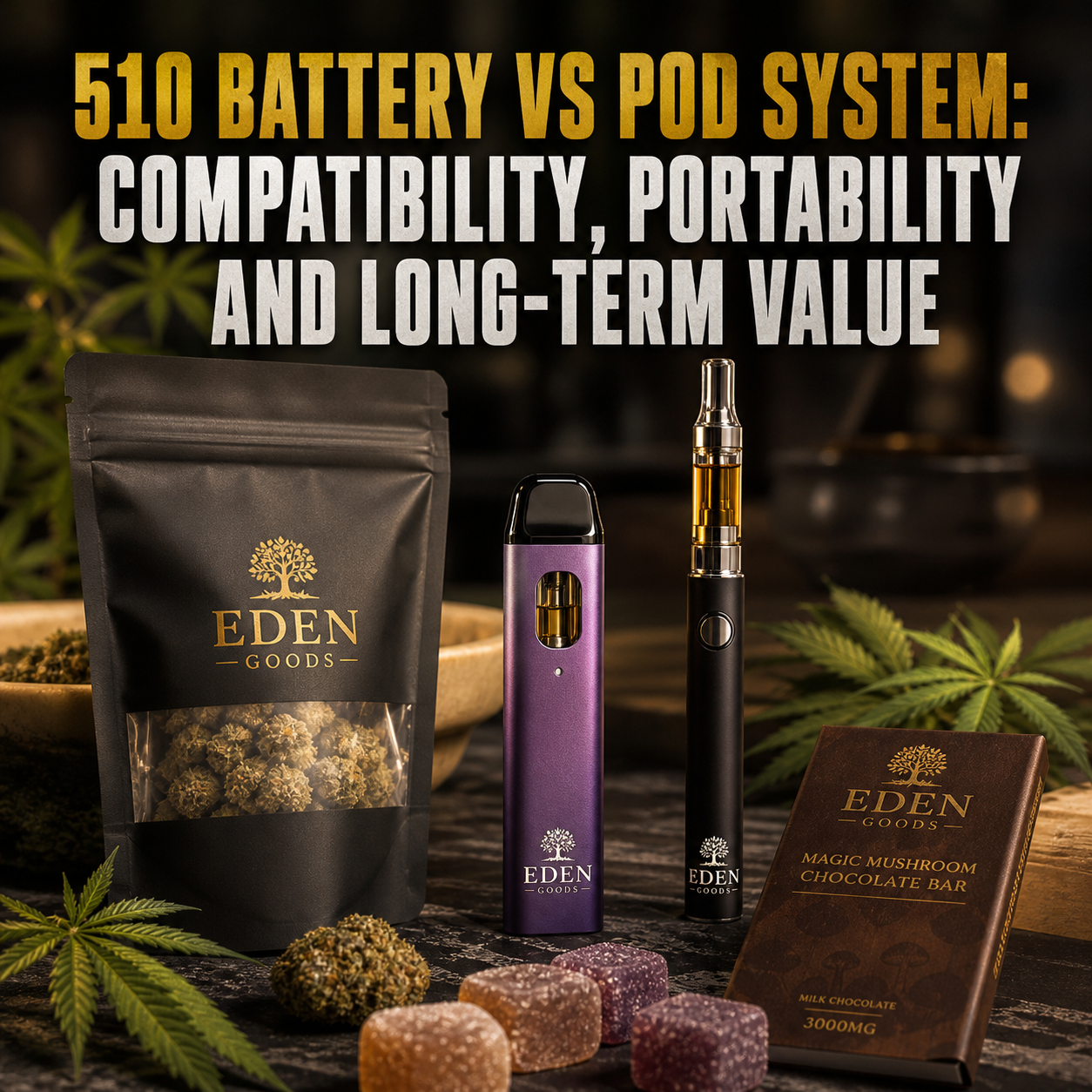
510 Battery vs Pod System: Compatibility, Portability and Long-Term Value
Choosing between a 510 battery vs pod system often comes down to one central trade-off. A 510-thread battery generally offers broader cartridge compatibility and more control, while a pod device prioritizes simplicity, portability and a tightly integrated experience.
Neither format is automatically better. The right choice depends on the products available in your area, how often you expect to use the device, your preferred level of control and your willingness to stay within one brand’s ecosystem. Long-term cost also matters because the least expensive starter device is not always the most economical option over time.
This guide compares both formats without assuming that every cartridge, pod or battery works the same way. Cannabis laws and product standards vary by jurisdiction. Purchase only from licensed sources where cannabis vaping is legal, follow local age restrictions and review the manufacturer’s instructions before use.
510 Battery vs Pod System at a Glance
| Feature | 510 battery | Pod system |
| Compatibility | Works with many cartridges that use a standard 510 thread, subject to size and electrical requirements | Usually works only with pods designed for that device family |
| Setup | Cartridge screws onto the battery | Pod clicks or slides into place |
| Controls | Ranges from simple draw activation to adjustable voltage and preheat | Usually streamlined, with automatic settings or limited adjustment |
| Portability | Often slim, but the exposed cartridge may be vulnerable | Frequently compact, with the pod partly enclosed |
| Product choice | Typically broad where regulated 510 cartridges are widely sold | Limited to compatible pods available locally |
| Maintenance | Thread and contact cleaning may be needed | Contacts and pod chamber may require occasional cleaning |
| Long-term flexibility | Higher because the battery is not usually tied to one oil brand | Lower if pods are proprietary or difficult to find |
The comparison above reflects common designs, not universal rules. Some pod platforms offer multiple settings, while some 510 batteries have no controls at all. Always check the exact device specifications rather than relying only on the format name.
What Is a 510 Battery?
A 510 battery is a rechargeable power unit designed around the widely used 510 connection. The name refers to the threaded interface between the battery and a compatible cartridge. Many prefilled cannabis oil cartridges use this connection, which is why the format is often considered the more open and flexible option.
Basic pen-style models may activate when the user inhales. Button-operated devices can include multiple voltage levels, a preheat function or a manual firing control. Larger models may partly conceal the cartridge inside the body for added protection.
Main Advantages of a 510-Thread Battery
- Broad cartridge access: users can often choose among several licensed brands and formulations.
- Replaceable power source: an empty cartridge does not require replacing the battery.
- More device choices: options range from simple pens to batteries with screens and adjustable controls.
- Potentially lower switching costs: changing cartridge brands may not require buying a new device.
Common Limitations
The phrase “510 compatible” does not guarantee a perfect match. A cartridge may be too wide for a recessed device, require a magnetic adapter or operate poorly at the battery’s available voltage. Airflow openings can also become blocked by certain device designs.
The threaded connection needs reasonable care. Oil residue, dust or overtightening may interfere with electrical contact. Long, exposed cartridges are also easier to bend or crack when carried loosely in a pocket or bag.
What Is a Cannabis Pod System?
A cannabis pod system uses a cartridge, or pod, shaped specifically for a compatible battery. Instead of screwing into place, the pod generally clicks, slides or connects magnetically. The battery and pod are designed as one platform, often with automatic draw activation and few visible controls.
This integrated approach can make setup straightforward. The device may automatically manage power within a preset range. However, the user usually cannot install a pod from an unrelated platform, even when it appears similar.
Main Advantages of Pod Devices
- Simple installation: pods are typically quick to insert and remove.
- Compact design: many devices are short, pocket-friendly and discreet in appearance.
- Protected connection: the battery body often surrounds part of the pod.
- Consistent pairing: the manufacturer designs the pod and battery to function together.
Common Limitations
Proprietary compatibility is the most important drawback. If a preferred pod becomes unavailable, the battery may have little practical use. Selection can also vary sharply by region. A platform that is common in one legal market may be difficult to support in another.
Pod systems may provide less control over voltage or temperature. That simplicity benefits users who do not want to adjust settings, but it may frustrate those who prefer to fine-tune device output.
510 Battery vs Pod System Compatibility
Compatibility is usually the deciding factor in the 510 battery vs pod system comparison. A 510 battery follows a shared mechanical connection, whereas a pod battery usually belongs to a closed or semi-closed ecosystem.
Why 510 Does Not Mean Universally Compatible
A matching thread is only the first requirement. Before pairing a cartridge and battery, consider:
- The cartridge diameter and whether it fits inside recessed openings
- The battery’s supported resistance and voltage range
- The position of the cartridge’s airflow holes
- Whether the device requires a supplied magnetic adapter
- The cartridge maker’s recommended operating settings
Forcing a cartridge, using an improvised adapter or overtightening the connection can damage the components. Screw a compatible cartridge in gently and stop when it is secure. It does not need to be tightened with force.
Understanding Proprietary Pod Compatibility
Pod names and shapes are not reliable indicators of interchangeability. Two pods may look nearly identical while using different contacts, magnets, airflow paths or internal electronics. Use only pods that the device manufacturer explicitly lists as compatible.
Before buying a pod battery, examine local pod availability rather than focusing only on the device price. Check whether several licensed products support the platform and whether replacement pods are consistently stocked. This reduces the risk of owning a battery that cannot be used when inventory changes.
Portability, Discretion and Everyday Durability
Both formats can be highly portable. The practical difference lies in shape and cartridge protection. A pen-style 510 battery is narrow but may be longer once the cartridge is attached. A pod device is often shorter and wider, with fewer exposed parts.
Pod systems tend to travel neatly because the pod sits partly inside the battery. Some 510 devices provide similar protection through a recessed chamber. Traditional stick batteries leave the cartridge exposed, making a protective case especially useful.
Do not carry either device beside keys, coins or other metal objects. Keep it away from extreme heat, direct sunlight and water. Never leave a vape battery in a parked vehicle. Battery safety takes priority over convenience.
Which Format Is More Discreet?
A small pod system may attract less attention because it resembles a compact consumer electronic device. Slim 510 pens are also easy to carry. However, discretion should not be confused with permission to vape anywhere. Public consumption rules, smoke-free policies and property restrictions may apply even where adult cannabis use is legal.
Controls, Vapor Output and Ease of Use
Many pod devices aim to remove decision-making. Insert the correct pod, inhale and allow the device to regulate output. This can help users who value a predictable setup and do not want buttons or menus.
510 batteries cover a wider range. Some are equally simple, while others allow voltage adjustment. Lower settings generally apply less power to the cartridge coil. Higher settings increase power and may create warmer vapor, but excessive power can produce a harsh or burnt taste and may damage the cartridge.
More visible vapor does not necessarily indicate better quality or a more appropriate experience. Cannabis concentrates can be potent. Start cautiously, avoid repeated inhalations in quick succession and wait before deciding whether to use more. Effects and onset can vary by product and individual.
When Adjustable Voltage Is Useful
Adjustment can help when cartridges have different operating requirements. It also gives the user some control over warmth and vapor density. The safest approach is to follow the cartridge manufacturer’s guidance and begin at the lowest suitable setting.
Preheat functions should also be used carefully. They may help with thick oil or a cold cartridge, but repeated heating can reduce product quality or contribute to leakage. Preheat is not a universal solution for a blocked airway.
Long-Term Value: Device Price Is Only One Factor
Long-term value includes the battery, replacement cartridges or pods, reliability and local availability. A cheap battery can become poor value if it fails early or supports products that are expensive and difficult to find.
| Cost factor | 510 battery | Pod system |
| Initial device cost | Ranges from basic to premium | Often competitive, but varies by platform |
| Consumable choice | Usually broader | Restricted to compatible pods |
| Ability to change brands | Often possible without replacing the battery | Usually limited to the platform |
| Risk from discontinued products | Lower when other compatible cartridges remain available | Higher if the pod line or local supply ends |
| Replacement needs | Battery and cartridge can be replaced separately | Battery and pods are separate, but both depend on the ecosystem |
A 510 battery often provides stronger long-term flexibility. It allows comparison among compatible cartridges and can remain useful when preferences change. A pod system may still represent good value when its pods are reliably available, reasonably priced and well suited to the user’s priorities.
Disposable vape products can appear convenient, but they replace the battery with every finished unit and create additional electronic waste. A rechargeable battery with replaceable cartridges or pods usually avoids that specific issue. Local battery recycling rules still apply when the device reaches the end of its service life.
Maintenance and Troubleshooting
Both systems need light maintenance. Turn the device off when possible before cleaning. Remove the cartridge or pod, then inspect the contacts for residue. A small amount of isopropyl alcohol on a cotton swab may be suitable for some external contacts, but follow the manufacturer’s directions and allow every surface to dry completely before reassembly.
Common 510 Battery Problems
- No connection: the cartridge may be overtightened, dirty, incompatible or not making contact.
- Blinking light: this may indicate a low charge, short circuit, timeout or connection fault. Meanings vary by model.
- Weak output: the battery may need charging, or the selected voltage may be too low for the cartridge.
- Clogged airflow: residue may have collected in the cartridge airway. Do not insert sharp objects unless the cartridge maker recommends a specific method.
Common Pod System Problems
- Pod not detected: remove and reseat it, then check that both contact areas are clean and dry.
- Leaking pod: keep the device upright and avoid heat. Replace a damaged or persistently leaking pod.
- No draw activation: charge the battery and confirm that airflow openings are unobstructed.
Stop using a battery that becomes unusually hot, swells, smells abnormal or shows physical damage. Do not attempt to open or repair a lithium-ion battery. Use the correct charging equipment and take damaged devices to an appropriate battery or electronics disposal facility.
Health, Product Quality and Responsible Use
Vaping cannabis is not risk-free. Inhaled aerosols can irritate the lungs, and long-term health effects remain an area of ongoing research. Avoid unregulated cartridges, homemade oil mixtures and products from informal sellers. Licensed products provide clearer labeling and regulatory oversight, although no inhaled product can be described as harmless.
Do not modify cartridges or add substances to them. Keep cannabis products locked away from children and pets. Do not drive, cycle on public roads or operate machinery while impaired. Mixing cannabis with alcohol or other substances may increase impairment or unwanted effects.
People who are pregnant or breastfeeding should avoid cannabis unless directed otherwise by a qualified clinician. Anyone with heart, lung or mental health concerns, or who takes prescription medication, should discuss cannabis use with a healthcare professional. Seek urgent medical help for chest pain, severe breathing difficulty, loss of consciousness or other serious symptoms.
How to Choose Between a 510 Battery and Pod System
Start with the legal, tested products available in your area. A device has little value if its compatible cartridges cannot be purchased consistently.
- Review local availability. Compare the number and variety of licensed 510 cartridges with the pods sold for each platform.
- Decide how much control you want. Choose a simple draw-activated design for minimal setup or adjustable voltage if you understand and value that feature.
- Consider carrying style. Look for an enclosed cartridge or pod if the device will travel frequently.
- Check charging details. Review the cable type, charging instructions and whether pass-through use is permitted.
- Calculate ongoing value. Include consumable prices and availability, not just the starter battery.
- Verify support. Clear instructions, warranty terms and responsive customer service can matter when problems arise.
Choose a 510 Battery If
- You want access to a wider selection of compatible cartridges.
- You may switch brands or formulations over time.
- You prefer adjustable voltage or a choice of device styles.
- Long-term flexibility matters more than a fully integrated design.
Choose a Pod System If
- You want a compact device with minimal setup.
- Your preferred licensed products are reliably available in compatible pods.
- You do not need extensive power controls.
- You value a pod that sits securely inside the device body.
Frequently Asked Questions
Are 510 cartridges compatible with every 510 battery?
No. The thread may match while cartridge width, airflow, voltage requirements or contact design does not. Check both manufacturers’ specifications before use.
Can a cannabis pod fit a different brand’s battery?
Usually not. Most pods are proprietary. Use only the battery models explicitly listed as compatible with that pod.
Which lasts longer, a 510 battery or a pod battery?
Battery life depends on capacity, power settings, usage and device condition. The format alone does not determine how long a charge or the device itself will last.
Is a pod system easier to use?
Often, yes. Many pod systems use draw activation and automatic power settings. Simple 510 batteries can provide a similarly uncomplicated experience.
Which option offers better long-term value?
A 510 battery often offers better flexibility because it can support multiple cartridge brands. A pod system can still be economical when compatible pods remain available and competitively priced.
Can I refill a prefilled cartridge or pod?
Do not refill a product unless the manufacturer specifically designed it for refilling. Opening sealed hardware can cause leaks, contamination, malfunction or unsafe heating.
Why does my vape battery blink?
Blinking may signal low charge, a connection error, a short circuit or an activation timeout. Consult the device manual because light codes differ between models.
Conclusion: Which Vape Format Is Right for You?
In the 510 battery vs pod system decision, a 510 battery is usually the stronger choice for compatibility, cartridge selection and long-term flexibility. A pod system often wins on compact design, straightforward setup and integrated performance.
Base your choice on licensed product availability, physical compatibility, battery safety and total ongoing cost. Do not assume that all threaded cartridges or similar-looking pods are interchangeable. Whichever format you choose, follow the manufacturer’s instructions, store the device safely and avoid damaged or unregulated products.
