


Blog
THC Gummies vs Chocolate: Comparing Taste, Onset and Dosing

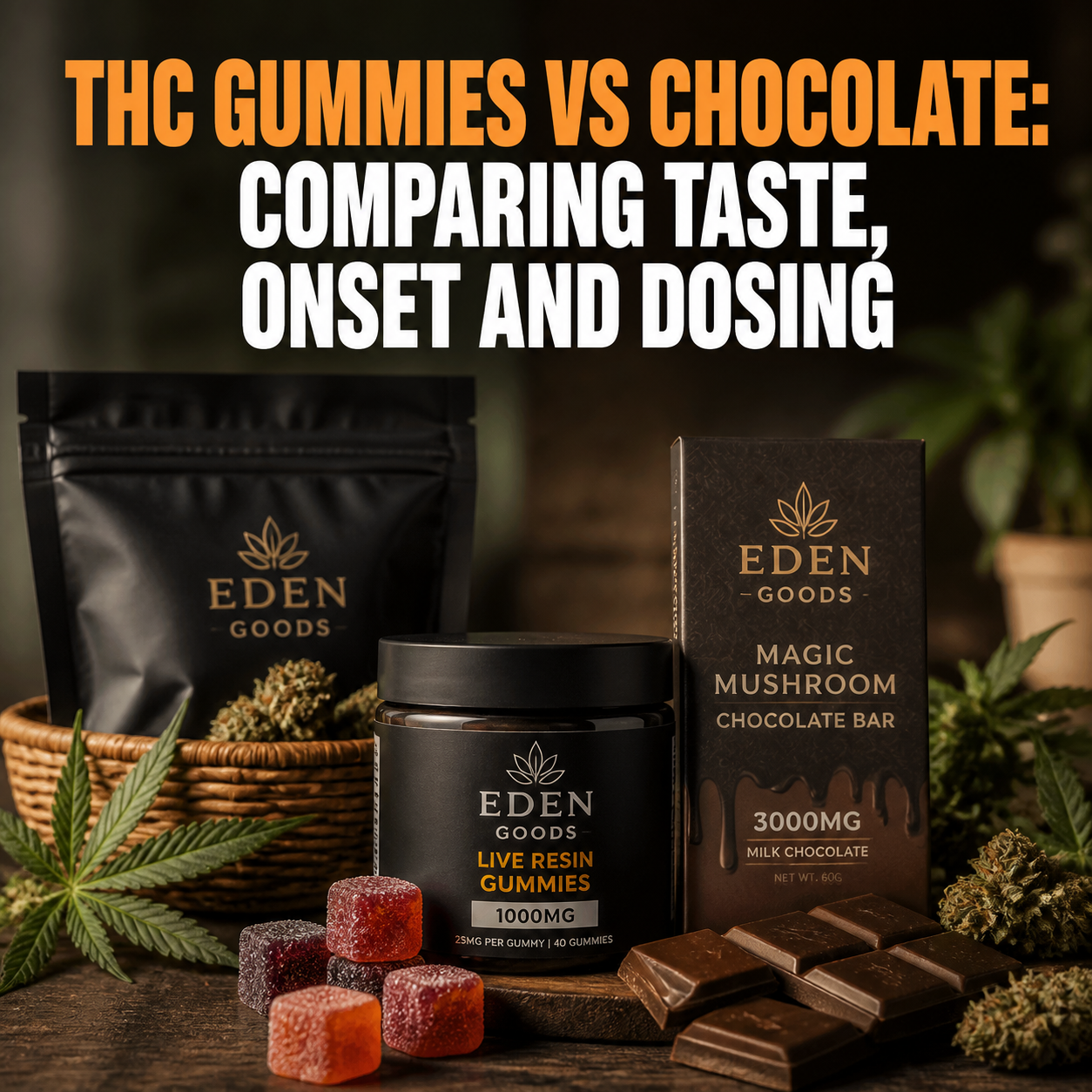
THC Gummies vs Chocolate: Comparing Taste, Onset and Dosing
Choosing between THC gummies vs chocolate involves more than deciding whether you prefer candy or cocoa. Both are cannabis edibles, but their texture, ingredients, portioning, storage needs and eating experience can differ significantly.
Neither format is automatically stronger, faster or better. The THC amount listed for each serving matters more than the shape of the edible. Your metabolism, recent meals, tolerance and the product formulation can also influence when effects begin and how they feel.
This guide compares THC-infused gummies and chocolate in practical terms. It explains onset, duration, dosing, labels, storage and safety without promising a predictable result. If you use cannabis for a health concern, take medication, are pregnant or have an underlying condition, speak with a qualified healthcare professional before using THC.
THC Gummies vs Chocolate at a Glance
Gummies offer a chewy, fruit-flavored format that is usually divided into individual pieces. Chocolate provides a richer experience and often comes as a bar divided into squares. Either option can contain a low or high amount of THC, so appearance is not a reliable guide to potency.
| Feature | THC gummies | THC chocolate |
| Taste | Usually fruity, sweet or sour | Cocoa-based, creamy, bitter or sweet |
| Texture | Chewy or soft | Smooth, firm or filled |
| Portioning | Often one labeled dose per piece | Usually divided into labeled squares |
| Typical onset | Often about 30 minutes to 2 hours | Often about 30 minutes to 2 hours |
| Storage concern | Heat, humidity and drying | Heat, melting and flavor changes |
| Common dietary concern | Gelatin, sugar and food colorings | Milk, soy, nuts and sugar |
| Portability | Convenient when securely packaged | Portable but sensitive to warmth |
These are general comparisons rather than guarantees. Always follow the specific label because recipes and cannabinoid concentrations vary among manufacturers. Explore related options in [[LIEN_INTERNE: Cannabis Edibles]].
How Do THC Edibles Work?
When you swallow a conventional edible, THC passes through the digestive system before being processed by the liver. This process takes longer than inhalation. It also produces 11-hydroxy-THC, an active metabolite that can contribute to the intensity and longer duration associated with oral cannabis.
The delay creates an important safety issue. A person may assume that the first serving has not worked and take another too soon. The effects can then overlap, producing a more intense and longer experience than intended.
Several factors can change the response:
- The milligrams of THC consumed
- Whether the edible was taken with or without food
- Individual metabolism and body composition
- Previous experience and tolerance
- The product recipe and cannabinoid profile
- Alcohol, medication or other substances
- Digestive and liver health
This variability applies to both gummies and chocolate. A familiar product may even feel different on another day, especially if meal timing, sleep or other circumstances have changed.
THC Gummies vs Chocolate: Which Tastes Better?
Taste is subjective, but the two formats create distinct experiences. Gummies tend to emphasize fruit, citrus, berry or sour flavors. Sugar and acidity can mask some of the herbal notes associated with cannabis extracts. They may appeal to people who prefer bright flavors and a chewy texture.
Chocolate combines cannabis extract with cocoa, cocoa butter, sugar and, depending on the recipe, milk or plant-based ingredients. Dark chocolate may taste less sweet and slightly bitter. Milk or white chocolate usually offers a sweeter, creamier profile.
Flavor consistency
A well-made edible should distribute THC consistently throughout the product. Licensed or regulated products generally provide testing information and clear cannabinoid labeling where required. Homemade or unverified products may have uneven distribution, making one piece different from another.
Flavor does not indicate potency. A strong cannabis taste does not necessarily mean that an edible contains more THC. Likewise, a pleasant candy flavor can conceal a substantial dose. Read the package before eating any portion.
Texture and ease of eating
Gummies require chewing and can become hard or sticky over time. They may not suit people with dental problems, braces, swallowing difficulties or sensitivity to chewy foods.
Chocolate melts in the mouth and may be easier to consume for some adults. However, it can melt in a bag, car or warm room. People who have swallowing or chewing difficulties should seek individualized advice rather than assuming that any edible is appropriate.
Do THC Gummies or Chocolate Work Faster?
Standard THC gummies and chocolate have broadly similar onset windows because both travel through the digestive system. Effects may begin in approximately 30 minutes to 2 hours, but some people need longer. The most noticeable effects may continue to build after they first appear.
There is no dependable rule that chocolate always works faster than gummies. Chocolate contains fat, and THC is fat-soluble, but that fact alone does not guarantee a quicker or stronger effect. The full formulation, dose, meal context and individual physiology all matter.
Why onset time varies
An empty stomach does not make the outcome reliably predictable. Eating patterns can affect absorption, while taking an edible after a substantial meal may delay the initial sensation for some people. Digestive speed and liver metabolism also vary widely.
Some gummies are sold as fast-acting or use specialized emulsions. These products may behave differently from traditional edibles. Treat any stated onset as an estimate and follow the manufacturer’s directions. A marketing term should never replace careful dosing.
How long can effects last?
Edible THC effects commonly last several hours and can persist longer after a larger dose. Residual impairment or drowsiness may continue after the most obvious sensations fade. Plan accordingly and avoid driving, cycling in traffic, operating machinery or doing safety-sensitive work.
Because onset and duration are variable, use an edible only when you have enough time to remain in a safe, familiar setting. Do not schedule driving based on an assumed end time.
Comparing THC Dosing in Gummies and Chocolate
Accurate dosing begins with the label. Look for both the total THC in the package and the THC per piece or square. Confusing these two numbers is a common cause of accidental overconsumption.
For example, a bar may contain multiple servings even though it looks like a single snack. A gummy may also contain more than one intended serving. Never assume that one piece equals one beginner dose.
Are gummies easier to dose?
Gummies are often convenient because each piece may contain a stated amount of THC. If the product was manufactured and tested appropriately, choosing one whole piece can be simpler than dividing a bar.
However, splitting a gummy does not always create perfectly equal doses. THC may not be distributed with mathematical precision, and cutting an irregular shape accurately can be difficult.
Is chocolate easy to portion?
Chocolate bars commonly include scored squares. When each square has a clearly stated THC amount, portioning can be straightforward. Problems arise when consumers mistake the bar’s total THC for the amount in one square, or eat several squares as they would ordinary chocolate.
Breaking a square into smaller pieces provides only an estimate unless the manufacturer specifically labels those portions. Melting a THC chocolate bar and reshaping it can also make even distribution less certain.
A cautious approach for new consumers
Where adult-use cannabis is legal, public health guidance often treats 2.5 mg THC or less as a cautious starting amount for people who are new to edibles or sensitive to THC. Individual recommendations can differ, and lower amounts may still cause noticeable effects.
After consuming a serving, wait at least two hours before considering more. For some products and individuals, waiting longer is more prudent because effects may still be developing. Do not increase the amount simply because nothing happened during the first hour.
Use the lowest practical amount, follow local guidance and avoid combining THC with alcohol or other intoxicants. A clinician or pharmacist can help if you use prescription medicines or have questions about interactions.
Ingredients and Dietary Considerations
The best format may depend on more than THC. Review the full ingredient and allergen list each time you buy, since recipes can change.
What is commonly found in gummies?
- Sugar, glucose syrup or alternative sweeteners
- Gelatin or plant-based pectin
- Natural or artificial flavors
- Citric or malic acid in sour varieties
- Colors and glazing agents
- Cannabis extract or infused oil
Traditional gelatin is animal-derived, while pectin-based gummies may suit some vegetarian or vegan preferences. A vegan label still requires verification because other ingredients or processing methods may not meet every consumer’s standards.
What is commonly found in THC chocolate?
- Cocoa solids and cocoa butter
- Sugar or another sweetener
- Milk ingredients in some varieties
- Soy or sunflower lecithin
- Nuts, flavorings or fillings
- Cannabis extract or infused fat
Chocolate may contain milk, soy, peanuts or tree nuts, or may be produced in facilities that handle them. People with food allergies should rely on the package’s current allergen statement and contact the manufacturer when information is unclear.
Consumers managing diabetes or another nutrition-related condition should consider sugar and carbohydrate content as well as THC. Ask a healthcare professional for advice suited to your needs.
Storage, Discretion and Convenience
Gummies usually travel better than chocolate, but both need secure packaging. Heat can soften gummies and melt chocolate. Humidity can make gummies sticky, while air exposure may dry them out. Chocolate can develop harmless surface discoloration after temperature changes, although any product with an unusual odor, visible mold or damaged packaging should be discarded.
Keep edibles in their original, child-resistant container when provided. Preserve the cannabinoid label, ingredient list, lot information and expiration or best-before date. An unmarked bag makes a THC edible easier to confuse with ordinary food.
Protecting children, visitors and pets
THC gummies and chocolate can look highly appealing to children. Chocolate can also be dangerous to dogs because of its cocoa content, in addition to the risks posed by THC.
- Store products in a locked location, out of sight and reach
- Do not place them in a shared candy jar or food container
- Avoid consuming them in front of children
- Tell other adults in the home what the package contains
- Never leave an edible in a vehicle, handbag or bedside drawer accessible to others
If a child or pet consumes THC, contact the appropriate poison control service, emergency service or veterinarian promptly. Keep the package available so professionals can identify the ingredients and labeled dose.
Safety Considerations for Both Formats
THC can impair attention, coordination, reaction time and judgment. It may also cause anxiety, dizziness, nausea, dry mouth, rapid heart rate or pronounced sleepiness. Higher doses generally increase the chance of an unpleasant reaction, but sensitivity differs from person to person.
Do not use THC before driving or operating equipment. Do not combine it with alcohol. Extra caution is appropriate for older adults and for anyone taking medicines that cause sedation, affect balance or interact through liver metabolism.
THC products should be avoided during pregnancy and breastfeeding. People with cardiovascular disease, a history of psychosis, significant anxiety, liver disease or other complex health concerns should discuss cannabis with a qualified clinician. Laws and age restrictions also vary, so verify the rules where you live.
What to do after consuming too much
Move to a quiet, safe place and stay with a trusted sober adult if possible. Do not drive. Avoid taking more cannabis, alcohol or unprescribed substances. Sip water and remember that edible effects can take time to subside.
Seek urgent medical help for chest pain, difficulty breathing, a seizure, severe confusion, loss of consciousness, dangerous behavior or any symptom that feels medically concerning. Contact poison control for case-specific guidance. Be honest about the product, amount and approximate time consumed.
THC Gummies vs Chocolate: How to Choose
Your choice should reflect the dose, ingredients and practical context rather than appearance alone. Start by comparing clearly labeled products with an amount of THC you understand.
| You may prefer gummies if you want | You may prefer chocolate if you want |
| Fruit or sour flavors | A cocoa-based flavor |
| Individually shaped portions | A bar divided into squares |
| Better resistance to moderate warmth | A softer, melting texture |
| Pectin-based options without gelatin | Dark, milk or plant-based varieties |
| A format that is easy to count | A dessert-like eating experience |
Before purchasing, ask these questions:
- How many milligrams of THC are in one serving?
- How many servings are in the package?
- Does the product also contain CBD or other cannabinoids?
- Are there allergens or ingredients I avoid?
- Does the package provide testing and traceability information?
- Can I store it securely away from children and pets?
- Is the product legal for me to purchase and possess?
A trustworthy label should be legible and specific. Avoid products with unclear potency, damaged seals or unsupported health claims. THC edibles should not be presented as treatments or cures for medical conditions.
Frequently Asked Questions
Are THC gummies stronger than chocolate?
Not inherently. Strength depends mainly on the milligrams of THC consumed, along with formulation and individual response. Compare the dose per serving rather than the edible type.
Does THC chocolate take effect faster than gummies?
Not reliably. Both conventional formats often begin working within about 30 minutes to 2 hours, but onset can take longer. Specialized fast-acting formulations may differ.
Can I take another edible after one hour?
One hour may be too soon because the first dose can still be developing. Wait at least two hours and consider waiting longer according to the label and your circumstances.
Can I cut a gummy or chocolate square in half?
You can physically divide it, but each half may not contain an exactly equal dose. Use products designed and labeled for the portion you need whenever possible.
Should THC edibles be taken with food?
Food can affect absorption and timing, but the result is not identical for everyone. Follow the product directions and use it under similar conditions when consistency matters.
Which format is better for beginners?
Neither is universally better. A clearly labeled, low-dose product is more important than choosing gummy or chocolate. New consumers should use a cautious amount and wait patiently.
How should THC gummies and chocolate be stored?
Keep them sealed in their original labeled packaging, protected from heat and moisture, and locked away from children and pets. Follow any manufacturer-specific storage instructions.
Conclusion
In the comparison of THC gummies vs chocolate, neither format wins in every category. Gummies provide fruity flavors, convenient counting and good portability. Chocolate offers a rich taste, a melting texture and easy-to-recognize squares. Both can have a delayed onset, long-lasting effects and significant potency.
The safest choice is a legal, clearly labeled product with a THC amount that matches your experience and circumstances. Read the serving information, avoid rapid redosing and store every edible securely. If you take medication or use cannabis for a health-related reason, talk with a doctor or pharmacist.
To explore carefully selected options and practical wellbeing solutions, discover the Sphère Santé products available through the relevant product collection. Always confirm that any THC item is legal in your location and appropriate for adult use.