


Blog
Live Resin vs Live Rosin Edibles: What Is the Difference?

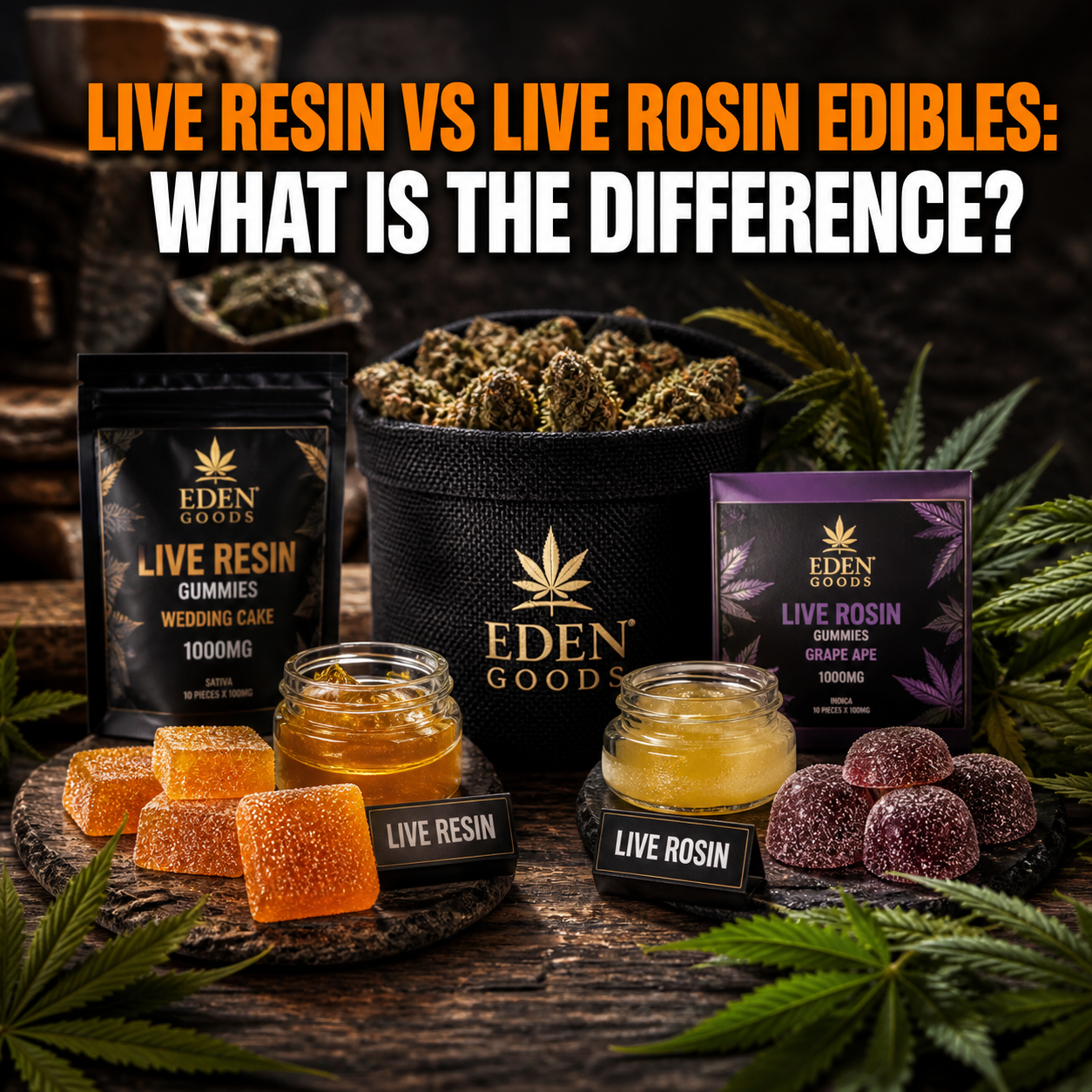
Live Resin vs Live Rosin Edibles: What Is the Difference?
When comparing live resin vs live rosin edibles, the main difference lies in how the cannabis extract is made. Live resin usually relies on hydrocarbon solvents. Live rosin uses heat, pressure, water, and filtration instead. Both often begin with fresh-frozen cannabis to preserve more of the plant’s aromatic compounds.
That distinction matters, but it does not tell the whole story. Potency, cannabinoid content, formulation, testing, and serving size can affect your experience more than the extraction method alone. Neither option is automatically stronger or better for everyone.
This guide explains extraction, flavor, effects, safety, cost, and label quality. It will help you compare products without relying on confusing marketing claims.
Live Resin vs Live Rosin Edibles at a Glance
| Feature | Live resin edibles | Live rosin edibles |
| Starting material | Usually fresh-frozen cannabis | Usually fresh-frozen cannabis or fresh-frozen hash material |
| Extraction | Typically butane, propane, or a blend of hydrocarbon solvents | Heat and pressure, often after ice-water hash production |
| Solvent-free process | No | Yes |
| Typical character | Plant-forward extract with a broad aromatic profile | Solventless extract valued for flavor and traditional mechanical processing |
| Price | Often less expensive | Often more expensive due to lower yields and added labor |
| Potency | Depends on the labeled cannabinoid dose | Depends on the labeled cannabinoid dose |
| Best reason to choose | Flavor-focused formulation at a potentially more accessible price | Preference for solventless processing and a craft-style extract |
The most practical takeaway is simple: look at milligrams per serving before looking at the extraction name. A 5 mg THC live resin gummy and a 5 mg THC live rosin gummy contain the same labeled THC dose, even if their flavors and minor-compound profiles differ.
What Does Live Mean in Cannabis Edibles?
In this context, live does not mean that the final edible contains a living plant. It describes how the cannabis was handled after harvest.
Traditional extracts often start with dried and cured flower. Live extracts generally start with cannabis that was frozen soon after harvest. Freezing can help retain volatile compounds that may otherwise decline during drying and curing. These include terpenes, which contribute to the plant’s aroma and flavor.
The frozen material then follows one of two broad paths. Producers may use a solvent to create live resin, or mechanical separation followed by heat and pressure to make live rosin.
However, terminology is not applied consistently across every market. Packaging alone cannot prove how a product was made. A clear ingredient list, transparent manufacturer, and accessible certificate of analysis offer more useful information.
What Are Live Resin Edibles?
Live resin edibles contain an extract typically produced from fresh-frozen cannabis with hydrocarbon solvents such as butane or propane. Controlled extraction separates cannabinoids, terpenes, and other compounds from the plant material.
After extraction, the manufacturer removes the processing solvent. The extract also needs appropriate preparation before it can deliver the expected oral effects. This usually includes decarboxylation, a heating step that converts cannabinoid acids such as THCA into active forms such as THC.
Reputable licensed manufacturers test the finished extract or edible for potency and contaminants. Testing may include residual solvents, pesticides, heavy metals, and microorganisms, depending on local rules.
Potential advantages of live resin edibles
- They may retain a broader plant-derived flavor than edibles made only with highly refined distillate.
- They are often more affordable than comparable live rosin products.
- Extraction can produce relatively consistent and efficient yields.
- They may contain minor cannabinoids and aromatic compounds alongside THC or CBD.
Potential limitations
- The process uses solvents, even though compliant products should undergo purging and residual-solvent testing.
- The words live resin do not guarantee premium starting material or accurate dosing.
- Some products combine distillate with live resin or added terpenes rather than using live resin as the only cannabis extract.
- Flavor can vary considerably by formulation and storage conditions.
Using a solvent is not, by itself, evidence that a product is unsafe. The relevant questions are whether it came from a regulated source, whether the process was controlled, and whether independent laboratory results support the label.
What Are Live Rosin Edibles?
Live rosin is produced without hydrocarbon extraction solvents. Producers commonly wash fresh-frozen cannabis in ice water to separate trichome heads. They filter and dry the resulting hash, then apply controlled heat and pressure. The pressed oil is live rosin.
This method is often described as solventless. Water may play a role in separating the trichomes, but it is not used as a chemical extraction solvent. That distinction appeals to consumers who prefer mechanically produced concentrates.
Live rosin also requires careful handling. Temperature, pressure, starting material, filtration, and storage can all influence quality. As with live resin, the extract must be formulated correctly for use in an edible.
Potential advantages of live rosin edibles
- They use a solventless extraction process.
- They can offer a distinctive, cannabis-forward taste.
- They may preserve a varied mixture of cannabinoids and plant-derived aromatic compounds.
- They appeal to consumers who value small-batch or craft-style production.
Potential limitations
- They usually cost more because production can be labor-intensive and yields may be lower.
- Solventless does not automatically mean contaminant-free or medically safer.
- A pronounced plant flavor may not suit every consumer.
- Premium terminology can increase the price without guaranteeing a better finished edible.
Live rosin can be an excellent ingredient, but its value depends on execution. Accurate dosing, good manufacturing practices, and reliable testing remain essential.
Do Live Resin and Live Rosin Edibles Feel Different?
They can feel different, but the extraction method does not predict the experience with certainty. The most influential factors usually include the THC dose, the balance of THC and CBD, your tolerance, recent food intake, metabolism, and previous cannabis exposure.
Both types are swallowed and processed through the digestive system. The liver converts some THC into 11-hydroxy-THC, a metabolite associated with the longer and sometimes stronger-feeling effects of oral cannabis. This process applies to both live resin and live rosin edibles.
Minor cannabinoids and terpenes may contribute to product character, but research has not established that one extract type consistently produces a specific mood or effect in every person. Terms such as uplifting, relaxing, indica, and sativa should therefore be treated as broad descriptions rather than guarantees.
Terpenes can shape taste and aroma. Yet swallowing an edible differs from inhaling cannabis, and digestion changes how compounds reach the body. Do not assume that a terpene-rich edible will reproduce the experience of the original flower.
Which Type Is Stronger?
Neither is inherently stronger. A product’s strength depends mainly on its cannabinoid content and serving size.
For example, a live resin gummy labeled with 10 mg THC is likely to be more intoxicating than a live rosin gummy labeled with 5 mg THC, assuming the labels are accurate. The word rosin does not double potency, and resin does not make an edible weaker.
Check these numbers before consuming any product:
- Total THC per serving
- Total THC per package
- CBD and other cannabinoids per serving
- Number of servings in each piece or package
- Suggested serving size
Be especially careful when one gummy contains multiple servings. Cutting a gummy may not always divide cannabinoids perfectly, although products from reliable manufacturers should aim for uniform distribution.
Flavor and Aroma Differences
Live resin and live rosin edibles are often chosen for flavor. Both can taste more plant-forward than products made exclusively with cannabinoid distillate.
Live resin may deliver bright, aromatic notes because hydrocarbon extraction can efficiently capture volatile compounds. Live rosin may offer a rich, full-bodied profile linked to the trichome material and mechanical pressing process. These are tendencies, not fixed rules.
The final recipe also matters. Sweeteners, fruit flavoring, acids, chocolate, fats, and emulsifiers can mask or amplify the cannabis taste. Storage affects quality too. Heat, light, oxygen, and time may degrade cannabinoids or aromatic compounds.
If flavor is your priority, review the extract ingredients and production date where available. A product marketed as live may still rely heavily on added flavoring.
Live Resin vs Live Rosin Edibles: Safety Considerations
Both types can cause intoxication when they contain THC. Common unwanted effects may include anxiety, dizziness, dry mouth, impaired coordination, confusion, or excessive sleepiness. Higher doses can produce more intense and longer-lasting reactions.
Edibles may take 30 minutes to two hours or longer to produce noticeable effects. Duration can extend for several hours. Timing varies, so taking more too quickly is a common cause of unpleasant experiences.
A cautious approach is recommended:
- Read the THC amount per serving and per package.
- Start with a low dose, especially if you have little experience.
- Wait long enough to assess the full effect before considering more.
- Use the product in a safe and familiar environment.
- Do not drive, cycle on public roads, operate machinery, or combine THC with alcohol.
Keep all edibles locked away from children and pets. Gummies, chocolates, and baked products can look like ordinary food. Retain the original child-resistant packaging whenever possible.
Avoid cannabis during pregnancy or breastfeeding. Speak with a physician or pharmacist if you take medication, have a heart condition, live with a mental health condition, or have a history of problematic substance use. This article provides general information and does not replace individualized medical advice.
How to Read a Live Extract Edible Label
A polished package does not establish quality. Before choosing between live resin and live rosin, look for specific, verifiable information.
Confirm the actual extract
Read the ingredient list. Some products contain live resin or live rosin alongside distillate. That is not necessarily a problem, but it differs from an edible made exclusively with the named live extract.
Check the cannabinoid dose
Confirm THC and CBD per serving, not only per package. If the product lists several cannabinoids, review each amount separately.
Find the certificate of analysis
A current certificate of analysis should match the product name and batch or lot number. It may report cannabinoid potency and contaminant results. Requirements vary by jurisdiction, so learn what regulated testing covers in your area.
Review traceability and packaging
Look for the manufacturer, batch number, production or packaging date, expiration information, storage directions, and required warnings. Avoid products with unclear origins, copied laboratory documents, damaged seals, or implausible claims.
Browse related options through [[LIEN_INTERNE: Cannabis Edibles]] and compare labels before focusing on flavor or price.
How to Choose Between Live Resin and Live Rosin Edibles
Your choice should reflect your priorities rather than assumptions about prestige.
- Choose live resin if you want a broad, plant-forward extract and a potentially lower price.
- Choose live rosin if solventless processing is important to you and you accept a possible price premium.
- Choose by dose if predictable intensity is your main concern.
- Choose by cannabinoid ratio if you are comparing THC-only products with balanced THC and CBD formulas.
- Choose by testing when one manufacturer provides clearer batch-specific information than another.
For many consumers, a lower-dose, accurately labeled product is a better starting point than the most expensive extract. Premium ingredients cannot compensate for an unsuitable THC dose.
Common Misconceptions About Live Resin and Live Rosin
Live rosin is always safer
Solventless processing removes concerns about hydrocarbon residuals, but it does not remove every possible risk. Cannabis can still contain pesticides, microorganisms, heavy metals, or inaccurate cannabinoid levels. Testing and manufacturing controls remain necessary.
Live resin contains dangerous amounts of butane
Licensed producers should purge processing solvents and test products against applicable limits. Unregulated or homemade extracts may not offer the same assurance, which is why source and laboratory documentation matter.
Live products are always full-spectrum
There is no single universally applied definition of full-spectrum. A live extract may contain a varied compound profile, but processing and formulation can change it. Check the ingredients and laboratory report instead of relying on front-label language.
Rosin is the same as resin
The words sound similar, but the processes differ. Resin typically refers to solvent-extracted concentrate in this comparison. Rosin refers to an extract made with heat and pressure. Ordinary cured-flower rosin is also different from live rosin because it does not start with fresh-frozen material.
Frequently Asked Questions
Are live rosin edibles better than live resin edibles?
Not automatically. Live rosin suits people who prioritize solventless processing. Live resin may provide comparable plant character at a lower price. Dose, formulation, and testing are more important than prestige.
Do live resin edibles get you higher?
Not simply because they contain live resin. Intensity depends mainly on THC per serving, individual tolerance, metabolism, and whether other cannabis or alcohol was consumed.
Do live rosin edibles contain solvents?
Live rosin is made without hydrocarbon extraction solvents. However, consumers should still look for contaminant testing and clear manufacturing information.
How long do live resin and live rosin edibles take to work?
Effects may begin within 30 minutes to two hours or longer. Food intake, metabolism, dose, and formulation can alter the timing. Wait before taking more.
Can live extract edibles expire?
Yes. Cannabinoids and flavor compounds can degrade, while the food ingredients may spoil. Follow the package date and storage instructions, and discard products with damaged packaging or unexpected changes.
Are live resin and live rosin edibles legal?
Legality depends on your location, age, cannabinoid content, and product source. Check current local laws and purchase only through lawful channels.
Should beginners choose live resin or live rosin?
Beginners should focus first on a low, clearly labeled THC dose. Either extract can be suitable when legally produced, accurately tested, and used cautiously.
Conclusion: Live Resin vs Live Rosin Edibles
In the live resin vs live rosin edibles comparison, extraction is the defining difference. Live resin usually uses hydrocarbon solvents, while live rosin relies on mechanical separation, heat, and pressure. Both commonly start with fresh-frozen cannabis and may provide a more plant-forward profile than highly refined extracts.
Neither format is universally stronger, safer, or more effective. Review the THC dose, cannabinoid ratio, full ingredient list, batch testing, and manufacturer transparency. Start cautiously, follow local laws, and ask a healthcare professional for personalized guidance if cannabis could interact with your health or medication.
Discover the cannabis edible selection available from Eden Goods, compare each label carefully, and choose a format that matches your preferences, experience, and desired serving size.