


Blog
What Is Full Melt Hash? Grades, Texture, Quality and Consumption Options

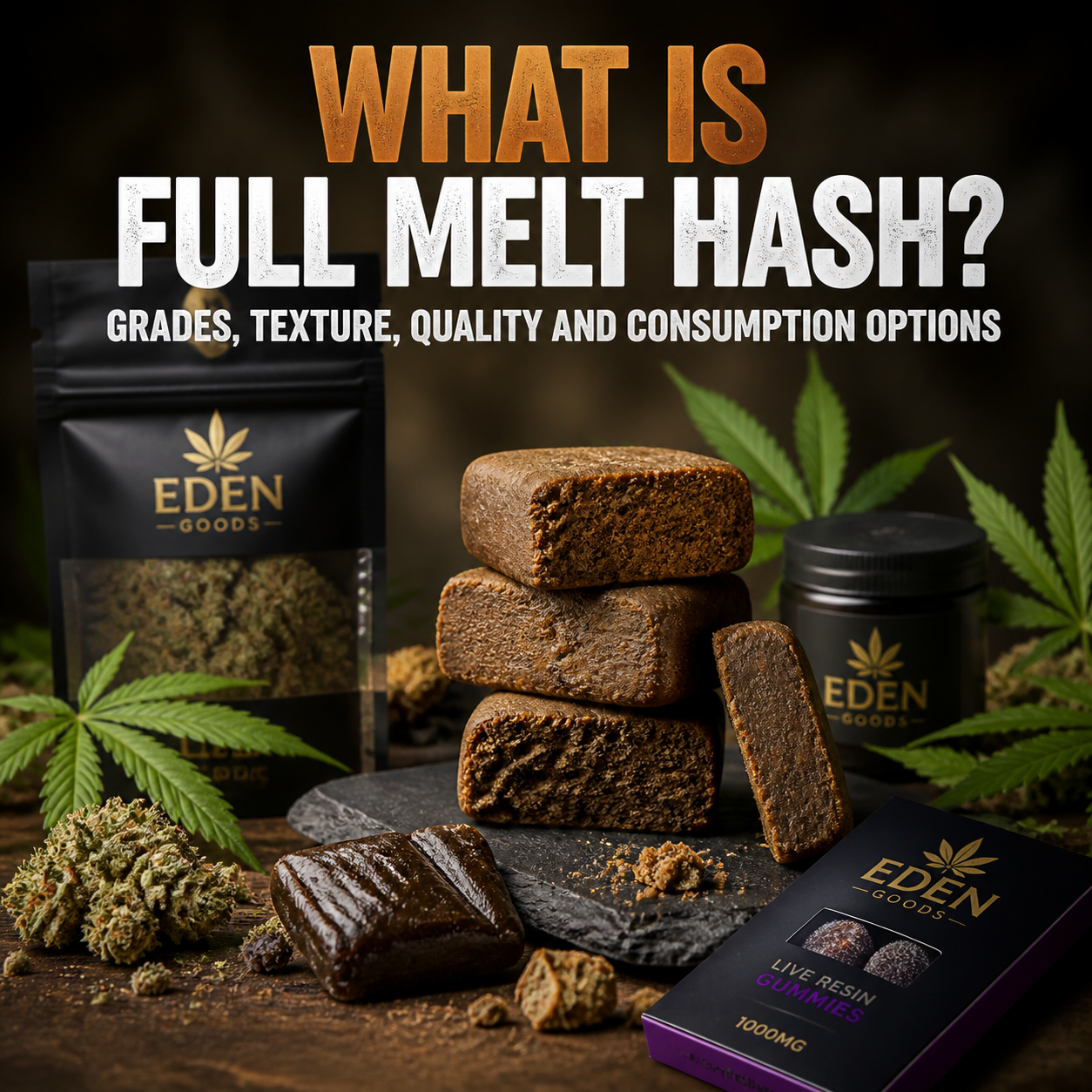
What Is Full Melt Hash? Grades, Texture, Quality and Consumption Options
If you are exploring solventless cannabis concentrates, you may be wondering: what is full melt hash, and why does it command so much attention? Full melt hash is a highly refined form of cannabis trichome concentrate. When heated, a high-quality sample melts almost completely, leaving very little plant material or residue behind.
The term describes performance rather than one universally regulated product category. Full melt is usually made by separating trichome heads from cannabis flowers without chemical solvents. Producers commonly use ice water, fine filtration screens, careful drying and sometimes static separation. The finished concentrate can deliver intense flavor and high cannabinoid potency.
This guide explains melt grades, textures, quality indicators and consumption options. It also covers storage, legality and important precautions. Cannabis laws differ by location, and concentrated products may not be suitable for everyone. Always follow local regulations and seek medical advice if cannabis could interact with your health or medication.
What Is Full Melt Hash?
Full melt hash is a solventless cannabis concentrate composed mainly of separated glandular trichomes. Trichomes are the tiny resin-producing structures found on cannabis flowers. They contain cannabinoids, aromatic terpenes and other naturally occurring compounds.
The defining feature is how the hash behaves under heat. Material sold as genuine full melt should liquefy and bubble with minimal charring. It should leave far less solid residue than lower-grade dry sift or traditional pressed hash. This clean melt reflects a high concentration of intact trichome heads and limited contamination from leaves, stalks or dust.
Full melt is not necessarily a specific strain, color or consistency. It may come from fresh frozen cannabis or carefully dried material. It can also appear sandy, granular, greasy or lightly pressed, depending on the source material, separation method, temperature and storage conditions.
Why trichome heads matter
A trichome has a resin-rich head attached to a small stalk. The head contains most of the desirable resin. When producers isolate mature heads while removing stalks and plant fragments, the result tends to melt more evenly and produce less residue.
This separation requires precision. Screen size, water temperature, agitation, drying and handling can all affect the final quality. Excessive agitation may break apart plant material. Poor drying may create undesirable flavors and increase the risk of microbial growth.
Is full melt hash solventless?
Yes, full melt hash is generally classified as a solventless concentrate. Mechanical separation techniques are used instead of hydrocarbon or alcohol extraction. Ice and water may assist separation, but water does not dissolve and extract the resin in the same way as a chemical solvent.
Solventless does not automatically mean contaminant-free or safe. Cannabis can carry pesticides, microbes, heavy metals or foreign material. Water hash can also retain moisture if it is not dried correctly. Laboratory testing from a licensed market remains more reliable than appearance alone.
How Full Melt Hash Is Made
Production methods vary, and small changes can affect purity. Most full melt begins with either ice water hash or dry sift. Both methods aim to separate trichome heads while preserving their aromatic and chemical profile.
Ice water separation
With ice water separation, cold conditions make trichomes brittle enough to detach from the cannabis material. The mixture passes through filtration bags or screens with different micron sizes. These screens collect fractions according to particle size.
Producers then dry the collected resin thoroughly. Professional operations may use controlled freeze-drying to remove moisture quickly and consistently. Traditional air-drying can also be used, but it requires careful control of temperature, humidity and sanitation.
The presence of water in the process does not make every batch full melt. The cleanest fractions may qualify, while other screen sizes from the same wash may contain more stalks or plant particles.
Dry sift and static refinement
Dry sift is produced by passing dried cannabis over fine mesh screens. Trichomes fall through while larger plant fragments remain above. Additional screening or static separation can remove contaminants and concentrate intact heads.
Exceptional dry sift can achieve full-melt quality. However, ordinary kief collected in a grinder usually contains a broader mixture of trichome heads, stalks and plant matter. It therefore tends to burn rather than melt cleanly.
Understanding Full Melt Hash Grades
Hash is sometimes evaluated with a one-to-six-star melt scale. This system is useful as descriptive shorthand, but it is not a standardized legal or laboratory grading system. Sellers and reviewers may apply grades differently. A star rating should never replace information about production, testing and provenance.
| Common grade | Typical behavior | General description |
| 1 to 2 star | Mostly burns | Contains substantial plant material and leaves significant residue. |
| 3 to 4 star | Partially melts | Bubbles and softens but still chars or leaves noticeable solids. |
| 5 star | Melts very well | High trichome purity with limited residue; often called near-full melt. |
| 6 star | Melts almost completely | Exceptional separation with minimal residue; commonly described as full melt. |
The difference between five-star and six-star hash can be subjective. Temperature, storage history and the surface used for observation may alter melt behavior. Marketing language can also exaggerate a product’s grade.
What does six-star hash mean?
Six-star hash generally refers to the highest informal melt grade. It should liquefy rapidly, bubble actively and leave little contamination behind. The starting material and aroma should also be excellent because purity cannot create desirable flavor from poor-quality cannabis.
Not every high-potency concentrate is six-star hash. Potency measures cannabinoid concentration, while the melt grade mainly describes cleanliness and behavior under heat. A product can test high in THC yet leave substantial residue.
Full Melt Hash Texture, Color and Aroma
There is no single correct full melt hash texture. A fresh sample may resemble loose sand or fine granules. Heat and pressure from handling can cause the resin to grease up, clump or become glossy. Some batches form a soft mass at room temperature, while others stay relatively dry.
Texture depends on the cultivar’s resin, the maturity of its trichomes, processing choices and storage temperature. A change in consistency is not automatically evidence of deterioration. However, unexpected dampness, visible fuzz or an ammonia-like smell can indicate a serious storage or contamination problem.
Does lighter color mean better quality?
Not always. Pale cream or golden hash can reflect fresh material and limited oxidation, but color also depends on genetics and trichome maturity. Some excellent concentrates are darker. Conversely, very light material can still have weak aroma, poor melt or contamination.
Color should be assessed alongside several factors:
- A clean, recognizable aroma rather than musty or chemical odors
- Good melt performance with limited charred residue
- A texture appropriate to the product and storage conditions
- Verified origin and processing information
- Recent testing from a credible laboratory where regulated testing exists
Expected aroma
Well-preserved full melt often has a strong aroma that reflects the cannabis cultivar. Depending on its terpene profile, it may smell citrusy, floral, earthy, spicy, fruity or fuel-like. Aroma strength alone does not prove safety or potency.
A harsh chemical odor may suggest contamination or improper handling. A musty smell can indicate excess moisture or microbial growth. Do not consume a product that looks or smells suspicious.
How to Assess Full Melt Hash Quality
Consumers cannot confirm purity by sight alone. A melt test may reveal plant contamination, but it cannot identify pesticides, heavy metals or microbes. In legal markets, choose products from licensed sources that provide traceable batch information and compliant testing.
Useful quality indicators include:
- Source transparency: the producer identifies the cultivar, batch and processing method.
- Laboratory results: the label or certificate reports cannabinoids and required contaminant screening.
- Clean melt: the material liquefies evenly with minimal solid debris.
- Fresh aroma: the scent is distinct and free from moldy, burnt or chemical notes.
- Proper packaging: the container is clean, sealed and designed to limit heat, air and light exposure.
- Realistic claims: the seller does not rely solely on words such as premium, pure or six-star.
Home testing cannot establish that a concentrate is safe. If regulated laboratory information is unavailable, uncertainty remains even when the hash looks excellent.
Full Melt Hash vs Other Cannabis Concentrates
Several products are confused with full melt. The distinctions involve production, texture and intended performance.
| Product | How it differs |
| Bubble hash | An ice water hash category that includes several purity levels. Only the cleanest fractions may be full melt. |
| Dry sift | Mechanically separated resin from dried cannabis. Highly refined dry sift can reach full-melt quality. |
| Kief | Loose trichome material that often contains stalks and plant fragments. It usually does not melt completely. |
| Hash rosin | A concentrate made by pressing hash with heat and pressure. It is an extract of hash, not the same product as full melt. |
| Traditional pressed hash | Compressed resin that may contain more plant matter and generally burns rather than fully liquefies. |
| Hydrocarbon extracts | Products made using solvents such as butane or propane, followed by controlled solvent removal. |
Full melt hash vs hash rosin
This is the most common confusion. Full melt consists of highly purified trichomes. Hash rosin is made by placing hash under controlled heat and pressure so that resinous oil separates from much of the remaining solid material.
Rosin often has a smooth, uniform consistency and may be easier to handle. Full melt can offer a direct expression of separated trichomes, but it may require more careful storage and handling. Neither category is automatically superior. Quality depends on the material, processing and personal preference.
Full Melt Hash Consumption Options
Full melt hash is highly concentrated and may produce stronger effects than cannabis flower. Consumption methods differ in onset, intensity and risk. Product labels and local laws should always take priority.
Vaporization or dabbing
Full melt is often vaporized on equipment designed for cannabis concentrates. Controlled heating allows the resin to melt rather than contact a direct flame. Very high temperatures can create harsher vapor and reduce flavor.
Dabbing can deliver a substantial dose quickly. This makes accidental overconsumption easier, particularly for people with limited tolerance. Avoid improvised equipment and surfaces not intended for heating. They may introduce burns, breakage or unwanted fumes.
Use with cannabis flower
Some adults add a small amount of hash to cannabis flower. In this context, the material burns rather than demonstrating its full melting properties. Combining products also raises the total cannabinoid dose and may make effects less predictable.
Oral consumption
Swallowing unheated hash may not produce the expected effects because cannabinoids in raw material are not necessarily in their active form. Commercial edible products undergo controlled formulation and provide labeled serving information.
Homemade preparation can lead to uneven dosing. Oral cannabis also has a slower onset and longer duration than inhaled cannabis, which may encourage someone to take more before the first dose has taken effect. For greater predictability, regulated and clearly labeled products are preferable where legal.
Potency, Effects and Safety Considerations
Full melt hash can contain a high concentration of THC, although composition varies. Possible short-term effects include altered perception, impaired coordination, dry mouth, anxiety, dizziness, sleepiness and increased heart rate. Higher doses may cause panic, confusion or severe discomfort.
Risk can be reduced, but not eliminated, by taking basic precautions:
- Use only where adult cannabis consumption is legal.
- Check the label and choose the lowest practical amount, especially with a new batch.
- Allow enough time to assess effects before considering more.
- Do not drive, cycle, operate machinery or perform safety-sensitive tasks while impaired.
- Avoid combining cannabis with alcohol, sedatives or other intoxicants.
- Use in a calm setting with a trusted adult nearby if you are inexperienced.
- Keep all cannabis locked away from children, teenagers and pets.
Cannabis use during pregnancy or breastfeeding is not recommended. People with cardiovascular conditions, a personal or family history of psychosis, significant anxiety, or those taking prescription medication should speak with a qualified healthcare professional before using cannabis. A clinician or pharmacist can discuss possible interactions according to your situation.
Seek urgent medical assistance if someone experiences chest pain, trouble breathing, loss of consciousness, a seizure, severe agitation or other alarming symptoms. If a child or pet consumes hash, contact emergency services, poison control or a veterinarian promptly.
How to Store Full Melt Hash
Heat, oxygen, moisture and light can change the aroma, texture and chemical profile of hash. Short-term storage generally requires a clean, airtight container kept in a cool, dark place. Follow the producer’s instructions because packaging and stability differ.
Cold storage may help preserve delicate concentrates for longer periods. However, opening a cold container immediately can allow condensation to form on the product. Moisture may damage texture and create conditions that support microbial growth. Keep the container sealed while it gradually reaches room temperature.
Always label the container clearly. Use child-resistant packaging and store it in a locked location separate from ordinary food. Do not rely on height alone to prevent access by children.
Is Full Melt Hash Worth Choosing?
Full melt may appeal to experienced adult consumers who value solventless processing, strong aroma and minimal residue. Its disadvantages include high potency, sensitivity to storage and a price that often reflects intensive processing and low yields.
A high price does not guarantee six-star quality. Consider the producer’s transparency, batch testing, freshness and legal status before marketing language. People who prefer lower potency or simpler dosing may find other regulated cannabis formats more suitable.
Frequently Asked Questions About Full Melt Hash
Does full melt hash completely disappear when heated?
Not literally. Even exceptional hash may leave a small amount of residue. Full melt means that it liquefies almost completely and leaves far less solid material than lower-grade hash.
Is all bubble hash full melt?
No. Bubble hash describes an ice water separation method. Different fractions contain different amounts of plant material, and only the cleanest may qualify as full melt.
Is full melt stronger than regular hash?
It often has a higher concentration of resin and cannabinoids, but potency varies by batch. Laboratory results provide better information than texture, color or a star grade.
Can full melt hash contain contaminants?
Yes. Solventless processing does not remove every pesticide, microbe, heavy metal or foreign substance. Regulated testing and traceable sourcing remain important.
What is the difference between five-star and six-star hash?
Five-star hash generally melts very well but may leave some residue. Six-star material should melt almost completely. The scale is informal, so ratings can differ between producers.
Why did my full melt become greasy?
Warmth, pressure and the resin’s natural composition can make trichomes soften and merge. Greasiness is not automatically a defect, but poor odor, visible growth or excess moisture are warning signs.
Can beginners use full melt hash?
Its concentrated potency can make dosing difficult for inexperienced consumers. Anyone who chooses to use it should follow local law, review the label and use a cautious amount.
Conclusion
So, what is full melt hash? It is a highly refined, solventless trichome concentrate that melts with very little residue. The best examples combine clean separation, careful drying, expressive aroma and transparent testing. Melt grades can help describe performance, but they are informal and should not be treated as proof of purity or safety.
Consider potency, storage requirements, source credibility and your personal health before choosing a concentrated cannabis product. Follow local laws, avoid driving after use and consult a healthcare professional if you have a medical condition or take medication.
For wider day-to-day health, hygiene and discreet continence needs, discover the carefully selected Sphère Santé products designed to support comfort, independence and home care. [[LIEN_INTERNE: protections anatomiques]] [[LIEN_INTERNE: slips absorbants]] [[LIEN_INTERNE: alèses]]