


Blog
Hash Rosin vs Flower Rosin: How the Starting Material Changes the Product

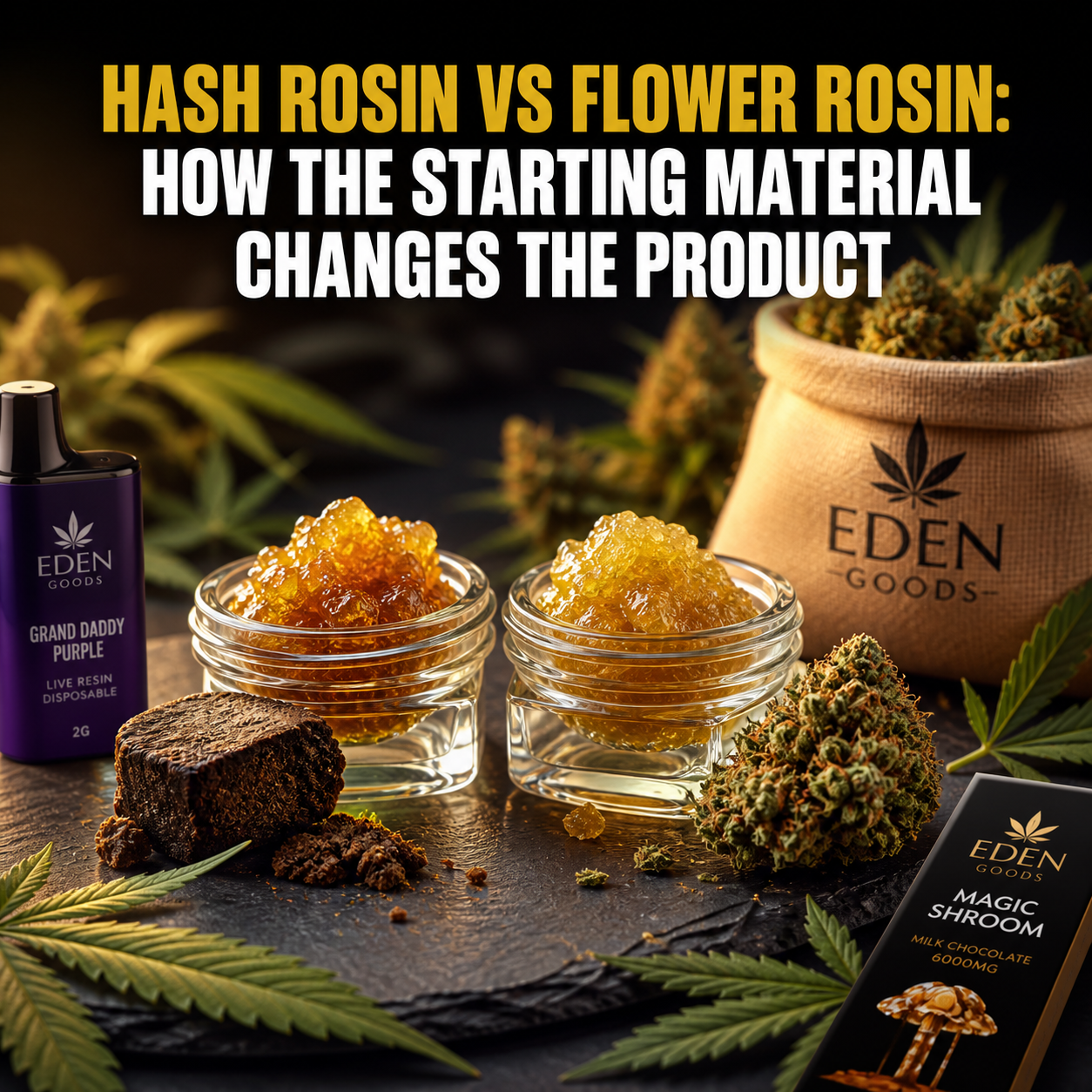
Hash Rosin vs Flower Rosin: How the Starting Material Changes the Product
When comparing hash rosin vs flower rosin, the main difference is simple: hash rosin is pressed from separated trichomes, while flower rosin is pressed directly from cannabis buds. That change in starting material affects flavor, color, texture, refinement, yield, and price.
Hash rosin usually offers a cleaner, more concentrated expression of the plant’s resin. Flower rosin often costs less and requires fewer processing steps, but it may contain more waxes and other plant compounds. Neither option is automatically better. The right choice depends on your priorities, the quality of the original material, and the accuracy of the product label.
Hash Rosin vs Rosin: Clearing Up the Terminology
The phrase hash rosin vs rosin can be confusing because hash rosin is itself a type of rosin. Rosin is the broad product category. It describes a concentrate created by applying controlled heat and pressure to resin-rich cannabis material, without using a volatile extraction solvent such as butane.
The starting material determines the specific type:
- Flower rosin comes from dried and cured cannabis flower.
- Hash rosin comes from mechanically separated trichomes, commonly in the form of ice-water hash or dry-sift hash.
- Live rosin is generally hash rosin made from plants frozen soon after harvest rather than dried and cured first.
On some menus, sellers use the word rosin as shorthand for flower rosin. That usage is common, but it is not technically precise. Check the ingredient or production information instead of relying on the product name alone.
What Is Flower Rosin?
Flower rosin is produced by pressing cannabis buds. Heat softens the resin inside the flower, while pressure separates it from much of the solid plant material. The extracted resin is then collected as rosin.
Because the entire flower enters the pressing stage, the extract can carry chlorophyll, lipids, waxes, and tiny plant particles. Their presence varies with cultivar, freshness, storage, moisture, and processing skill. Well-made flower rosin can still be flavorful and aromatic, but it usually looks and behaves differently from a carefully refined hash rosin.
Typical characteristics of flower rosin
- Made directly from dried or cured flower
- Fewer production stages than hash rosin
- Often darker or less translucent
- May have a thicker, less uniform consistency
- Usually contains more non-resin plant compounds
- Often priced below comparable hash rosin
Color alone does not prove quality. Genetics, maturity at harvest, oxidation, storage, and heat exposure can all influence appearance. A very pale product is not necessarily safer, stronger, or more flavorful.
What Is Hash Rosin?
Hash rosin is pressed from hash rather than whole flower. Before pressing, producers separate the resin-rich trichome heads from the rest of the plant. This creates a more refined starting material with less leaf and flower matter.
Ice-water hash is a common source. In this method, cold water and agitation help separate trichomes, which are then filtered and carefully dried. Dry sift uses mechanical screening instead. The resulting hash can be pressed to release rosin.
This extra preparation requires time, suitable equipment, careful handling, and high-quality cannabis. It also explains why hash rosin generally carries a higher retail price.
Typical characteristics of hash rosin
- Pressed from separated trichomes
- Contains less plant material than flower rosin
- Often delivers a more defined aroma and flavor
- May leave less residue when vaporized appropriately
- Available in fresh-press, badder, cold-cure, jam, and other consistencies
- Usually more expensive to produce and purchase
Hash rosin quality still depends on the source crop. Processing cannot turn poor, contaminated, or degraded material into a premium product. Testing and transparent sourcing remain important.
Hash Rosin vs Flower Rosin at a Glance
| Comparison point | Hash rosin | Flower rosin |
| Starting material | Separated trichomes or hash | Whole cannabis flower |
| Processing stages | Hash production followed by pressing | Flower pressed directly |
| Plant material | Generally lower | Generally higher |
| Flavor expression | Often cleaner and more defined | Can be robust but more plant-forward |
| Texture | Often smooth and uniform | May be thicker or less consistent |
| Color | Frequently lighter, but not always | Frequently darker, but not always |
| Price | Usually higher | Usually more accessible |
| Quality dependence | Hash quality, drying, pressing, and storage | Flower quality, moisture, pressing, and storage |
These are general tendencies rather than guarantees. A carefully made flower rosin may outperform a poorly handled hash rosin. Brand reputation, batch freshness, testing, and storage can matter more than the category name.
How Starting Material Changes Flavor and Aroma
Trichomes contain many of the cannabinoids and aromatic compounds associated with cannabis. Hash production aims to isolate these resin glands before pressing. As a result, hash rosin often presents a clearer expression of the source cultivar’s aroma.
Flower rosin includes compounds drawn from the whole bud. Some consumers enjoy its broader, heavier character. Others find it more vegetal or less precise. Personal perception, product freshness, and storage conditions strongly influence the experience.
Terpenes are volatile. Heat, air, light, and time can reduce their intensity. A well-made concentrate can lose aroma if it sits in a warm display case or an unsealed container. Freshness and handling should therefore form part of any hash rosin vs flower rosin comparison.
Differences in Texture and Appearance
Rosin can appear as a glossy sap, brittle sheet, creamy badder, or granular jam. These textures do not necessarily represent different extraction methods. They can result from curing, agitation, temperature changes, moisture, and the natural composition of the resin.
Fresh press
Fresh-press rosin is packaged soon after pressing with minimal post-processing. It may look translucent and can change consistency as it ages. Keeping it cool may help preserve its original texture and aroma.
Cold cure
Cold-cure rosin has been allowed to develop a more stable, creamy consistency under controlled conditions. Despite the name, cold cure is a texture-management process. It does not mean that no heat was used during production.
Badder, jam, and sauce-like textures
These terms describe consistency more than quality. They do not create a universal grading system. A smooth badder may be convenient to handle, while a more fluid product may preserve a different aromatic profile. Neither texture proves purity or potency by itself.
Is Hash Rosin Stronger Than Flower Rosin?
Hash rosin is often more refined because its starting material contains a higher proportion of trichomes. It may therefore test differently from flower rosin. However, no category guarantees a specific cannabinoid concentration.
Cultivar, harvest timing, trichome selection, processing, and storage all affect the final profile. Laboratory results from the specific batch provide more useful information than assumptions based on color, price, or texture.
Higher potency is not necessarily an advantage. Concentrates can produce intense effects, and individual responses vary. Adults who legally use cannabis should follow local rules, begin cautiously, and avoid driving or operating machinery while impaired.
Does Solventless Mean Safer?
Both flower rosin and hash rosin are commonly described as solventless concentrates. This means their primary separation process does not depend on volatile hydrocarbon solvents. It does not mean that the product is risk-free, contaminant-free, or suitable for everyone.
Cannabis can contain pesticides, microorganisms, heavy metals, or other unwanted substances if cultivation and handling standards are poor. Concentration may also concentrate some contaminants. Independent batch testing is therefore valuable even for solventless products.
Inhaled cannabis can irritate the respiratory system, and high-THC products can cause unwanted effects such as anxiety, dizziness, or impaired coordination. People who are pregnant, breastfeeding, taking medication, or living with cardiovascular or mental health conditions should discuss cannabis use with a qualified healthcare professional. This information does not replace medical advice.
Why Hash Rosin Usually Costs More
Hash rosin requires an additional separation stage before pressing. Producers must start with resin-rich material, collect the trichomes, dry or prepare the hash correctly, and protect it from heat and oxidation. Each step requires labor and can reduce the amount of material that reaches the final jar.
Premium hash rosin may also come from selected trichome fractions. These choices can improve refinement but leave less material available for pressing. Packaging, cold storage, testing, and small-batch production may add further costs.
Price alone is not proof of quality. It is better to compare the batch date, source material, testing, storage, aroma, and producer transparency. Flower rosin may offer better value when it is fresh and well made.
Live Rosin, Hash Rosin, and Flower Rosin
Live rosin is usually a form of hash rosin, not a separate alternative to it. Producers commonly freeze the plant shortly after harvest, make hash from that fresh-frozen material, and then press the hash. The goal is to retain a profile closer to that of the living plant.
Traditional hash rosin may instead begin with dried and cured material. Flower rosin also usually starts with dried flower because excess moisture can make pressing and storage less predictable.
The word live should describe the condition of the starting plant material. It does not mean the concentrate contains living organisms, and it does not automatically indicate better safety or greater potency.
How to Read a Rosin Product Label
A useful label should tell you more than the product name. Regulations differ by location, but transparent sellers should provide enough information to identify the concentrate and its batch.
Look for:
- Product type: flower rosin, hash rosin, or live rosin
- Source material: cured flower, fresh-frozen material, ice-water hash, or dry sift
- Batch information: production or packaging date and batch number
- Cannabinoid profile: results from the relevant batch where legally required or available
- Contaminant screening: testing performed by a recognized laboratory
- Storage instructions: especially when refrigeration is recommended
- Producer details: licensed source and traceable contact information
Be cautious with vague claims such as ultra-pure, medical grade, or chemical-free when the seller provides no definition or supporting documentation. Cannabis quality terms are not always standardized.
How to Choose Between Hash Rosin and Flower Rosin
Your decision should reflect what you value most. Neither format fits every budget or preference.
Choose hash rosin when you prioritize
- A more refined trichome-based starting material
- Defined aroma and cultivar expression
- A smoother, more uniform consistency
- Premium solventless production
- Detailed information about hash type and processing
Choose flower rosin when you prioritize
- A lower typical purchase price
- A straightforward product pressed from flower
- A robust, sometimes more plant-forward profile
- Value over maximum refinement
- A simpler introduction to the rosin category
Always prioritize legal, clearly labeled, batch-tested products. Avoid concentrates with unexplained discoloration, unusual odors, damaged packaging, or no traceable production information.
Storage and Handling
Rosin changes when exposed to light, oxygen, and heat. Good storage can help preserve aroma and consistency, although it cannot restore an already degraded product.
- Keep the container tightly closed.
- Store it away from direct sunlight and heat.
- Follow the producer’s refrigeration guidance.
- Allow a cold, sealed container to approach room temperature before opening when instructed, which may help limit condensation.
- Use clean handling tools to reduce contamination.
- Keep all cannabis products away from children and pets.
Local laws may impose additional requirements for storage, transport, and possession. Follow the rules that apply where you live.
Common Misconceptions About Hash Rosin vs Flower Rosin
Lighter rosin is always better
False. Light color may reflect fresh material and limited oxidation, but genetics and harvest timing also play major roles. Excessively early harvesting can produce pale resin without delivering a mature profile.
All hash rosin is live rosin
False. Hash rosin can come from fresh-frozen, dried, or cured material. Live rosin usually refers specifically to a fresh-frozen starting plant.
Solventless means free from every contaminant
False. Solventless describes the separation approach. It does not verify cultivation standards, microbial safety, pesticide screening, or proper storage.
Flower rosin is low quality
False. Its composition is less refined, but quality varies widely. Fresh, well-grown flower and careful processing can produce excellent flower rosin.
The most expensive jar is the best
False. Limited supply and labor can influence price, but they do not guarantee freshness, flavor, or suitable storage. Evaluate the complete product record.
Frequently Asked Questions
Is hash rosin the same as rosin?
Hash rosin is one type of rosin. It is made by pressing hash. Flower rosin is another type, made by pressing cannabis buds directly.
Which is better, hash rosin or flower rosin?
Hash rosin is generally more refined and flavor-focused. Flower rosin is often more affordable. The better choice depends on batch quality, budget, and personal preference.
Is live rosin always hash rosin?
In standard industry usage, live rosin is typically hash rosin made from fresh-frozen cannabis. Check the label because terminology is not applied consistently everywhere.
Why is flower rosin usually darker?
Pressing whole flower can introduce more plant compounds. Age, oxidation, cultivar, moisture, and processing conditions also affect color.
Does hash rosin contain solvents?
Its main extraction process uses mechanical separation, heat, and pressure rather than volatile extraction solvents. This does not guarantee that the finished product is contaminant-free.
Should rosin be refrigerated?
Many producers recommend cool storage, particularly for longer periods. Follow the label because ideal storage depends on texture, packaging, and intended use.
Can appearance prove that rosin is high quality?
No. Color and texture provide clues, but they cannot confirm freshness, potency, cleanliness, or flavor. Batch testing and traceable production offer stronger evidence.
Conclusion: Understanding Hash Rosin vs Flower Rosin
The key to understanding hash rosin vs flower rosin is the starting material. Hash rosin begins with separated trichomes, giving it greater refinement and often a more defined aromatic profile. Flower rosin comes directly from cannabis buds, making it simpler to produce and usually less expensive.
Do not judge either product by color, texture, or price alone. Look for clear sourcing, accurate labeling, recent batch information, suitable storage, and independent testing where available. If you use cannabis for a health-related reason or have concerns about interactions and side effects, speak with a qualified healthcare professional.
Explore the Hash selection available through Eden Goods to compare formats, product information, and carefully described options: [[LIEN_INTERNE: Hash]]. Purchase and use only where permitted by law and restricted to adults of legal age.