

Blog
High THC vs High Terpene Cannabis: Which Matters More When Choosing Flower?

High THC vs High Terpene Cannabis: Which Matters More When Choosing Flower?
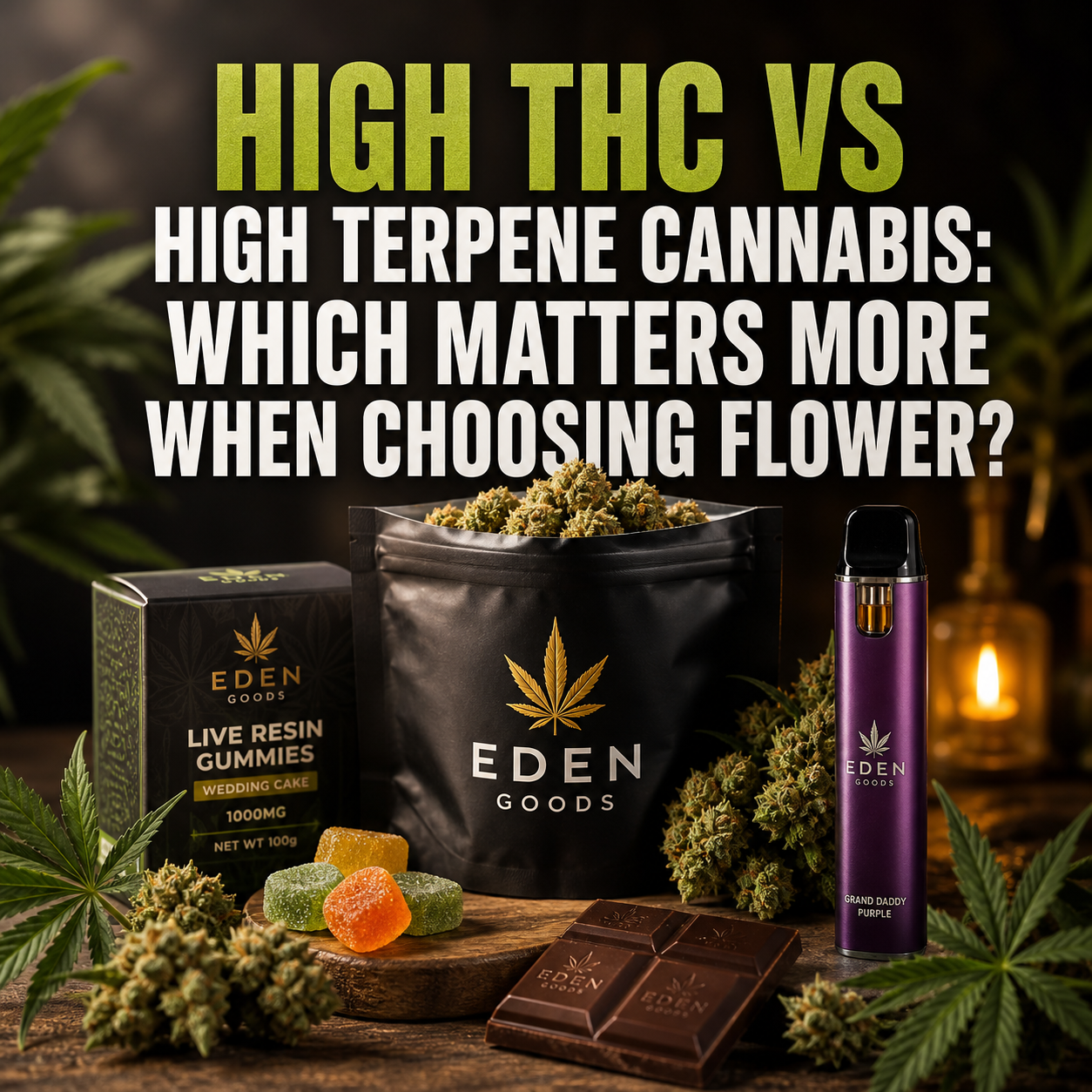
When comparing high THC vs high terpene cannabis, the highest number on the label is not always the best guide. THC strongly influences intoxicating potency. Terpenes shape aroma and flavor and may contribute to how a cultivar feels. Neither tells the whole story on its own.
For most adults, the better flower is the one that matches their tolerance, preferred experience, setting, and consumption habits. A fresh, terpene-rich flower with moderate THC may feel more enjoyable than a dry product with an impressive potency figure. Conversely, an experienced consumer may prefer a stronger cultivar while still paying close attention to its terpene profile.
This guide explains what THC and terpenes can tell you, what they cannot prove, and how to compare cannabis flower without relying on marketing shortcuts.
High THC vs High Terpene Cannabis at a Glance
| Factor | High-THC flower | High-terpene flower |
| Primary characteristic | Greater concentration of potential intoxicating cannabinoids | Greater concentration of aromatic compounds |
| What you may notice | More pronounced intoxication, especially at larger doses | Stronger aroma, clearer flavor, and a more distinctive sensory profile |
| Main limitation | THC percentage does not predict the complete experience | Terpene content does not reliably predict a specific effect |
| Best suited to | Experienced adults who understand their tolerance | Consumers who value flavor, aroma, freshness, and cultivar character |
| Important caution | Higher potency can increase unwanted effects | Terpenes are not a guarantee of therapeutic benefit or safety |
The practical answer is therefore not that THC or terpenes always matter more. THC matters more for estimating intoxicating strength, while terpenes often matter more for aroma, flavor, and overall character. Product quality, cannabinoid balance, freshness, dose, and personal sensitivity remain essential.
What Does High-THC Cannabis Flower Mean?
THC, or delta-9-tetrahydrocannabinol, is the main intoxicating cannabinoid associated with cannabis. Raw flower contains substantial amounts of THCA, the acidic precursor to THC. Heat converts THCA into THC through a process called decarboxylation.
This is why a laboratory report may show THCA, THC, and a calculated total THC value. The number displayed by a retailer or producer may represent total potential THC rather than only the active THC present in unheated flower.
Does a Higher THC Percentage Mean a Stronger Effect?
All else being equal, flower with more THC has the potential to produce stronger intoxication. However, the relationship is not perfectly linear. A flower labeled 30% THC will not necessarily feel twice as strong as one labeled 15%.
The actual experience can vary according to:
- The amount consumed
- Your tolerance and prior cannabis experience
- How deeply and frequently you inhale
- The consumption method and device
- The presence of CBD and minor cannabinoids
- The terpene profile and product freshness
- Your mood, surroundings, sleep, and recent food intake
- Natural variation between buds from the same batch
Laboratory results also have limits. Samples represent a batch rather than every individual bud. Testing methods, moisture levels, storage, and natural plant variation can affect the reported result. THC percentage should be treated as useful information, not an exact forecast.
Possible Drawbacks of Choosing THC Alone
Very potent flower may be appealing to experienced consumers, but more THC can also make careful dosing harder. Excessive intake may cause anxiety, dizziness, impaired coordination, rapid heart rate, confusion, nausea, or an unpleasantly intense experience.
People who are new to cannabis or sensitive to THC should generally avoid using the highest percentage as a purchasing goal. Starting with a small amount and waiting before consuming more can reduce the risk of taking too much. Cannabis laws vary, so products should only be purchased and used where permitted and by adults of legal age.
What Are Terpenes in Cannabis?
Terpenes are aromatic compounds produced by many plants, not only cannabis. They contribute to the scent of citrus peel, pine needles, herbs, flowers, and spices. In cannabis, they help create the recognizable aroma and flavor of each cultivar.
A terpene-rich flower may smell bright, earthy, fruity, floral, peppery, gassy, or woody. The total terpene percentage can indicate aromatic intensity, but the individual terpenes and their proportions provide more useful detail than the total alone.
Common Cannabis Terpenes
| Terpene | Common aroma associations | Also found in |
| Myrcene | Earthy, herbal, musky | Hops, mangoes, thyme |
| Limonene | Citrus, fresh, zesty | Citrus peels |
| Beta-caryophyllene | Peppery, spicy, woody | Black pepper, cloves |
| Pinene | Pine, resinous, fresh | Pine needles, rosemary |
| Linalool | Floral, soft, lavender-like | Lavender and other flowers |
| Terpinolene | Herbal, floral, citrus-like | Nutmeg, apples, tea tree |
These descriptions refer to aroma, not guaranteed effects. Two cultivars dominated by the same terpene may still feel different because their complete chemical profiles, freshness, dose, and cannabinoid levels are not identical.
Do Terpenes Change the Effects of THC?
You may encounter the term entourage effect. It describes the idea that cannabinoids, terpenes, and other cannabis compounds may interact to shape the overall experience. The concept is plausible and remains an active area of research, but many popular claims go beyond what controlled human evidence can currently confirm.
It is reasonable to use terpenes as clues for aroma, flavor, and personal preference. It is not reasonable to assume that one terpene will always cause sleepiness, energy, focus, or relief. Terpene labels should not replace medical advice or be treated as a promise of a therapeutic outcome.
High THC vs High Terpene Cannabis: Which Matters More?
The answer depends on what you want to understand about the flower. THC is usually the more relevant number when your main concern is intoxication. Terpenes deserve greater attention when aroma, taste, cultivar character, and a satisfying sensory experience are priorities.
For a balanced purchase, consider both. A moderate-THC flower with a well-preserved terpene profile can provide a distinctive experience without making potency the only measure of value. A high-THC product may still be excellent, but only if it is fresh, clean, properly stored, and suited to your tolerance.
Choose Based on Your Experience Level
- New or low-tolerance consumers: Look beyond maximum THC. Consider lower-potency flower, balanced THC-to-CBD options, and very small initial amounts.
- Occasional consumers: Prioritize predictable potency, clear laboratory information, freshness, and aromas you already enjoy.
- Experienced consumers: Compare total cannabinoids, dominant terpenes, harvest or packaging information, and batch consistency rather than chasing one number.
- Flavor-focused consumers: Favor recently packaged flower with a clear terpene profile and appropriate storage.
Past experience with a cultivar can help, but names are not standardized. The same strain name from two growers may represent different genetics, growing conditions, curing methods, and chemical profiles. The current batch report is usually more informative than the name alone.
Why Freshness Can Matter More Than a Headline Percentage
Terpenes are volatile. They can evaporate or degrade when flower faces excessive heat, air, light, or poor storage. Old or badly stored cannabis may have a muted scent, harsh flavor, and dry texture even when its original laboratory report looked impressive.
Good flower should not feel powdery or crumble into dust with minimal pressure. It should also not feel wet. Excess moisture can create storage problems, while extreme dryness can reduce aroma and smoking quality.
Before choosing a product, review available information about:
- Harvest and packaging dates
- Batch-specific cannabinoid results
- Total and individual terpene results, when available
- Testing for contaminants as required by local regulations
- Packaging that limits light and air exposure
- Storage guidance from the producer or retailer
A strong aroma can suggest preserved volatile compounds, but smell alone cannot confirm safety, potency, or freedom from contaminants. Reliable regulated testing remains important.
How to Read a Cannabis Certificate of Analysis
A certificate of analysis, often called a COA, is a laboratory report for a specific product batch. Its layout varies, but it may include cannabinoids, terpenes, moisture-related measurements, and contaminant screening.
Check the Product and Batch Details
Confirm that the product name, batch or lot number, and testing date match the flower you are considering. A report from another batch cannot accurately describe the product in front of you.
Review the Cannabinoid Profile
Look for THC, THCA, CBD, CBDA, and other listed cannabinoids. A broader profile gives more context than a single front-label percentage. If total THC is calculated, remember that THCA does not convert to THC at a one-to-one rate by weight.
Read the Terpene Breakdown
When terpene testing is available, compare the leading compounds and their relative proportions. A detailed profile can help you identify aromas you have enjoyed before. It is more useful for this purpose than broad labels such as indica, sativa, or hybrid.
Look for Safety Testing
Depending on the jurisdiction, regulated testing may cover pesticides, microbes, mycotoxins, heavy metals, or foreign material. Requirements differ by location. Buy through legal, reputable channels and review the applicable local standards.
THC, Terpenes, and the Limits of Indica and Sativa Labels
Many shoppers use indica to mean relaxing and sativa to mean uplifting. These labels can be convenient, but they do not reliably describe the complete chemistry or predict how every person will respond.
Modern cannabis cultivars often have complex hybrid ancestry. Growing conditions and phenotype selection can also produce meaningful differences within a named cultivar. For a more informed comparison, examine the batch-specific cannabinoid and terpene profile, then note your own response over time.
A simple personal record can be useful. Write down the product, batch, approximate amount, dominant terpenes, consumption method, setting, and experience. This practical history may become more valuable than generic strain categories.
A Practical Checklist for Choosing Cannabis Flower
- Define your priority. Decide whether you care most about lower intensity, stronger potency, flavor, aroma, or a balanced experience.
- Know your tolerance. Do not assume a high THC percentage represents better quality.
- Review the full profile. Compare THC, CBD, minor cannabinoids, and dominant terpenes when available.
- Verify the batch. Match the COA with the package or product listing.
- Check freshness. Consider packaging date, storage, texture, and aroma.
- Assess overall quality. Look for accurate labeling, responsible packaging, and regulated contaminant testing.
- Start conservatively. Use a small amount, especially with an unfamiliar cultivar or higher-potency batch.
Explore the available [[LIEN_INTERNE: Cannabis Flower]] selection to compare flower by cannabinoid profile, terpene character, and product details rather than THC alone.
Responsible Use and Health Considerations
Inhaled cannabis acts quickly, which can make the intensity easier to notice, but smoking exposes the lungs to combustion products. Vaporizing avoids combustion but is not risk-free. Avoid unregulated devices or products, and do not hold smoke or vapor in the lungs.
Do not drive, cycle in traffic, operate machinery, or perform safety-sensitive tasks while impaired. Keep cannabis locked away from children and pets. Combining cannabis with alcohol or sedating substances can increase impairment.
People who are pregnant or breastfeeding should avoid cannabis. Extra caution is also appropriate for anyone with a history of severe anxiety, psychosis, heart problems, or problematic substance use. Cannabis may interact with medications. If you use cannabis for symptoms or have a health condition, speak with a qualified healthcare professional who understands your medical history.
Frequently Asked Questions
Is high-terpene cannabis stronger than high-THC cannabis?
Not necessarily. THC is the more direct indicator of intoxicating potential. High terpene content usually indicates a stronger aromatic profile, not greater potency.
What is considered a high terpene percentage?
There is no universal threshold. Results vary by cultivar, laboratory, moisture level, and testing method. Compare products within the same regulated market and focus on the individual terpene profile as well as the total.
Does more THC mean better cannabis?
No. Quality also depends on genetics, cultivation, curing, freshness, storage, contaminant testing, and suitability for the consumer. A higher percentage can increase intensity without improving flavor or enjoyment.
Can terpenes predict whether flower will feel relaxing or energizing?
They may provide clues, but they cannot guarantee a specific response. Dose, cannabinoids, tolerance, setting, and individual biology all influence the experience.
Do terpenes get you high?
Terpenes are not considered intoxicating in the same way as THC. They mainly contribute aroma and flavor, although researchers continue to examine how they may interact with other cannabis compounds.
Are strain names reliable when choosing flower?
Not always. The same name may differ across growers and batches. A current COA, packaging date, and detailed chemical profile usually provide better information.
Is terpene-rich flower safer than high-THC flower?
Terpene content alone does not establish safety. Legal sourcing, contaminant testing, responsible dosing, personal health, and the consumption method all matter.
Conclusion: Look Beyond a Single Number
In the debate over high THC vs high terpene cannabis, neither measurement should stand alone. THC offers the clearest indication of potential intoxicating strength. Terpenes describe aroma, flavor, and some of the flower’s distinctive character, but they cannot promise a particular effect.
The most informed choice combines cannabinoid content, terpene profile, freshness, verified testing, personal tolerance, and intended setting. Start conservatively, pay attention to your response, and seek medical guidance if cannabis relates to a health concern or medication.
Discover carefully selected products through Eden Goods and compare the available flower using complete product information. For everyday care and personal support needs, you can also discover the Sphère Santé product selection suited to individual circumstances.