


Blog
Cannabis Gummies vs Chews: Texture, Ingredients and Portioning Compared

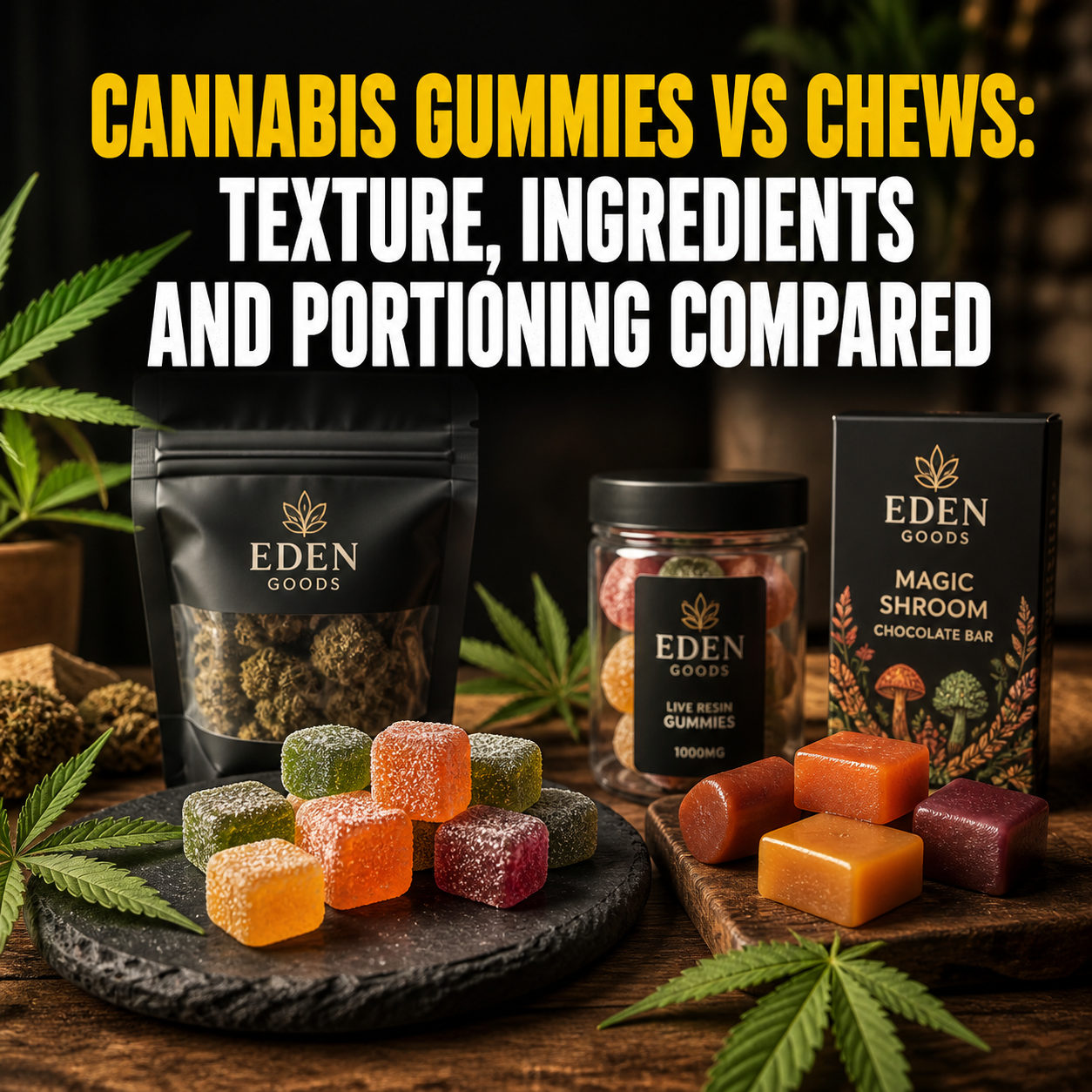
Cannabis Gummies vs Chews: Texture, Ingredients and Portioning Compared
When comparing cannabis gummies vs chews, the biggest differences usually involve texture, formulation, allergens and portioning. Gummies tend to have a springy, gel-like bite. Cannabis chews are a broader category that may include soft, taffy-like or caramel-style products.
The terms are not always used consistently. Some manufacturers describe gummies as chews, while others reserve the word for softer confectionery made with fats, starches or emulsifiers. The front of the package alone may therefore tell you very little. The ingredient list, cannabinoid panel and serving information provide a more reliable comparison.
This guide explains how the two formats differ, what they have in common and how to read their labels. It does not replace advice from a clinician or pharmacist, especially if you take medication, have a health condition, are pregnant or are breastfeeding.
Cannabis Gummies vs Chews at a Glance
| Feature | Cannabis gummies | Cannabis chews |
| Typical texture | Springy, elastic or jelly-like | Soft, dense, creamy, taffy-like or caramel-like |
| Common structure | Gelatin, pectin or another gelling agent | Varies widely; may use starches, fats, syrups or emulsifiers |
| Dietary considerations | May be vegan if made with pectin, but not if made with gelatin | May contain dairy, soy, coconut, nuts or other allergens |
| Portion format | Often sold as individual pieces with a stated amount per piece | May be individually portioned, scored or sold as small wrapped pieces |
| Heat sensitivity | May soften or melt, depending on the gelling system | May become sticky, oily or very soft |
| Effect profile | Primarily determined by cannabinoids, dose and personal factors | Primarily determined by cannabinoids, dose and personal factors |
Neither format is automatically stronger, faster or safer. A soft chew can contain less THC than a gummy, and a gummy can contain more CBD than a chew. The label matters more than the product name.
What Is a Cannabis Gummy?
A cannabis gummy is a gelled edible infused with one or more cannabinoids. Depending on the product and local laws, those cannabinoids may include THC, CBD or a combination of compounds. Flavorings, sweeteners, acids and colors help create the finished confection.
The characteristic texture comes from a gelling agent. Gelatin creates an elastic bite and comes from animal-derived collagen. Pectin comes from plants and often produces a softer or more tender texture. Other stabilizers may also appear in the recipe.
Gummies are popular because manufacturers can form them into uniform pieces. This can make portion information straightforward when the product comes from a regulated, tested source. However, equal-looking pieces are not proof of equal cannabinoid content. Laboratory testing and clear labeling remain important.
Explore related formats in [[LIEN_INTERNE: cannabis edibles]] when comparing available products.
What Is a Cannabis Chew?
A cannabis chew is an edible designed to be chewed before swallowing. That definition is broad. In everyday retail language, it may describe a fruit chew, soft chew, taffy, caramel or another dense confection.
Unlike gummies, chews do not share one standard base. A fruit chew may use glucose syrup and starch. A creamy chew may contain dairy or plant-based fat. A taffy-like product may rely on sugar, oil and emulsifiers to achieve its texture.
This variation makes the ingredient list especially important. Two packages labeled as cannabis chews may have little in common beyond their cannabinoid content and the fact that they are eaten.
Why the terminology can be confusing
There is no universal texture rule that separates every gummy from every chew. A gummy is technically chewy, and some brands use the terms interchangeably for marketing purposes.
Instead of relying on the name, check three details:
- The gelling or structural ingredients, such as gelatin, pectin, starch or fat.
- The stated cannabinoid amount per piece and per package.
- The product description, which may identify a soft, fruit, caramel or taffy-style texture.
Texture and Eating Experience
Texture is often the most noticeable difference in a cannabis gummies vs chews comparison. It can also affect ease of use, particularly for people with dry mouth, dental appliances or difficulty chewing.
Gummy texture
Gelatin gummies often feel elastic and require more chewing. Pectin gummies may have a shorter, softer bite, although recipes differ. Sugar coatings can add a slightly grainy surface, while uncoated gummies may feel smoother or stickier.
A firm gummy may be uncomfortable for someone with sensitive teeth or jaw problems. Cutting it is not always a reliable solution for portioning, and very sticky pieces may be difficult to manage with dentures.
Soft-chew texture
Soft chews tend to compress rather than bounce back. Some dissolve gradually in the mouth, while taffy-style products can be sticky and require prolonged chewing. Caramel-like chews may attach to dental work or become hard in cool conditions.
If chewing or swallowing is difficult, speak with a healthcare professional before using an edible. Texture changes do not remove choking or swallowing risks.
Does chewing longer change the effects?
Ordinary gummies and chews are generally designed to be swallowed and processed through digestion. Chewing for longer does not reliably make a conventional edible act like a product formulated for absorption in the mouth.
Products specifically labeled for buccal or sublingual use may use different technology. Follow the product directions rather than assuming that all chews behave in the same way.
Ingredients: What to Compare
The cannabinoid extract is only one component of an edible. The confectionery base can matter for dietary preferences, digestive comfort and allergy management.
Gelatin and pectin
Gelatin commonly appears in traditional gummies. It is animal-derived, so it may not suit vegetarian, vegan or certain religious dietary requirements. Pectin is plant-derived and is frequently used in vegan gummies.
A pectin label does not guarantee that the entire product is vegan. Glazes, colors, flavor carriers and manufacturing practices may also matter. Look for explicit dietary certification if that distinction is important to you.
Fats and emulsifiers
Some soft chews contain butter, milk, coconut oil or another fat. Emulsifiers such as lecithin may help ingredients remain evenly mixed. Gummies can also contain oils and emulsifiers, so these ingredients are not exclusive to chews.
Fat content alone does not let you predict exactly how strong or fast an edible will feel. Cannabinoid formulation, food intake, metabolism and individual sensitivity can all influence the experience.
Sugars and sweeteners
Both formats may contain sugar, glucose syrup or other caloric sweeteners. Sugar-free versions can include sugar alcohols or high-intensity sweeteners. Some sugar alcohols may cause bloating, gas or loose stools in sensitive people, especially when consumed in larger amounts.
If you monitor carbohydrate intake or live with diabetes, review the nutrition information and consult a qualified healthcare professional when needed. A sugar-free label does not mean that a product is suitable for every person.
Allergens and cross-contact
Soft chews may be more likely to use dairy, soy, coconut or nut-based ingredients, but any edible can contain allergens. Gummies may also be manufactured in facilities that handle common allergens.
Check the complete ingredient and allergen statements every time you buy. Recipes can change. If you have a severe allergy, contact the manufacturer when labeling is incomplete or unclear.
Colors, flavors and acids
Fruit-flavored products often contain citric acid, malic acid or similar ingredients to create tartness. These acids, along with sugar, can contribute to dental concerns. Sticky products can remain on the teeth after eating.
Good oral hygiene may help reduce this issue. People with sensitive teeth, enamel problems or extensive dental work may wish to discuss frequent edible use with a dentist.
Cannabis Gummies vs Chews for Portioning
Portioning deserves more attention than shape or flavor. For THC-containing edibles in particular, taking more before the initial portion has taken effect can lead to an unpleasant and prolonged experience.
Read both numbers on the package
A label may show the cannabinoid content for the entire package and for one serving or piece. These figures are not interchangeable. A multi-piece package can contain several servings even when the container looks small.
Before consuming a product, identify:
- The amount of THC, CBD and other declared cannabinoids per piece.
- The total amount of each cannabinoid in the package.
- The number of pieces included.
- The manufacturer’s defined serving size.
- Any instructions about dividing or consuming the product.
If the figures do not add up or the label is unclear, do not guess. Ask the retailer or manufacturer for clarification.
Can you cut a gummy or chew in half?
Physical division does not always guarantee an exact half-portion. Cannabinoids may not be distributed perfectly throughout an untested or poorly manufactured edible. Even in a well-made product, cutting a small, sticky piece evenly can be difficult.
Scored lines may make division easier, but they do not automatically confirm equal cannabinoid distribution. A lower-strength product with clear per-piece labeling may offer more predictable portioning than repeatedly cutting a stronger item.
Choose tested, clearly labeled products
Purchase cannabis edibles only from lawful sources that follow the rules in your area. Regulated labeling and testing can improve transparency, although no system removes every risk.
Avoid loose, homemade or repackaged edibles when you cannot verify their ingredients and cannabinoid content. Homemade products can be especially difficult to portion consistently.
Do Gummies and Chews Feel Different?
They can, but texture alone is not a dependable explanation. Both are swallowed edibles, so their effects may take longer to appear than inhaled cannabis and can last longer than expected. The timing and intensity vary substantially from one person to another.
Important variables include:
- The type and amount of cannabinoids.
- Previous cannabis exposure and individual sensitivity.
- Whether the edible is consumed with food.
- Digestive and metabolic differences.
- Other medicines, alcohol or substances.
- The product’s specific formulation.
Do not take another portion simply because effects are not immediate. Follow the label and allow adequate time. If you are new to cannabis or unusually sensitive to it, seek guidance from a knowledgeable healthcare professional.
THC and CBD are not interchangeable
THC can cause intoxication and impair judgment, coordination and reaction time. CBD is generally not intoxicating in the same way, but it can still cause side effects and interact with medicines. Products containing both can feel different from THC-only or CBD-dominant options.
Do not drive, cycle in traffic or operate machinery after taking an intoxicating edible. Avoid combining cannabis with alcohol or sedating substances. If you take prescription or over-the-counter medication, ask a doctor or pharmacist about possible interactions.
Storage, Freshness and Household Safety
Gummies and chews can look like ordinary sweets. This makes secure storage essential, particularly in homes with children, teenagers, visitors or pets.
Keep edibles in their original child-resistant packaging when provided. Store them locked away, out of sight and separate from regular food. Do not place them in an unmarked jar, lunchbox or everyday candy container.
How texture changes during storage
Heat can make gummies soften and stick together. Soft chews may melt, leak oil or fuse into one mass. Cold conditions can make some products firm or brittle. Moisture can affect both texture and shelf life.
Follow the package directions for temperature, light and humidity. Check the stated best-before or expiration information. Discard products that show mold, unusual odor, damaged packaging or major unexpected changes.
If several pieces melt together, do not estimate a serving by tearing off an approximate amount. The result may be difficult to portion. Contact the manufacturer for guidance or dispose of the product safely according to local recommendations.
How to Choose Between Cannabis Gummies and Chews
The better format depends on your priorities. Start with the cannabinoid profile and serving information, then consider texture, ingredients and storage.
- Define the purpose. Decide whether you are comparing THC, CBD or a balanced product. Do not use cannabis to self-treat a new or unexplained symptom without medical advice.
- Check the amount per piece. Favor labels that clearly separate per-piece content from package totals.
- Review dietary needs. Look for gelatin, dairy, soy, nuts, coconut, sweeteners and cross-contact warnings.
- Consider chewing comfort. A firm gummy and a sticky taffy can create different challenges for teeth, dentures and swallowing.
- Assess storage needs. Consider climate, travel and whether secure locked storage is available.
- Verify legality and testing. Cannabis rules differ by location. Buy only products that comply with applicable laws.
Flavor should come after these practical checks. An appealing taste can make an edible easier to consume, but it can also encourage casual re-dosing. Treat every cannabis edible as a measured product, not ordinary candy.
Important Safety Considerations
Cannabis is not appropriate for everyone. Extra caution is recommended for older adults, people with heart, liver, kidney or mental health conditions, and anyone taking medicines that cause drowsiness or affect cannabinoid metabolism.
Pregnant or breastfeeding people should seek medical guidance and generally avoid cannabis unless specifically advised otherwise by an appropriate clinician. Keep all cannabis products away from children and pets.
Seek urgent help if someone develops severe confusion, chest pain, trouble breathing, a seizure, loss of consciousness or another alarming symptom. Contact local poison control or emergency services if a child or pet consumes a cannabis edible, even if symptoms have not yet appeared.
Frequently Asked Questions
Are cannabis chews the same as gummies?
Not always. Gummies are a type of chewy edible made with a gelling agent. The term chew can also cover taffy, caramel and other soft confections.
Are chews stronger than gummies?
No format is inherently stronger. Compare the labeled cannabinoid amount per piece and per package rather than relying on texture or product type.
Do cannabis gummies work faster than soft chews?
Not reliably. Both are usually swallowed edibles. Formulation, food intake, metabolism and cannabinoid content can influence timing more than the name.
Are cannabis gummies vegan?
Some are. Pectin gummies may be vegan, while gelatin gummies are not. Check all ingredients and any dietary certification.
Can I divide an edible into smaller portions?
You can physically divide many products, but equal size does not guarantee equal cannabinoid content. Choose clearly labeled, tested products designed for practical portioning.
Which format is better for people with dentures?
Neither is universally better. Firm gummies and sticky chews can both cause difficulty. Consider texture carefully and ask a dentist or healthcare professional if chewing is a concern.
How should cannabis edibles be stored?
Keep them in original packaging, locked away from children and pets, and protected from heat, moisture and light according to the label.
Conclusion
In the cannabis gummies vs chews comparison, texture and ingredients create the clearest differences. Gummies typically use gelatin or pectin for a gel-like bite. Chews can range from fruit-based pieces to creamy, taffy-style confections with more varied ingredient lists.
For a confident choice, focus on verified cannabinoid content, portion information, allergens and lawful sourcing. Do not assume that one format acts faster or feels stronger. Personal response and formulation matter far more than the product name.
If cannabis could interact with your health condition or medication, speak with a doctor or pharmacist before use. For additional products selected around comfort and everyday care, discover the Sphère Santé product range.