


Blog
How to Preserve Cannabis Terpenes: Handling, Packaging and Storage Principles

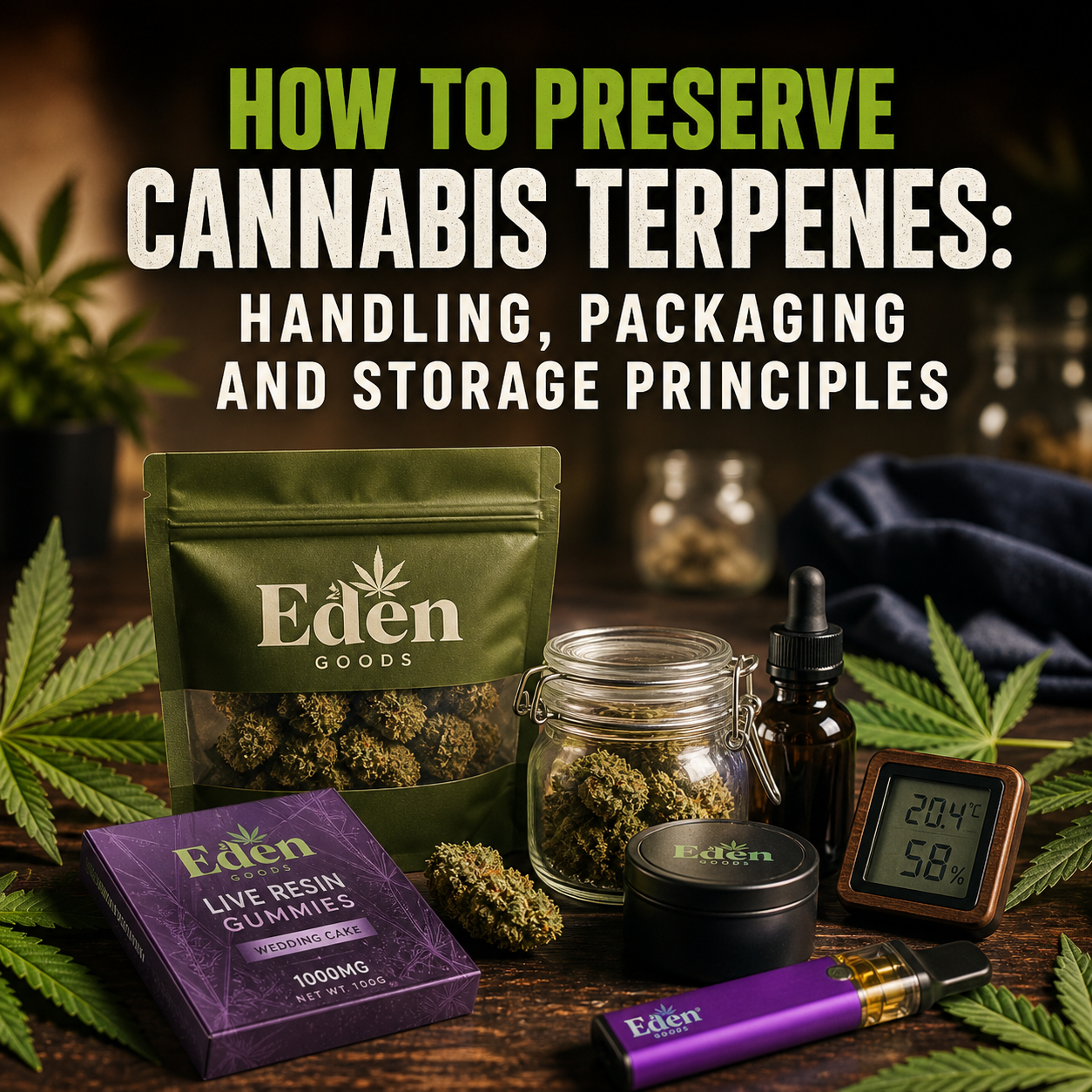
Terpenes give cannabis flower much of its distinctive aroma and sensory character. These delicate compounds can gradually evaporate or degrade when exposed to heat, light, oxygen, unsuitable humidity or rough handling. Effective cannabis flower terpene preservation therefore starts long before a container reaches the back of a cupboard.
The essential principles are simple: limit unnecessary exposure, use an appropriate container, maintain stable conditions and handle the flower gently. Proper storage cannot restore terpenes that have already been lost. It can, however, help slow further deterioration while protecting the flower from excessive dryness, moisture and contamination.
This guide explains how to preserve cannabis terpenes at home without relying on complicated equipment. It applies to legally obtained, properly dried and cured cannabis flower. Always follow the cannabis laws that apply where you live, and keep all products away from children, pets and anyone who could consume them accidentally.
Why Cannabis Flower Terpene Preservation Matters
Terpenes are aromatic compounds found in many plants. Limonene occurs in citrus peel, pinene contributes to the scent of pine, and linalool appears in lavender. Cannabis can contain a complex mixture of these and many other compounds. The exact profile depends on genetics, cultivation, harvest timing, drying, curing and subsequent storage.
Many terpenes are volatile. This means they can enter the air, particularly when flower becomes warm or remains exposed. Some are also sensitive to oxidation and light. Once they have evaporated or changed chemically, putting the flower into a better jar will not reverse the process.
Preserving terpenes supports more than aroma. Good storage also helps maintain the flower’s texture and overall condition. It reduces avoidable exposure to environmental factors that can affect cannabinoids, color and freshness. It does not make old or contaminated cannabis safe, and it cannot correct poor drying or curing.
The Main Causes of Terpene Loss
Several factors often act together. A clear understanding of them makes it easier to choose effective storage practices.
| Factor | Potential effect | Practical response |
|---|---|---|
| Heat | Encourages volatile compounds to evaporate and may accelerate degradation | Choose a cool location with a stable temperature |
| Light | Can contribute to chemical deterioration, especially with prolonged exposure | Use opaque or UV-resistant packaging, or store the container in darkness |
| Oxygen | Promotes oxidation during repeated or prolonged exposure | Use a well-sealed container with limited empty space |
| Low humidity | Dries flower, makes trichomes brittle and diminishes sensory quality | Maintain a moderate, controlled relative humidity |
| High humidity | Raises the risk of mold and microbial growth | Avoid damp storage and inspect flower if conditions become too humid |
| Rough handling | Breaks off trichomes that contain aromatic compounds and cannabinoids | Handle flower minimally and avoid crushing it before use |
Heat and temperature fluctuations
A consistently cool room is generally better than a location that alternates between hot and cold. Cars, windowsills, kitchen cabinets near an oven and spaces beside heating equipment are poor choices. Even when average room temperature seems acceptable, repeated heat spikes can accelerate aroma loss.
For routine household storage, a stable environment of roughly 15–21°C is a practical target. Exact conditions will vary with the home and packaging. Stability matters more than pursuing a perfect number through frequent movement or refrigeration.
Light exposure
Direct sunlight combines light and heat, making it particularly unsuitable. Clear glass offers visibility but does not provide full protection from light. If you use a clear jar, place it inside a closed cupboard or another dark location. An opaque container can offer additional convenience, provided its material is suitable for storing cannabis.
Oxygen and repeated opening
Flower needs protection from constant air exchange after it has been properly dried and cured. Every opening replaces some of the air inside the package and allows aromatic compounds to escape. This does not mean the container must never be opened. It means opening it briefly and only when necessary.
A very large container holding a small amount of flower leaves excessive headspace. A suitably sized container reduces the volume of air without compressing the buds.
Humidity outside the safe range
Overly dry flower can become harsh, crumbly and less aromatic. Excess moisture presents a more serious problem because it may support mold. For finished flower, many storage systems aim for approximately 58–62% relative humidity inside the container. This is a practical range rather than a guarantee of product safety.
Flower that was packaged too wet should not simply be sealed with a humidity pack. Moisture-control products are designed to help maintain conditions, not rescue improperly dried flower or eliminate contamination.
Best Packaging for Preserving Cannabis Terpenes
Packaging should limit air exchange, block or reduce light, avoid adding odors and protect the flower from physical damage. No package stops aging indefinitely, but the right choice can slow it considerably.
Glass jars
A clean glass jar with a well-fitting lid remains a practical option for home storage. Glass is nonporous, easy to inspect and unlikely to transfer unwanted aromas. Choose a jar that leaves some room around the buds without creating a large volume of empty space.
Glass alone does not block light. Amber or opaque glass provides more protection, while clear jars must remain in a dark place. Check the lid and seal for damage, retained food odors or residue before use.
Purpose-made barrier pouches
High-quality barrier pouches can protect flower from light, oxygen and moisture exchange. Performance depends on the materials, seal quality and whether the pouch closes correctly after opening. Avoid squeezing the pouch or stacking heavy objects on it, as compression can damage trichomes and bud structure.
Plastic bags and basic containers
Thin household plastic bags provide limited protection. They can allow odor and moisture exchange, build static and crush flower during handling. They may be adequate for brief transport where legal, but they are not ideal for preserving terpenes over an extended period.
Food containers can also retain odors or fail to seal effectively. If a container smells of detergent, spices or previous contents, do not use it for cannabis flower.
| Packaging option | Main advantage | Main limitation |
|---|---|---|
| Sealed glass jar | Low odor transfer and good physical protection | Clear glass needs separate light protection |
| Opaque glass jar | Combines a rigid structure with better light protection | Can break and may cost more |
| Quality barrier pouch | Lightweight and effective when properly sealed | May allow compression during handling |
| Thin plastic bag | Convenient for short-term transport | Poor long-term protection and limited structural support |
| Vacuum packaging | Reduces oxygen exposure | May crush buds and is unnecessary for everyday access |
Humidity Control Without Damaging the Flower
Two-way humidity-control packs can help stabilize the environment inside a sealed container. Select a product designed for botanical storage and an appropriate container volume. These packs can release or absorb moisture within their intended range.
They do not replace proper drying, curing or inspection. They also cannot return evaporated terpenes to the flower. Adding orange peel, bread, lettuce or other food is not recommended. These improvised methods introduce uncontrolled moisture, microorganisms and foreign aromas.
A small digital hygrometer may help monitor the container, but consumer devices vary in accuracy. Treat the reading as a guide rather than absolute proof of safety. If the flower feels damp, develops an unusual musty smell or shows suspicious growth, do not rely on a favorable display reading.
Handling Principles for Cannabis Flower Terpene Preservation
Trichomes are the resinous structures visible on the flower’s surface. They contain cannabinoids and aromatic compounds. They can break away through friction, impact and repeated handling, especially when the flower is very dry or cold.
- Handle buds only when needed.
- Use clean, dry hands or clean tools.
- Avoid shaking the storage container.
- Do not grind flower until shortly before intended legal use.
- Keep large quantities separate from the container opened every day.
- Do not compress buds to fit more into a small package.
- Close the container promptly after removing what you need.
Dividing flower into smaller portions can reduce repeated exposure. Keep the main supply sealed and use a separate, smaller container for regular access. This approach is particularly useful when storing more flower than will be used in a short period.
A Step-by-Step Storage Method
- Inspect the flower. Confirm that it appears properly dried and cured. Do not store visibly damp, musty or suspicious flower with the rest of the supply.
- Select a suitable container. Use clean, odor-free glass or purpose-made barrier packaging with a reliable closure.
- Match the container to the quantity. Limit excessive headspace while avoiding compression.
- Add humidity control if appropriate. Use a product made for botanical storage and follow its sizing instructions.
- Protect the container from light. Choose opaque packaging or place it in a dark cupboard.
- Choose a stable location. Keep it cool and away from heaters, appliances, windows and damp rooms.
- Label the package. Record the product name and storage date where permitted. Clear labels reduce unnecessary opening.
- Review it periodically. Check for seal failure, excessive dryness, condensation, unusual odor or visible contamination.
Do not open finished flower each day solely to let it breathe. This practice, often called burping, belongs to the controlled curing of recently dried cannabis. Repeatedly opening properly cured flower during storage increases air exchange and terpene loss.
Should Cannabis Flower Be Refrigerated or Frozen?
Refrigeration
A household refrigerator is usually not ideal for everyday cannabis flower storage. Temperatures and humidity fluctuate whenever the door opens. Food odors may enter poorly sealed packaging, while condensation can develop if cold flower meets warmer, humid air.
For most home users, a cool, dark cupboard provides more stable and convenient conditions. Refrigeration may be used in specialized, controlled systems, but it requires suitable packaging and careful management.
Freezing
Freezing makes trichomes brittle and easier to detach. Repeated freezing and thawing also increase the risk of condensation. Commercial processors may freeze material for specific extraction workflows, but that is different from storing finished flower for routine use.
If flower has already been frozen, allow the sealed package to return fully to room temperature before opening it. This can reduce condensation forming directly on the cold material. Avoid repeated freeze-thaw cycles.
How Long Can Terpenes Be Preserved?
There is no universal expiration date for aroma. The rate of change depends on the flower’s original quality, terpene profile, drying and curing, package integrity, temperature, humidity and handling. Even under favorable conditions, cannabis continues to age.
Use sensory changes as quality indicators, not as the only safety test. A weaker aroma may suggest terpene loss, but a strong smell does not prove freshness or freedom from contamination. Similarly, dry flower is not automatically unsafe, yet adding uncontrolled moisture can create new risks.
Buying quantities that can be used within a reasonable period often protects quality better than attempting very long storage. Follow any date, packaging and storage information supplied by the licensed producer or retailer.
Signs of Poor Storage or Possible Contamination
Examine flower in good light before use. Mold can appear as fuzzy, web-like or powdery growth and may be white, gray or other colors. A musty, damp-basement or ammonia-like odor can also indicate a problem. Natural trichomes usually look crystalline rather than fluffy, although visual distinction is not always easy.
Do not consume flower that appears moldy or contaminated. Do not try to save it by removing one affected section, heating it or drying it again. People with respiratory conditions, weakened immune systems or other health concerns should seek advice from a qualified healthcare professional about cannabis-related risks. Storage guidance does not replace medical advice.
Common Terpene Preservation Mistakes
- Leaving flower in direct sunlight: a windowsill exposes it to both light and temperature changes.
- Using oversized jars: excess headspace increases the amount of air around a small quantity.
- Opening containers repeatedly: frequent access releases aroma and introduces fresh air.
- Storing flower in a hot vehicle: car interiors can heat rapidly, even during mild weather.
- Adding fruit peel: this creates uncontrolled humidity and contamination risks.
- Assuming humidity packs restore freshness: they manage moisture but cannot replace lost terpenes.
- Grinding in advance: increased surface area speeds exposure to oxygen and aroma loss.
- Ignoring child-resistant storage: quality preservation never replaces safe, secure storage.
Frequently Asked Questions
What humidity is best for preserving cannabis terpenes?
A container relative humidity of about 58–62% is commonly used for finished cannabis flower. Avoid excessive moisture, and remember that a humidity reading cannot confirm that flower is free from mold.
Are glass jars good for cannabis flower?
Yes. Clean, well-sealed glass jars offer good protection from air exchange, odors and physical damage. Use opaque glass or keep clear jars in complete darkness.
Can dry cannabis terpenes be restored?
No storage method can replace terpenes that have evaporated or degraded. Controlled humidity may improve texture, but it does not restore the flower’s original aromatic profile.
Should cannabis flower be stored in the refrigerator?
Usually not. Household refrigerators create temperature and humidity fluctuations, odor exposure and condensation risks. A cool, dark and stable cupboard is generally more practical.
Does vacuum sealing preserve terpenes?
Vacuum sealing can reduce oxygen exposure, but strong compression may damage buds and trichomes. It is better suited to carefully managed long-term storage than frequent access.
How often should a cannabis storage jar be opened?
Open it only when necessary and close it promptly. Properly cured flower does not need routine burping during storage.
Can cannabis be stored with orange peel to add moisture?
No. Fruit peel introduces uncontrolled moisture, microorganisms and foreign aromas. Use a purpose-made two-way humidity-control product instead.
Conclusion
Successful cannabis flower terpene preservation depends on controlling a few basic factors. Keep properly cured flower cool, dark and protected from unnecessary oxygen. Use clean packaging with a reliable seal, maintain moderate humidity and minimize rough handling.
No container can stop natural aging or recover an aroma that has already disappeared. Thoughtful storage can still slow quality loss and reduce avoidable risks. Inspect flower regularly, discard anything that appears contaminated and store every cannabis product securely, in accordance with local law.
