


Blog
Cannabis Flower Smell: How Aroma Can Reveal Freshness and Storage Quality

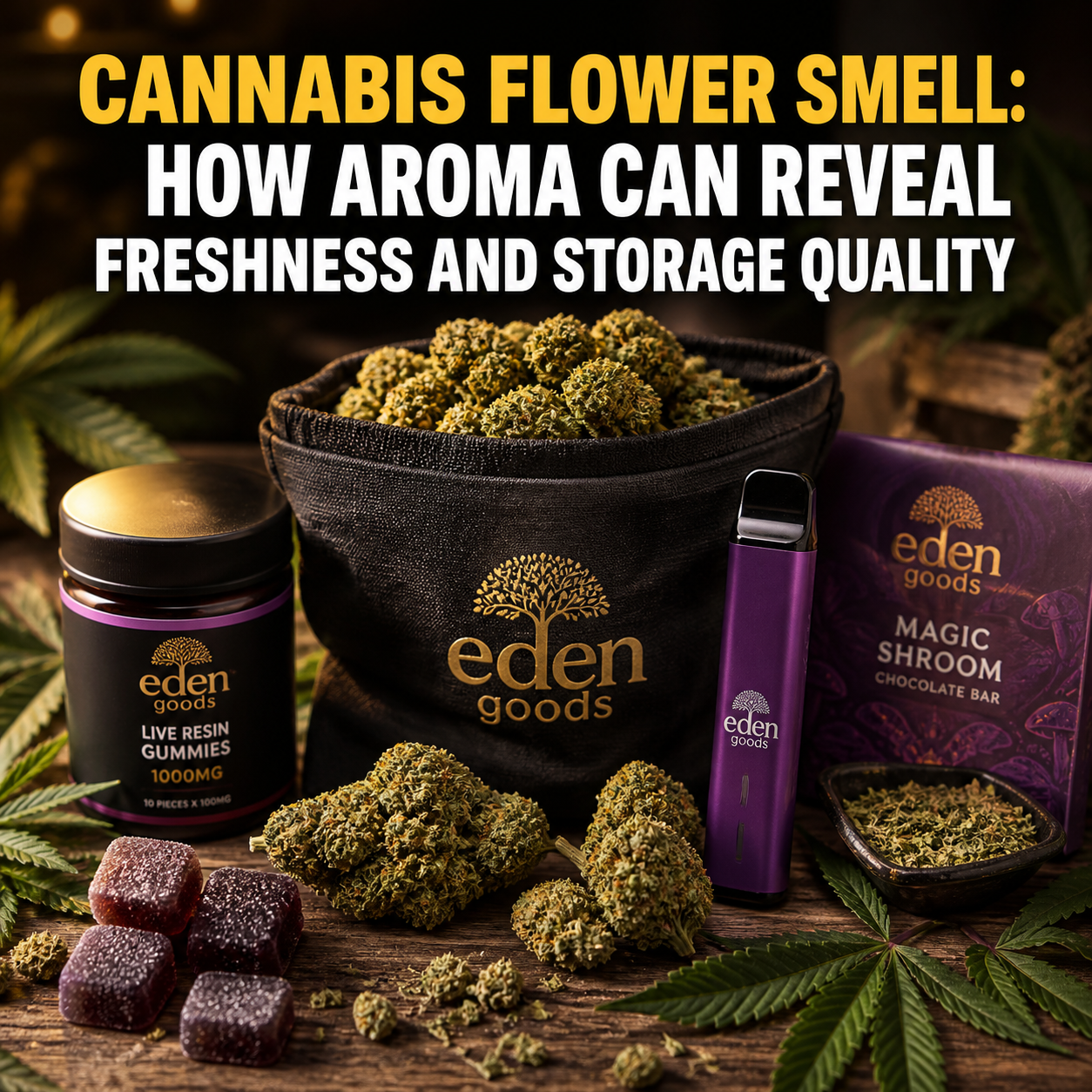
Cannabis Flower Smell: How Aroma Can Reveal Freshness and Storage Quality
A cannabis flower smell can offer useful clues about freshness, curing, moisture, and storage conditions. A vivid aroma often suggests that the flower has retained its volatile aromatic compounds. A flat, musty, or ammonia-like odor may point to age, excess moisture, or improper storage.
Smell is not a complete quality test, however. Aroma cannot confirm potency, purity, or safety. Some cultivars naturally smell subtle, while contaminated flower may not always have an obvious warning odor. The best assessment combines scent with appearance, texture, packaging information, and responsible sourcing.
This guide explains what common aromas may mean, which warning signs deserve attention, and how to preserve flower without creating excess moisture or encouraging mold.
Why Cannabis Flower Smell Matters
Cannabis produces a complex mixture of aromatic compounds. Terpenes form an important part of that profile, alongside other volatile substances. These compounds can create citrus, pine, floral, earthy, peppery, sweet, fuel-like, or skunky notes.
Because many aromatic compounds evaporate or degrade over time, smell can provide an immediate clue about how flower was dried, cured, packaged, and stored. Fresh, properly stored flower often has a recognizable and layered aroma. Old or poorly protected material may smell weak, dusty, or dominated by dry plant matter.
Still, stronger does not automatically mean better. Natural aroma varies considerably between cultivars and individual batches. Personal sensitivity, recent exposure to strong scents, packaging, and room temperature can also affect what you notice.
What Creates the Aroma of Cannabis Flower?
Terpenes and other volatile compounds
Terpenes are aromatic molecules found in many plants. They contribute to the scent of citrus peel, pine needles, herbs, flowers, and cannabis. Common cannabis terpenes include myrcene, limonene, pinene, linalool, and caryophyllene, although a flower’s complete aroma comes from a broader chemical mixture.
Terpene names should not be treated as reliable predictions of effects. A citrus smell does not prove that a product will feel energizing, just as a floral aroma does not guarantee relaxation. Individual response depends on many factors, including composition, amount used, tolerance, method of use, and personal health.
Cultivar, cultivation, and harvest timing
Genetics strongly influence aroma, but growing conditions and harvest decisions also matter. Light, temperature, plant health, nutrition, and maturity can all shape the final scent. Two batches sold under the same cultivar name may therefore smell different.
This variation is not automatically a sign of poor quality. Batch information and a trustworthy, compliant source are more useful than expecting every product with the same name to smell identical.
Drying and curing
After harvest, cannabis flower needs controlled drying and curing. These stages reduce moisture and allow the aroma to become more balanced. Flower dried too quickly may lose aromatic intensity and develop a harsh, plant-like character. Flower packaged with too much internal moisture may develop sour, ammonia-like, or musty odors.
A grassy or hay-like scent can occur when chlorophyll-rich plant aromas remain prominent or when delicate volatiles have faded. It may indicate rushed processing or age, but smell alone cannot identify the exact cause.
Cannabis Flower Smell and Quality: Common Aroma Clues
| Aroma | What it may indicate | Recommended response |
| Citrus, pine, floral, herbal, or spicy | A cultivar’s natural aromatic profile and retained volatile compounds | Compare it with the product description and inspect the flower |
| Skunky, earthy, or fuel-like | A normal profile for some cultivars | Do not assume contamination based on intensity alone |
| Faint or nearly odorless | Age, volatile loss, loose packaging, or a naturally mild batch | Check packaging date, texture, and storage history |
| Hay, straw, or dry grass | Possible rapid drying, incomplete curing, or aging | Assess dryness and overall condition before use |
| Musty, damp basement, or mildew-like | Possible moisture damage or fungal growth | Do not use the flower; isolate it and contact the seller |
| Sharp ammonia-like odor | Possible excess moisture and microbial activity | Avoid use and seek guidance from the retailer |
| Chemical or solvent-like odor | Could be natural fuel-like terpenes, contamination, or packaging exposure | If unexpected or irritating, do not use it |
This table offers practical clues, not laboratory conclusions. Natural fuel, cheese, musk, and skunk notes can seem unusual to an inexperienced consumer. Context matters. Compare the smell with the labeled profile, batch history, and visible condition.
What Fresh Cannabis Flower Should Smell Like
Fresh flower usually has a distinct aroma that becomes more noticeable when the container opens or the flower is gently handled. The scent may have several layers rather than one flat note. It should generally resemble the expected profile for the cultivar or product description.
Freshness does not require an overpowering smell. A sealed container may hold concentrated aromatic compounds, making the first opening especially intense. Conversely, dense flower may release more scent only after it is gently broken apart.
Useful signs of well-preserved flower include:
- A clear aroma without damp, sour, or ammonia-like notes
- Flower that feels slightly resilient rather than wet or powder-dry
- Trichomes that remain visible instead of being heavily rubbed away
- Packaging that is intact, clean, and suitable for the product
- Batch and date information from a lawful, accountable source
None of these signs can guarantee that a product is free from pesticides, microbes, or other contaminants. Testing and regulated supply controls are more reliable than sensory inspection.
Warning Smells That Should Not Be Ignored
Musty or mildew-like odors
A musty smell may resemble a damp room, wet cardboard, old towels, or mildew. This is different from a clean earthy aroma. If the flower smells damp or moldy, do not consume it.
Mold can sometimes appear as fuzzy white, gray, or dark growth, but visual checks are imperfect. Trichomes naturally look crystalline and should not automatically be confused with mold. Under magnification, trichomes tend to appear structured and gland-like, while fungal growth may look webbed, fuzzy, or irregular. When uncertain, avoid use rather than trying to remove an affected area.
Ammonia or sour fermentation
A strong ammonia-like smell can develop when flower retains too much moisture and undergoes unwanted microbial activity. Sour or fermented odors may raise similar concerns, particularly when they differ from the product’s expected profile.
Do not attempt to fix questionable flower by leaving it open, heating it, or mixing it with dry material. Drying may reduce odor, but it does not establish safety or remove substances that contamination may have produced.
Unexpected chemical smells
Some cultivars naturally produce fuel, rubber, or solvent-like notes. That makes this category difficult to judge by smell alone. An odor deserves caution when it is unexpected, causes immediate irritation, resembles cleaning products, or seems to come from damaged packaging.
Keep the product and its label separate from other flower. Contact the seller or producer with the batch details. Do not taste or burn suspicious material as a test.
How Storage Changes Cannabis Flower Smell
Air, light, heat, moisture, and repeated handling can all alter cannabis flower smell and quality. Aromatic compounds are volatile. They can escape each time a container remains open, while oxygen and light can gradually change the product’s chemical profile.
Air exposure
Leaving flower in an open bag or frequently opening a large container allows aroma to dissipate. Excessive air exposure can also dry the material. Use a well-sealed container and open it only as needed.
Light and heat
Direct sunlight and high temperatures can accelerate degradation and terpene loss. Store flower in a cool, dark, stable location. Avoid windowsills, vehicles, radiators, ovens, and appliances that produce heat.
Too much or too little moisture
Very dry flower may crumble easily and smell muted. Excessively moist flower may feel spongy, burn poorly, or develop undesirable odors. Both extremes can affect the experience, but excess moisture creates the more serious concern because it can support microbial growth.
Humidity-control products designed for cannabis may help maintain a stable storage environment. They should not be used to rescue wet, moldy, or suspicious flower. Avoid improvised methods involving fruit peel, bread, or damp paper, which can introduce moisture unevenly and increase contamination risk.
Unsuitable containers
A clean, airtight glass container can limit air exchange and protect aroma. The container should be appropriately sized, with enough room to avoid crushing the flower but not so much empty space that unnecessary air is trapped inside.
Plastic bags provide limited physical protection and may not preserve aroma well during long storage. Whatever container you choose, keep it clean, dry, clearly labeled, and secured from children and pets.
How to Assess Cannabis Flower Safely
A structured check helps reduce guesswork. Do not deeply inhale flower that already appears moldy or releases an obviously musty odor. People with asthma, allergies, weakened immunity, or other respiratory concerns should be especially cautious and may wish to avoid handling questionable material.
- Read the label. Check the product name, batch details, packaging date, source, and storage instructions.
- Inspect the container. Look for broken seals, moisture, residue, damage, or an unusual odor on the packaging itself.
- Look at the flower. Check for fuzzy growth, unusual discoloration, insects, webbing, or visible foreign material.
- Assess the aroma gently. Notice whether it smells fresh and characteristic or damp, sour, ammonia-like, or unexpectedly chemical.
- Check the texture. Flower should not feel wet. Extreme brittleness may suggest age or poor moisture control.
- Stop if uncertain. Keep the product isolated and contact the retailer or producer with its batch information.
Never rely on smoking or vaporizing as a safety test. Heating suspicious material can expose the lungs to irritants and does not provide a dependable answer about contamination.
Can Smell Reveal Potency or Effects?
No. Aroma cannot accurately determine THC or CBD content. A powerful cannabis flower smell may reflect a concentrated aromatic profile, but it does not prove high cannabinoid potency. Likewise, subtle-smelling flower is not necessarily weak.
Only reliable product information and appropriate laboratory testing can provide meaningful composition data. Even then, a label cannot predict exactly how an individual will respond. Start cautiously where adult cannabis use is legal, follow local rules and product directions, and avoid driving or operating machinery while impaired.
If you use cannabis for symptoms or alongside prescription medicines, speak with a qualified healthcare professional. Cannabis can cause side effects and may interact with medications. Aroma should never guide a medical decision.
Does a Weak Cannabis Flower Smell Mean It Is Old?
A weak scent may suggest age or poor storage, but it is not definitive. Some flower has a naturally restrained aroma. Cold flower may also release less scent until it reaches a moderate room temperature inside its closed container.
Other possible reasons include repeated opening, loose packaging, excessive dryness, heat exposure, and trichome loss from rough handling. Check the date and texture, then compare the product with previous batches only if they came from a consistent source.
Old flower is not automatically moldy. However, its aroma, flavor, texture, and chemical profile can change. Discard it if you notice moisture damage, mold, pests, or suspicious odors.
Preserving Aroma and Storage Quality
- Keep flower in a clean, tightly sealed container.
- Choose a cool, dark place with a stable temperature.
- Avoid bathrooms, kitchens, vehicles, and other humid or hot areas.
- Use clean, dry hands or utensils when handling the product.
- Store different products separately to preserve their individual aromas.
- Label containers with product and date information.
- Keep cannabis locked away from children, teenagers, pets, and vulnerable adults.
- Follow local laws and any storage directions supplied by the producer.
Buying an amount that can be used within a reasonable period may also reduce long-term quality loss. Do not combine new flower with an older batch. Mixing products can transfer odors, moisture, or contamination and makes traceability more difficult.
Frequently Asked Questions About Cannabis Flower Smell
What does good cannabis flower smell like?
Good flower usually smells distinct and characteristic of its cultivar, with possible citrus, pine, floral, earthy, spicy, sweet, skunky, or fuel-like notes. It should not smell damp, moldy, or like ammonia.
Why does my cannabis smell like hay?
A hay-like smell may result from rapid drying, incomplete curing, aging, or loss of volatile compounds. It does not prove contamination, so check the texture, appearance, packaging, and storage history.
Can cannabis smell strong and still be moldy?
Yes. A strong natural aroma does not rule out contamination. Inspect the flower and avoid it if you detect mustiness, visible fuzzy growth, excess moisture, or an abnormal sour odor.
Is ammonia smell in cannabis normal?
No. A pronounced ammonia-like odor can indicate excess moisture and unwanted microbial activity. Do not consume the product. Isolate it and contact the retailer or producer.
Does stronger-smelling cannabis contain more THC?
Not necessarily. Aroma intensity mainly reflects volatile compounds and storage conditions. It cannot reliably reveal THC concentration, which requires trustworthy labeling and laboratory analysis.
Can old cannabis lose its smell?
Yes. Air, heat, light, and time can reduce aromatic intensity. A faded smell may indicate age or poor storage, although some products naturally have a mild profile.
Should cannabis be stored in the refrigerator?
Routine refrigeration can create temperature changes and condensation when containers are opened. A cool, dark, stable cupboard is generally more practical unless the producer provides different instructions.
Conclusion
Cannabis flower smell is a useful first clue about freshness and storage quality. Clear, cultivar-appropriate aromas often suggest that volatile compounds have been preserved. Hay-like or faint scents may point to age or processing issues, while musty, sour, or ammonia-like odors require caution.
Smell cannot prove potency, purity, or safety. Combine aroma with a visual inspection, texture check, package details, and responsible sourcing. Store flower sealed, cool, dark, dry, and securely out of reach. If anything seems contaminated or unusually irritating, do not use it. Contact the seller, and seek medical advice if exposure causes symptoms or if cannabis use raises concerns about your health or medication.