


Blog
Cannabis Concentrate Tools Guide: Dab Tools, Caps, Mats and Storage Accessories

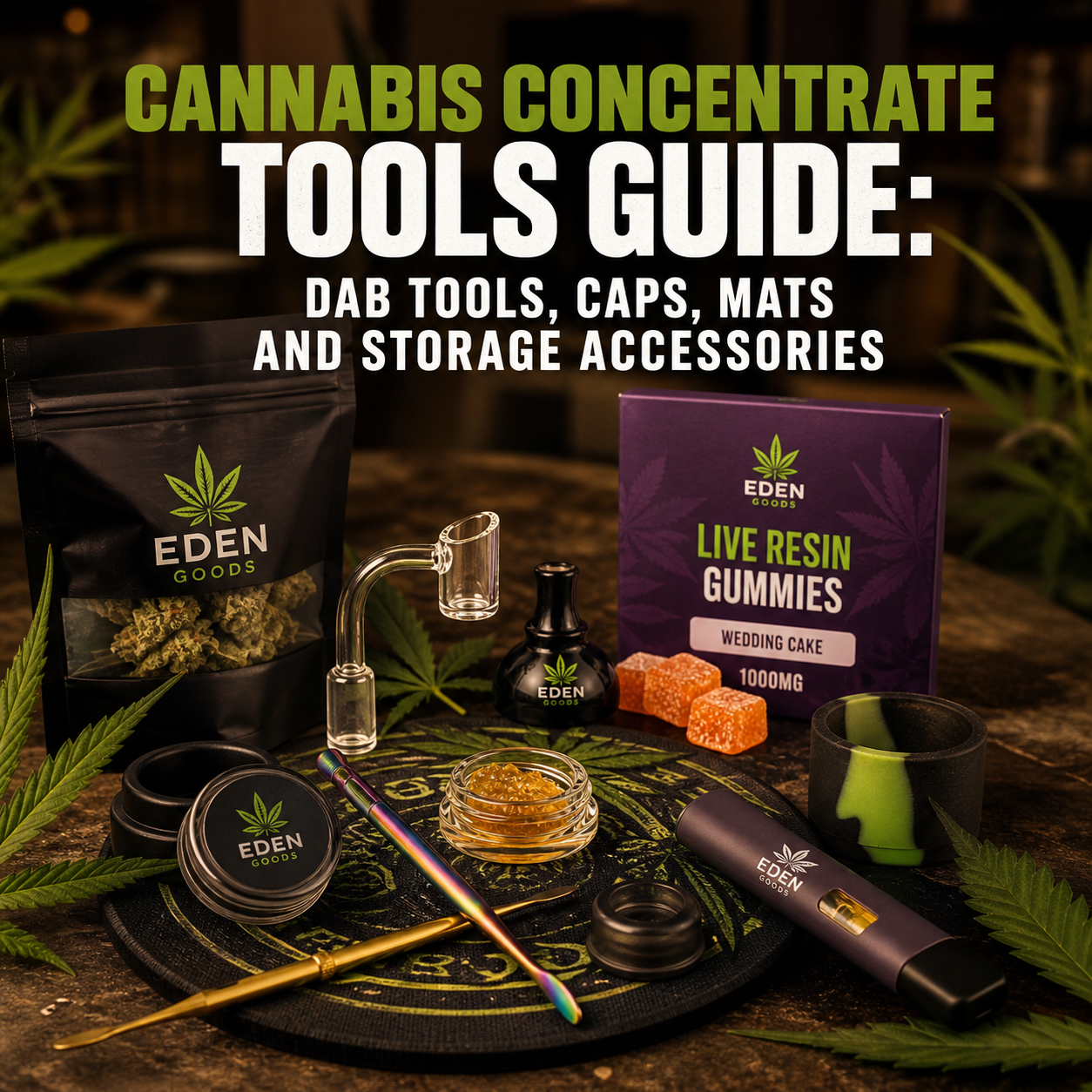
Cannabis Concentrate Tools Guide: Dab Tools, Caps, Mats and Storage Accessories
The right cannabis concentrate tools can make handling extracts cleaner, simpler, and more controlled. A basic setup may include a dab tool, carb cap, nonstick mat, storage container, and cleaning supplies. Each item serves a different purpose, and its material matters as much as its shape.
This guide explains how to compare concentrate accessories without filling your workspace with unnecessary equipment. You will learn which materials suit sticky, crumbly, or sauce-like extracts, how to check compatibility, and how to store accessories responsibly.
Cannabis concentrates can contain high levels of cannabinoids. Their effects may be intense and difficult to predict, particularly for inexperienced consumers. This article provides practical information about accessories, not medical advice. Adults using cannabis for health reasons should discuss benefits, risks, and possible drug interactions with a qualified healthcare professional.
What Are the Essential Cannabis Concentrate Tools?
A concentrate toolkit does not need to be complicated. The essential accessories are those that help you handle the material, control airflow in compatible equipment, protect surfaces, preserve the concentrate, and maintain cleanliness.
| Accessory | Primary purpose | Important feature |
| Dab tool | Handles and transfers concentrate | Heat-resistant, nonreactive tip |
| Carb cap | Controls airflow on a compatible nail or banger | Correct diameter and design |
| Dab mat | Protects the work surface and catches residue | Stable, heat-resistant material |
| Storage container | Limits exposure to air, light, and contamination | Suitable size and secure closure |
| Cleaning supplies | Remove residue from reusable equipment | Compatible with the accessory material |
Not every accessory works with every device. Traditional rigs, electronic rigs, concentrate vaporizers, and nectar collectors use different components. Check the device maker’s specifications before choosing caps, inserts, or replacement parts.
How to Choose Dab Tools for Different Concentrates
A dab tool is a small implement used to lift, separate, or transfer concentrate. It keeps sticky material away from fingers and provides more control than improvised household objects. Dabbers come in several materials and tip shapes.
Dab tool materials
| Material | Advantages | Considerations |
| Titanium | Durable, lightweight, and resistant to breakage | Choose reputable, clearly identified material rather than an unknown alloy |
| Stainless steel | Strong, accessible, and easy to maintain | Can retain heat after contact with a warm surface |
| Quartz | Nonreactive and suitable for precise handling | More fragile than metal |
| Ceramic | Nonreactive and resistant to flavor transfer | May chip or break if dropped |
| Glass | Smooth, nonporous, and easy to inspect | Fragile and unsuitable for rough travel |
Avoid painted, plated, or unidentified metal tips that may be exposed to heat. Decorative handles are acceptable when they remain away from hot surfaces, but the working end should be made from a stable, easy-to-clean material.
Match the tip shape to the texture
Concentrates vary from dry and brittle to thick and fluid. The most practical tip depends on how the extract behaves at room temperature.
- Scoop or spoon: useful for loose, granular, or sauce-like consistencies.
- Flat blade: helps separate waxes and softer solid concentrates.
- Pointed tip: offers precision with brittle or firm material.
- Paddle tip: provides a broad surface for sticky concentrates.
- Ball tip: can help collect a small amount without sharp edges.
Double-ended dab tools offer two shapes in one accessory, but they also require more careful storage because both ends may collect residue. A protective stand or silicone holder can keep the tips away from countertops.
Size, grip, and heat awareness
Look for a handle long enough to keep your hand away from heated components. A textured or shaped grip can improve control, especially when the tool is being cleaned. Very small tools are portable but easier to misplace and may place fingers closer to heat.
Assume that a metal or glass tip may remain hot after contact with a heated surface. Place it on a stable, heat-resistant holder and allow it to cool before touching, cleaning, or storing it.
Carb Caps and Airflow Accessories
A carb cap fits over a compatible banger or nail and changes the way air moves through it. The cap must match the dimensions and geometry of the heating component. A cap that looks suitable may still fit poorly, leak air, or touch surfaces it should not contact.
Common carb cap designs
| Cap type | How it works | Best consideration |
| Bubble cap | Tilts to direct airflow around the chamber | Needs room to move without slipping |
| Directional cap | Uses an angled air channel | Works best when the opening aligns with the banger |
| Spinner cap | Creates rotating airflow | Often paired with compatible inserts or pearls |
| Flat cap | Rests over a level opening | Requires a stable rim and appropriate diameter |
| Device-specific cap | Fits a particular electronic or proprietary system | Confirm the model and generation before buying |
Quartz and borosilicate glass caps allow visual inspection, while metal options may offer greater impact resistance. Whatever the material, inspect the cap regularly. Stop using glass or quartz accessories if they are cracked, chipped, or damaged.
Check fit before relying on a cap
Measure the relevant inner or outer diameter of the banger rather than estimating by appearance. Product dimensions can vary even when two components use similar names. Also consider the top style. A beveled rim, flat top, slanted top, or thermal design may require a particular cap.
Small inserts and terp pearls are optional rather than essential. They must be made for the intended application and should move freely without striking damaged surfaces. Tiny accessories also create a swallowing hazard, so keep them securely away from children and pets.
Why a Dab Mat Belongs in a Concentrate Setup
A dab mat creates a defined area for tools and containers. It can catch sticky residue, reduce scratches, and help prevent small glass pieces from sliding across a smooth table. It does not make a surface fireproof, and it should never be treated as protection against an open flame.
Silicone mats are popular because cured silicone is flexible, washable, and resistant to many sticky residues. Choose a stable mat that lies flat. Raised edges can contain minor spills, while molded tool slots help separate clean and used accessories.
For a permanent workstation, consider using a rigid heat-resistant base beneath the mat. Keep the area uncluttered and well ventilated. Flammable cleaning liquids, paper, fabric, and packaging should remain far from torches or hot components.
How to clean a concentrate mat
Follow the manufacturer’s instructions because not all silicone blends or printed designs tolerate the same cleaners. Remove loose material first. Wash the mat with warm water and mild dish soap, rinse it thoroughly, and let it dry completely. Avoid abrasive pads that may damage the surface.
Replace a mat that becomes torn, permanently tacky, swollen, or difficult to clean. A deteriorating surface can trap residue and no longer provides a dependable workspace.
Storage Accessories for Cannabis Concentrates
Storage affects consistency, aroma, and cleanliness. Heat, light, air, moisture, and repeated handling can change a concentrate over time. No container prevents all degradation, but a well-fitted, nonreactive option can limit unnecessary exposure.
Comparing concentrate containers
| Container | Suitable use | Limitations |
| Glass jar | General storage for many consistencies | Breakable and heavier for travel |
| Opaque glass jar | Storage where light exposure is a concern | Contents are harder to inspect without opening |
| Silicone container | Short-term handling of sticky material | May retain aroma or interact with some terpene-rich extracts over extended storage |
| Parchment paper | Temporary wrapping for stable, nonfluid concentrate | Provides little physical protection and is not airtight |
| Device pod or cartridge | Only for the compatible product and device | Should not be refilled unless specifically designed for it |
Glass is often the most versatile choice for longer storage because it is nonporous and easy to inspect. Select the smallest practical jar so that there is less empty air around the product. The lid should close securely without shedding liner material.
Do not use wax paper. Sticky concentrates may adhere to its coating, and the material is not designed as a dependable storage surface. Household plastic bags also provide poor protection from crushing, contamination, and odor transfer.
Control light, temperature, and moisture
Store concentrates in a cool, dark, dry location within any temperature range stated on the original packaging. Avoid windowsills, hot vehicles, radiators, and humid rooms. Frequent temperature changes can alter texture and may encourage condensation.
Refrigeration may suit some commercially packaged products, but it is not automatically appropriate for every extract. If a cold container is opened immediately in a warm room, moisture can condense inside. Follow the producer’s instructions and allow a sealed container to approach room temperature before opening when cold storage is recommended.
Label and secure every container
Keep the original label whenever possible. It may contain cannabinoid information, warnings, batch details, ingredients, and an expiration or best-use date. If material is moved into another container, clearly identify the contents and date.
All cannabis products and residue-covered tools should be locked away from children, teenagers, pets, and other vulnerable people. Child-resistant packaging can reduce risk, but it does not replace locked storage. Never use food, candy, cosmetic, or medication containers that could create confusion.
Cleaning and Maintaining Cannabis Concentrate Tools
Regular cleaning prevents thick residue from interfering with fit, movement, and handling. It also makes cracks or wear easier to see. Clean accessories according to their material and the device manufacturer’s directions.
Useful cleaning supplies
- Lint-free swabs or cotton swabs sized for the component
- Isopropyl alcohol when approved for that material
- Mild, unscented dish soap for washable mats and containers
- Soft brushes for cool, removable parts
- Clean water for rinsing appropriate accessories
- A dedicated drying area away from children and pets
Isopropyl alcohol is flammable. Use it in a ventilated area, away from heat, sparks, flames, and active devices. Never apply it to a hot component. Keep the bottle closed when not in use and follow the label instructions.
A simple cleaning routine
- Turn off electronic equipment and let every component cool fully.
- Separate only the parts that the manufacturer identifies as removable.
- Wipe away accessible residue without forcing tools into narrow openings.
- Use an approved cleaner for the specific material.
- Rinse parts when required by the cleaning instructions.
- Let everything dry completely before reassembly or storage.
- Inspect for cracks, chips, loose seals, corrosion, or damaged wiring.
Do not soak electronic bases, batteries, painted surfaces, or assembled devices unless their instructions explicitly permit it. Avoid metal scrapers on quartz, ceramic, glass, or coated chambers because scratches may weaken or damage them.
Building a Practical Cannabis Concentrate Tools Kit
Start with the accessories required by your existing device rather than buying a large universal bundle. Compatibility, cleanability, and safe storage are more valuable than the number of pieces.
Basic home kit
- One appropriately shaped dab tool
- A compatible carb cap, if the device requires one
- A stable dab mat or protected workspace
- A glass storage jar with a secure lid
- A tool stand or covered holder
- Material-compatible cleaning supplies
- A lockable storage box
People who handle several consistencies may benefit from a double-ended tool or two dedicated tip shapes. Keeping separate tools for different extracts can also reduce flavor transfer. Labeling containers and maintaining a simple cleaning schedule are usually more useful than adding decorative accessories.
Portable concentrate accessories
Travel requires extra protection. Use a rigid case that keeps glass parts from striking one another. Tools should have tip covers or dedicated slots. Containers must remain upright and securely closed.
Do not leave cannabis or accessories in a vehicle. Vehicle interiors can become very hot, and an unattended vehicle is not secure storage. Cannabis transport laws vary by location, and crossing state, provincial, or national borders may be prohibited even when possession is legal on both sides.
Common Mistakes When Buying Concentrate Accessories
- Choosing by appearance alone: dimensions and material quality are more important than color.
- Assuming every cap is universal: banger diameter and rim design determine compatibility.
- Using unknown metals: unidentified alloys or coatings may not suit heated applications.
- Buying oversized containers: excess space exposes the contents to more air.
- Keeping damaged glass: small chips and cracks can worsen with heat or handling.
- Cleaning hot parts with alcohol: this creates a serious fire risk.
- Ignoring storage security: tools with visible residue should receive the same care as the concentrate itself.
Improvised tools can introduce coatings, fibers, plastic, or other contaminants. Use accessories designed for the intended purpose and replace them when their condition becomes uncertain.
Health, Safety, and Legal Considerations
No cannabis concentrate tool removes the health risks associated with cannabis use. Concentrates may produce strong effects, including impaired coordination, anxiety, dizziness, or unwanted sedation. Inhaled products may irritate the lungs, and contaminants can create additional risks.
Do not drive, operate machinery, or perform hazardous tasks while impaired. Avoid combining cannabis with alcohol or sedating substances. People who are pregnant, breastfeeding, affected by heart or mental health conditions, or taking prescription medication should seek professional medical guidance before using cannabis.
If someone experiences severe confusion, chest pain, trouble breathing, loss of consciousness, or another urgent reaction, contact emergency services or the appropriate poison control service immediately.
Only purchase, possess, and use cannabis where permitted by local law and age restrictions. Choose regulated, clearly labeled products where a legal market exists. Accessories should never be used to disguise illegal transport or consumption.
Frequently Asked Questions About Cannabis Concentrate Tools
What tools do I need for cannabis concentrates?
A basic kit usually includes a suitable dab tool, a secure storage jar, a protected work surface, and cleaning supplies. A carb cap is needed only when the compatible device requires one.
What is the best material for a dab tool?
Titanium, stainless steel, quartz, ceramic, and glass can all work. The best choice depends on durability, tip shape, cleaning needs, and whether the material comes from a reputable source.
Are all carb caps universal?
No. Carb caps vary in diameter, shape, airflow, and intended device. Measure the banger and check the manufacturer’s compatibility information before choosing one.
Can concentrates be stored in silicone?
Silicone can help with short-term handling of sticky extracts. Glass is generally more suitable for extended storage, particularly for terpene-rich concentrates.
How often should dab tools be cleaned?
Clean them often enough to prevent residue buildup and cross-contamination. A quick cleaning after use is usually easier than removing hardened residue later.
Can I clean a hot banger with isopropyl alcohol?
No. Isopropyl alcohol is highly flammable. Let the component cool and follow the manufacturer’s cleaning instructions before using any solvent.
Should cannabis concentrates be refrigerated?
Only when the product’s storage guidance recommends it. Cold storage can create condensation if the container is opened before it returns toward room temperature.
Conclusion
Well-chosen cannabis concentrate tools support cleaner handling, organized storage, and easier maintenance. Focus first on a nonreactive dab tool, compatible airflow accessories, a stable mat, a secure glass container, and appropriate cleaning supplies.
Check measurements before buying, follow device instructions, and replace damaged components promptly. Most importantly, store concentrates and residue-covered accessories in a locked location. Practical equipment can improve organization, but it does not eliminate the health, impairment, fire, or legal risks associated with cannabis concentrates.
