

Blog
What Is Cannabis Reclaim? Appearance, Formation, Storage and Quality Limits

What Is Cannabis Reclaim? Appearance, Formation, Storage and Quality Limits
If you use or clean a dab rig, you may notice a sticky amber or dark residue collecting inside the glass. This material is commonly called cannabis reclaim. But what is cannabis reclaim, exactly, and how does it differ from fresh concentrate or ordinary pipe resin?
Cannabis reclaim is the condensed residue left after cannabis concentrate has been heated and vapor has traveled through a dab rig. Some vapor cools before inhalation and settles on the rig’s internal surfaces. The resulting material may still contain cannabinoids, but heat exposure, oxidation, moisture and debris can significantly change its quality.
Reclaim is not equivalent to a fresh cannabis extract. Its composition is unpredictable, and its appearance alone cannot confirm that it is clean or safe. This guide explains how reclaim forms, what it looks and smells like, how to store it responsibly, and when it should be discarded.
What Is Cannabis Reclaim?
Cannabis reclaim is a residue produced when vaporized cannabis concentrate cools and condenses inside a dab rig, vapor pathway or reclaim catcher. It usually develops after heating concentrates such as wax, shatter, live resin, rosin or similar extracts.
During a dab, the heated concentrate turns into an aerosol containing cannabinoids, terpenes and other compounds. Not all of that aerosol reaches the user. A portion adheres to cooler glass or metal surfaces, gradually forming a sticky deposit.
The term reclaim reflects the fact that this deposit can be recovered during cleaning. However, recovery does not restore the material to its original condition. It has already undergone heating and may have mixed with water, dust, ash, cleaning residues or particles from the equipment.
Is reclaim the same as resin?
The words reclaim and resin are sometimes used interchangeably, but they describe different materials. Reclaim generally comes from vaporized cannabis concentrates. Pipe resin is the dark residue created by burning cannabis flower and includes smoke by-products, tar-like material, ash and plant particles.
Cannabis resin can also refer to the natural trichome-rich substance produced by the plant or to products with names such as live resin. Context therefore matters. Reclaim is specifically a previously heated deposit collected from concentrate equipment.
| Material | How it forms | Typical characteristics |
| Cannabis reclaim | Vaporized concentrate condenses inside a rig | Sticky, oily, amber to very dark brown |
| Pipe resin | Smoke and combustion residue collect in a pipe | Dark, tar-like, smoky and often contaminated with ash |
| Fresh concentrate | Cannabinoids and aromatic compounds are extracted or mechanically separated | Product-specific texture, aroma and cannabinoid profile |
| Rosin | Heat and pressure separate resin from cannabis material | Fresh concentrate that has not already passed through a rig |
How Does Cannabis Reclaim Form?
Reclaim forms through cooling and condensation. When concentrate touches a heated surface, its volatile components become an aerosol. As that aerosol moves away from the hot area, the temperature drops. Some compounds condense on the cooler walls of the equipment instead of continuing through the mouthpiece.
Small droplets build up over time. They may flow toward bends, chambers or dedicated collection attachments. The amount and appearance depend on the rig, temperature, concentrate and cleaning routine.
Factors that influence reclaim buildup
- Equipment design: Long vapor paths, narrow joints and cooler surfaces may capture more condensed material.
- Heating temperature: Temperature affects vaporization, chemical degradation and the color of the residue.
- Concentrate consistency: Different extracts contain different proportions of cannabinoids, terpenes, waxes and other compounds.
- Water contact: Reclaim exposed to rig water may become less appealing and more vulnerable to contamination.
- Maintenance: Residue builds up faster when equipment is not cleaned regularly.
- Air exposure: Oxygen, light and warmth can gradually alter color, aroma and consistency.
A large amount of residue does not necessarily indicate a strong or high-quality product. It may simply reflect equipment design, low surface temperatures or incomplete aerosol delivery.
What Does Cannabis Reclaim Look Like?
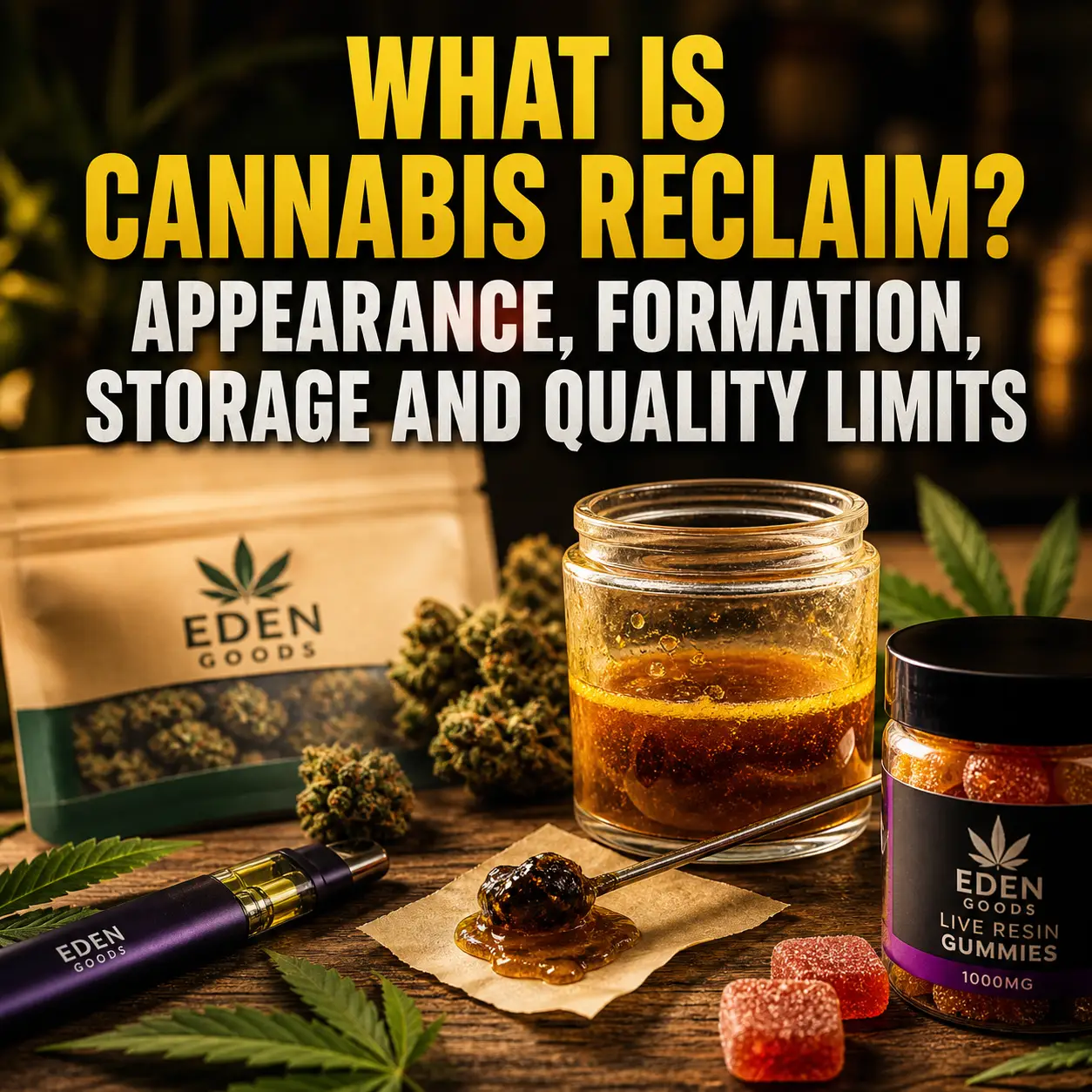
Cannabis reclaim commonly appears as a translucent golden film, an amber oil or a thick dark-brown deposit. It may be runny when warm and firm, waxy or glass-like when cool. Older material often becomes darker and less aromatic.
Color varies widely, so there is no single appearance that proves quality. A pale golden deposit may have experienced less oxidation or may come from a lighter concentrate. Dark material may reflect repeated heating, age, contamination or the original extract’s composition.
Typical sensory characteristics
- Golden, amber, reddish-brown or dark-brown color
- Sticky, oily, waxy or brittle texture
- Reduced aroma compared with the original concentrate
- Roasted, stale or muted odor after prolonged heat exposure
- Cloudiness when water or fine debris is present
Visible fuzz, unexpected spots, a sour or musty smell, or clear evidence of cleaning chemicals are warning signs. Material with these features should not be retained for consumption.
What Is in Cannabis Reclaim?
Reclaim may contain cannabinoids that were carried into the vapor stream and later condensed. It can also contain degraded cannabinoids, residual terpenes, waxes, lipids and other compounds from the original concentrate. The exact proportions cannot be determined by sight.
Heat changes the chemical profile. For example, acidic cannabinoids can convert into their neutral forms during heating. Some aromatic compounds evaporate or break down easily, which helps explain why reclaim usually has a weaker or less fresh aroma.
Repeated heating, oxygen and light can cause further degradation. The material may also pick up impurities from dirty equipment, old water, dust, fibers, ash or unsuitable cleaning methods. Only appropriate laboratory testing can provide meaningful information about potency or contaminants.
Can you estimate its potency from color?
No. Color is not a reliable potency test. Light reclaim is not automatically stronger, cleaner or safer. Dark reclaim is not automatically inactive. Concentrate type, temperature, age, oxygen and equipment cleanliness all influence appearance.
Because cannabinoid content can remain significant, accidental exposure is still a concern. Reclaim should be treated as an active cannabis product rather than harmless dirt.
Is Cannabis Reclaim the Same Quality as Fresh Concentrate?
No. Reclaim has already been heated and condensed, so it should not be considered equivalent to unused concentrate. Its flavor, aroma, texture and chemical profile have changed. Its quality is also less predictable because collection conditions vary.
Fresh products can still carry risks, but a labeled product from a regulated source provides more useful information than residue recovered from equipment. Reclaim generally has no dependable label, batch analysis, storage history or verified potency.
| Quality factor | Fresh concentrate | Reclaim |
| Aroma | Usually reflects the product’s original terpene profile | Often muted, altered or stale |
| Potency information | May be available on regulated product labeling | Unpredictable without testing |
| Heat exposure | Not previously vaporized | Already exposed to heat |
| Contamination risk | Depends on production and handling | Also depends on rig hygiene, water and collection method |
| Consistency | Designed as a finished product | Variable and often changes during storage |
Potential Health and Safety Concerns
The main issue with cannabis reclaim is uncertainty. A person usually cannot verify its cannabinoid concentration, purity or storage history. This makes its effects and risks difficult to predict.
Potential concerns include excessive intoxication, exposure to contaminants, irritation from degraded material and interactions with medications or existing health conditions. Cannabis can impair attention, judgment, coordination and reaction time. It may also cause anxiety, dizziness, nausea or an increased heart rate in some people.
Children and pets face a particular risk because even a small sticky deposit may contain active cannabinoids. Store all cannabis-related material securely and clean contaminated surfaces promptly.
When professional advice is important
Speak with a doctor or pharmacist before using cannabis if you are pregnant or breastfeeding, take prescription medication, have cardiovascular concerns, experience severe anxiety, or have a personal or family history of psychosis. Medical advice should reflect your individual situation.
Seek urgent medical assistance after suspected poisoning, severe confusion, chest pain, breathing difficulty, loss of consciousness or accidental exposure involving a child. Do not drive, cycle or operate machinery while impaired.
How to Store Cannabis Reclaim Safely
If reclaim is temporarily retained, careful storage can reduce accidental exposure and slow further deterioration. Storage cannot remove contamination or restore lost quality. It only helps protect the material and the people around it.
- Use a clean, sealed container. A small airtight glass container is generally easier to inspect and clean than porous materials.
- Label it clearly. Include the contents and collection date. Never place it in food packaging or an unlabeled container.
- Limit heat and light. Keep the closed container in a cool, dark and dry location.
- Prevent access. Use locked storage that children, visitors and pets cannot reach.
- Keep it separate. Do not store reclaim beside food, medication, cosmetics or household products.
- Check local law. Cannabis possession and storage rules vary between jurisdictions.
Silicone containers are often associated with concentrates, but long-term contact may be less suitable for preserving aromatic components. Clean glass with a secure lid is typically easier to manage for temporary storage.
Does reclaim need refrigeration?
Refrigeration is not always necessary and can introduce condensation when a cold container is opened. Moisture may make inspection and handling more difficult. A stable, cool and dark location is often more practical. If local temperatures are high, focus on secure storage that limits heat without exposing the container to repeated temperature changes.
How Long Does Cannabis Reclaim Last?
There is no universal shelf life for reclaim. Its condition depends on the original concentrate, heat exposure, water contact, cleanliness and storage environment. A collection date can help track age, but time alone cannot establish safety.
Quality generally declines rather than improves. Aroma fades, texture changes and oxidation continues. If you cannot confirm when the material was collected or how it was stored, discarding it is the safer choice.
Signs that reclaim should be discarded
- Visible mold, fuzz or unusual growth
- Musty, sour, chemical or otherwise unexpected odor
- Contact with dirty rig water or unknown liquids
- Glass fragments, ash, fibers or other visible debris
- Possible exposure to cleaning solvent
- An unsealed container or unknown storage history
- Any uncertainty about what the container holds
Do not try to hide an unusual smell or appearance by mixing questionable reclaim with another product. When in doubt, dispose of it in a way that prevents access by children, pets and wildlife, while following local waste rules.
Cleaning a Rig and Managing Reclaim
Regular cleaning limits residue buildup and makes equipment easier to inspect. It may also reduce exposure to stagnant water, loose particles and old deposits. Follow the equipment manufacturer’s instructions because materials and joint designs differ.
Allow heated parts to cool before handling them. Avoid scraping glass aggressively with metal tools, as this can chip or crack the equipment. Never assume a cleaning product is safe to inhale. Rinse and dry reusable components according to the manufacturer’s guidance, and do not apply heat while flammable cleaning agents are present.
A reclaim catcher can separate some condensed material from rig water, but it does not make the residue sterile, tested or equivalent to fresh concentrate. Clean collection hardware still requires routine maintenance.
Common Misconceptions About Cannabis Reclaim
Reclaim is pure because it came from vapor
Vaporization avoids some combustion by-products, but reclaim can still contain degraded compounds and environmental contaminants. The cleanliness of the rig and the original product both matter.
Golden reclaim is always high quality
Color provides limited information. A golden appearance does not establish potency, purity or freedom from solvents, pesticides, microbes or debris.
Reclaim cannot be potent
Some active cannabinoids may remain. Potency is unpredictable, which increases the risk of unintended impairment or accidental exposure.
Storage makes old reclaim safe again
Proper storage can slow deterioration. It cannot reverse heat damage, remove contaminants or verify the material’s composition.
All residue in a rig is reclaim
A rig may contain concentrate residue, water deposits, dust and cleaning remnants. Unknown buildup should not automatically be identified as usable cannabis reclaim.
Frequently Asked Questions About Cannabis Reclaim
What is cannabis reclaim in simple terms?
It is the sticky residue created when vaporized cannabis concentrate cools and condenses inside a dab rig or collection attachment.
Why is my reclaim dark?
Darkening may result from heat, oxidation, age, the original concentrate or contamination. Color alone cannot determine quality or potency.
Does cannabis reclaim still contain THC?
It may contain active cannabinoids, including THC. The concentration varies and cannot be reliably estimated without laboratory testing.
Is reclaim the same as rosin?
No. Rosin is a fresh concentrate produced with heat and pressure. Reclaim is previously heated residue recovered from vapor equipment.
Can reclaim develop mold?
Contamination is possible, especially after contact with water or dirty equipment. Discard material with fuzz, unusual spots or a musty smell.
What is the best container for reclaim?
A small, clean and airtight glass container offers practical temporary storage. Label it and secure it away from children and pets.
Can you tell whether reclaim is safe by looking at it?
No. Appearance may reveal obvious contamination, but it cannot confirm purity, potency or chemical safety.
Should reclaim smell like the original concentrate?
Not necessarily. Heat removes or changes many aromatic compounds, so reclaim often smells weaker, roasted or less fresh.
Conclusion
What is cannabis reclaim? It is condensed residue left inside a dab rig after cannabis concentrate has been heated and vaporized. It may retain cannabinoids, but its potency, purity and overall quality are unpredictable.
Appearance ranges from golden and oily to dark and waxy. Color alone does not show whether the material is clean or safe. Heat exposure, rig water, poor hygiene and unsuitable storage can all reduce quality or introduce contaminants.
If cannabis reclaim is retained temporarily, place it in a clean, labeled and sealed glass container in a cool, dark and locked location. Discard it when its history is unknown or contamination is suspected. For questions about cannabis, medications or personal health risks, consult a qualified healthcare professional.
