

Blog
THCA vs THC Concentrates: Labels, Activation and Potency Explained

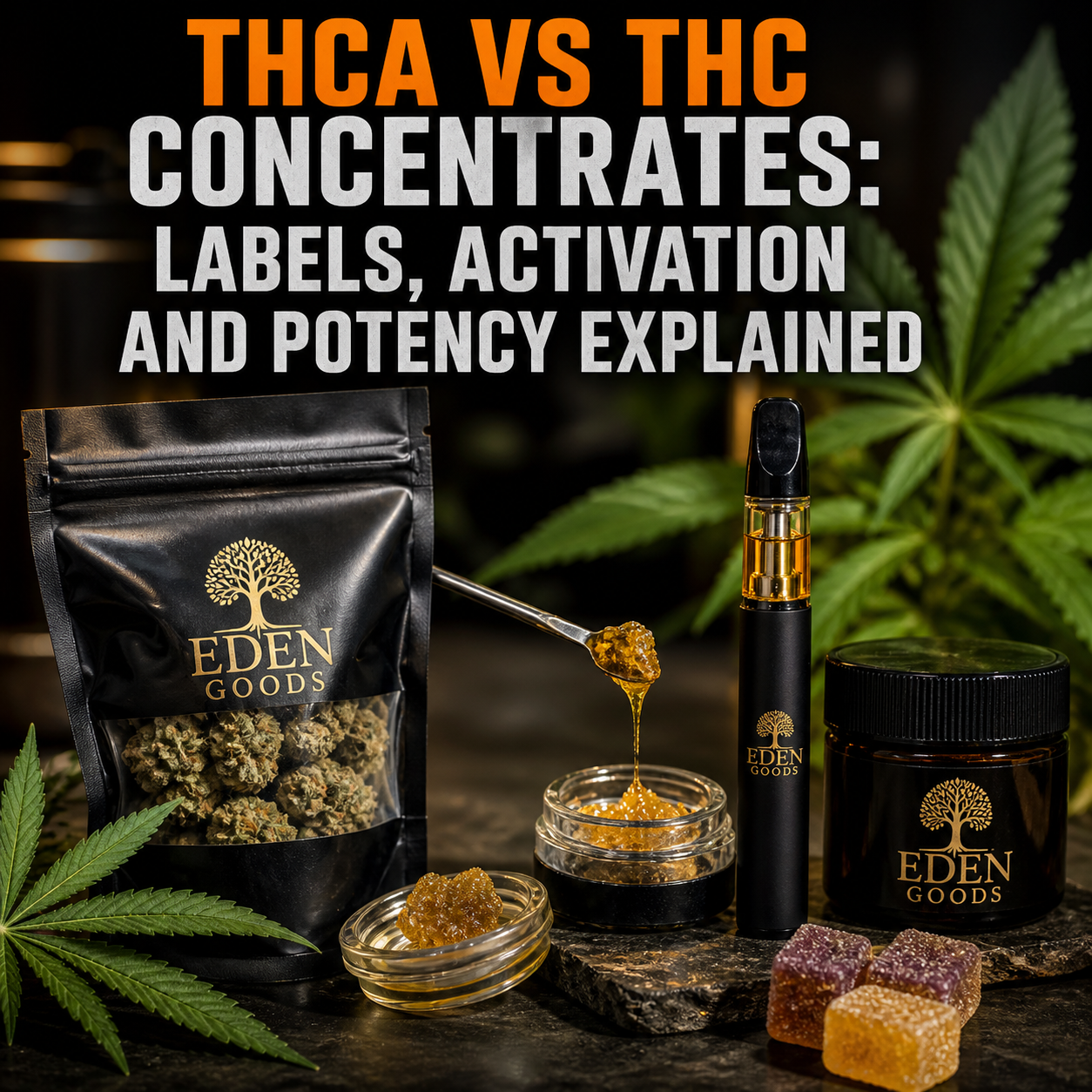
THCA vs THC Concentrates: Labels, Activation and Potency Explained
Comparing THCA vs THC concentrates can be confusing. A product may display a high THCA percentage while listing very little delta-9 THC. Another may emphasize total THC without explaining how that number was calculated. These labels can appear contradictory, but they describe different parts of the same chemical process.
THCA is the acidic precursor to THC. Heat can convert it into delta-9 THC through a process called decarboxylation. This means the expected effects of a concentrate depend on its cannabinoid profile, how it is stored and, most importantly, how it is consumed.
This guide explains the distinction, shows how to read potency figures and identifies the limits of label claims. It also covers laboratory reports, product formats and essential safety considerations. Cannabis laws vary widely, so always confirm the rules that apply where you live.
THCA vs THC Concentrates at a Glance
| Feature | THCA concentrates | THC concentrates |
| Main cannabinoid listed | Tetrahydrocannabinolic acid | Usually delta-9 tetrahydrocannabinol |
| Intoxicating before heating | Generally not expected to cause the classic THC high | Can be intoxicating |
| What heat does | Converts part of the THCA into THC | THC is already active, although heat affects delivery |
| Common formats | Diamonds, crystalline products, live resin and high-THCA extracts | Distillate, activated oils and some cured extracts |
| Key label figures | THCA, delta-9 THC and total THC | Delta-9 THC, total THC and milligrams per package |
| Main source of confusion | A high THCA percentage can translate into strong effects after heating | The term THC may be used loosely for several concentrate types |
The practical difference is activation. Unheated THCA and activated delta-9 THC do not interact with the body in exactly the same way. Once a THCA-rich concentrate is heated during vaporization or smoking, however, it may deliver a substantial amount of THC.
What Is THCA?
THCA stands for tetrahydrocannabinolic acid. The cannabis plant naturally produces acidic cannabinoids, including THCA. Fresh plant material therefore contains more THCA than delta-9 THC in many cases.
THCA is not simply a weaker version of THC. It has a different molecular structure and is generally considered non-intoxicating in its unheated form. It does not usually produce the characteristic high associated with activated delta-9 THC.
This distinction does not mean that every THCA product is free from intoxicating effects. A concentrate may already contain some delta-9 THC. THCA can also convert gradually because of heat, light, age or processing. The method of use then makes a major difference.
What are high-THCA concentrates?
High-THCA concentrates are extracts in which THCA represents a large share of the measured cannabinoids. They may include crystalline THCA, diamonds, sauce, live resin or other extracts. Product names alone do not establish the chemical profile. Two products sold under the same format can contain different amounts of THCA, THC and aromatic compounds.
Always use the cannabinoid panel from a recent batch-specific certificate of analysis rather than relying only on the front label or product category.
What Is THC Concentrate?
THC concentrate is a broad commercial term. It commonly refers to a cannabis extract with a much higher cannabinoid concentration than flower. Depending on the product and manufacturer, the listed THC may mean delta-9 THC specifically or the potential THC available after THCA activation.
Some concentrates, such as many distillates, contain mostly activated delta-9 THC. Others retain substantial levels of THCA. Live extracts, cured resins, waxes and similar products can fall anywhere along that spectrum.
For this reason, the name of a concentrate cannot tell you whether it is already activated. The laboratory results offer a more reliable answer.
Delta-9 THC and intoxication
Delta-9 THC is the main cannabinoid associated with cannabis intoxication. Effects can include changes in perception, mood, coordination, memory and reaction time. The experience varies with dose, tolerance, method of administration, product composition and individual sensitivity.
High-potency products can also cause unwanted effects, including anxiety, dizziness, confusion, nausea or a rapid heart rate. Avoid driving, operating machinery or performing safety-sensitive tasks after using an intoxicating cannabis product.
How THCA Becomes THC Through Activation
THCA converts into delta-9 THC through decarboxylation. During this chemical reaction, THCA loses a carboxyl group, releasing carbon dioxide and becoming THC. Heat accelerates the process.
Vaporization, smoking and some forms of heated preparation can activate THCA. Conversion may also occur more slowly during manufacturing or storage. It is rarely correct to assume that every molecule converts perfectly under real-world conditions.
Why the consumption method matters
- Vaporization: Heat can convert THCA rapidly before the resulting compounds are inhaled.
- Smoking: Combustion supplies intense heat, although some cannabinoids are destroyed or lost.
- Oral use without prior activation: Unheated THCA does not automatically behave like an equivalent amount of delta-9 THC.
- Activated oils or distillates: These may already contain substantial delta-9 THC and may not require additional activation to be intoxicating.
Do not assume that swallowing a concentrate will produce the same effects as vaporizing it. Product formulation also matters. Only use a product by a route supported by its instructions. A concentrate designed for inhalation may contain ingredients that are not intended for oral use, and the reverse can also be true.
How to Read THCA and THC Concentrate Labels
A useful label separates individual cannabinoids instead of presenting one unexplained potency number. Look for THCA, delta-9 THC and total THC. Results may appear as percentages, milligrams per gram or milligrams per package.
THCA percentage
The THCA percentage tells you how much of the product was measured as THCA at the time of testing. A result of 80% THCA means that the laboratory measured approximately 800 milligrams of THCA per gram of product, subject to the test method and normal analytical variation.
That does not mean the product can deliver 800 milligrams of delta-9 THC. THCA loses part of its molecular mass during decarboxylation. Conversion and consumption also involve practical losses.
Delta-9 THC percentage
This figure represents THC that was already present in its activated form when the sample was tested. A high delta-9 THC result generally indicates that the concentrate has undergone significant activation during processing or aging.
Total THC
Total THC is usually an estimate of the maximum theoretical THC after converting the measured THCA. Laboratories and regulators commonly use this formula:
Total THC = delta-9 THC + (THCA × 0.877)
The factor 0.877 accounts for the difference in molecular mass after THCA releases carbon dioxide. For example, a concentrate containing 80% THCA and 2% delta-9 THC has an estimated total THC of 72.16%:
2 + (80 × 0.877) = 72.16
This calculation does not predict the exact amount absorbed by the body. It assumes theoretical conversion and does not account for heat loss, incomplete activation, device performance or individual absorption.
Percentages versus milligrams
A percentage describes concentration, while milligrams describe quantity. As a general label conversion, 1% by weight equals approximately 10 milligrams per gram. Therefore, a one-gram concentrate listed at 70% total THC represents about 700 milligrams of theoretical total THC across the entire gram.
Serving size remains important. A potent concentrate used in a very small quantity may contain less THC than a larger portion of a lower-potency product. Package totals should never be mistaken for a suggested single serving.
Does Higher THCA Always Mean a Stronger Concentrate?
Not necessarily. A high THCA percentage suggests substantial potential THC after heating, but the laboratory number is only one part of the experience.
Perceived potency can also depend on:
- The amount consumed
- The level of existing delta-9 THC
- The degree of decarboxylation
- The temperature and efficiency of the device
- The presence of other cannabinoids and aromatic compounds
- Personal tolerance and prior cannabis exposure
- Food intake, health status and concurrent medications
Concentrates can contain far more cannabinoids by weight than cannabis flower. Small differences in portion size may therefore create large differences in exposure. Visual estimates are unreliable, particularly with sticky oils, crystals and dense extracts.
Potency is not the same as quality
The product with the highest number is not automatically the best option. Quality also involves accurate labeling, appropriate consistency, storage, freshness and contaminant testing. Aroma, cannabinoid balance and intended use may matter more than maximizing THC.
A very high-potency concentrate may also be difficult for an inexperienced person to use predictably. If adult use is legal in your jurisdiction and you choose to consume cannabis, a cautious approach can reduce the risk of an unpleasant experience.
Certificates of Analysis: What to Check
A certificate of analysis, often called a COA, is a laboratory report for a tested sample. The most useful report matches the exact batch or lot number on the package. A generic report from another batch offers less assurance.
Check the following details:
- Product identity: The product name and batch number should match the packaging.
- Test date: A current report is more relevant than an undated or very old document.
- Cannabinoid panel: Look for separate THCA and delta-9 THC results, not only a marketing claim.
- Units: Confirm whether values appear as percentages, milligrams per gram or milligrams per package.
- Contaminant results: Depending on local requirements, reports may include residual solvents, pesticides, heavy metals, microbial contaminants or mycotoxins.
- Laboratory details: The report should identify the testing laboratory and the analytical methods or reporting limits where applicable.
A passing result does not make cannabis risk-free. Testing requirements differ by jurisdiction, and a COA only represents the submitted sample. Still, transparent batch-specific testing provides more useful information than appearance, texture or brand claims alone.
Common THCA vs THC Concentrate Confusions
THCA concentrate can still become intoxicating
The description non-intoxicating applies primarily to THCA before activation. Heating a THCA-rich product can generate delta-9 THC. A label that shows little existing THC does not mean the product will remain non-intoxicating when vaporized or smoked.
Legal status does not follow one universal rule
Cannabis and hemp laws vary by country, state and locality. Some rules focus on delta-9 THC, while others consider THCA, total THC, intended use or product type. Laws and enforcement policies can change.
Do not assume that a THCA label makes a product legal to buy, possess, transport or use. Verify current local requirements before ordering or traveling with any cannabinoid product.
THCA products may affect drug tests
Many cannabis drug tests look for THC metabolites rather than the original label category. THCA products may contain some THC and can produce more THC when heated. Their use may therefore lead to a positive result. No label can guarantee that a product is safe for workplace, legal or athletic testing.
Texture does not prove potency
Diamonds, crystals, wax, shatter and oil describe physical characteristics or processing styles. They do not provide a complete potency profile. Clear crystals may contain high THCA, but appearance cannot confirm purity, contaminants or cannabinoid content.
Safety Considerations for Cannabis Concentrates
Concentrates require care because they can deliver a large cannabinoid dose in a small amount. Keep all products in their original packaging and store them securely away from children, teenagers and pets. Avoid transferring concentrates to unmarked containers.
Do not mix cannabis with alcohol or other intoxicating substances. Combining them can increase impairment and make effects less predictable. Never drive after using THC or a product that may convert into THC.
Inhaled cannabis can irritate the lungs and airways. Products from unverified sources may also carry contamination risks. Avoid modifying concentrates with oils, thinning agents or other substances not specifically intended for the device and route of use.
When to speak with a healthcare professional
Consult a doctor or pharmacist before using cannabinoid products if you take prescription medication or have a medical condition. This is especially important for people with cardiovascular, psychiatric, neurological or respiratory concerns.
Cannabis is generally discouraged during pregnancy and breastfeeding. People with a personal or family history of psychosis, as well as those who have experienced severe reactions to THC, should seek professional guidance. Medical advice should reflect individual health history rather than a product label alone.
Seek urgent medical assistance after severe chest pain, difficulty breathing, loss of consciousness, seizures, extreme confusion or other alarming symptoms. If a child or pet consumes a concentrate, contact the appropriate emergency or poison service promptly.
Frequently Asked Questions About THCA vs THC Concentrates
Is THCA stronger than THC?
They cannot be compared only by the printed percentage. Unheated THCA is generally not intoxicating like delta-9 THC, but it can become potent THC when heated. Total THC offers a better estimate of activation potential.
Will THCA diamonds get you high?
THCA diamonds may produce intoxicating effects when vaporized or smoked because heat converts THCA into delta-9 THC. They may also contain some THC before use.
Why is total THC lower than the THCA percentage?
THCA loses molecular mass as carbon dioxide during decarboxylation. The 0.877 conversion factor accounts for this change, so the potential THC from THCA is lower than the original THCA weight.
Can you use a THCA concentrate without heating it?
That depends on the formulation and manufacturer instructions. Unheated THCA does not usually create the classic THC high, but concentrates should only be used by their intended route.
Are THCA concentrates legal?
Legality depends on current local law. Some jurisdictions consider THCA or total THC, not only existing delta-9 THC. Check the rules where you live before buying or possessing a product.
Can THCA cause a positive drug test?
Yes. THCA products may contain THC or form THC when heated, and drug tests often detect THC metabolites. A positive result is possible.
What is the most important number on a concentrate label?
No single figure tells the whole story. Compare THCA, delta-9 THC, total THC, serving quantity and package weight. Then verify them against a matching batch-specific laboratory report.
Conclusion
Understanding THCA vs THC concentrates starts with activation. THCA is the acidic precursor to THC and is generally non-intoxicating before heating. Once vaporized, smoked or otherwise decarboxylated, it can become delta-9 THC and produce strong effects.
Read beyond the headline percentage. Check THCA, existing delta-9 THC, calculated total THC, units and batch-specific laboratory results. Remember that total THC is a theoretical estimate rather than a promise of how much your body will absorb.
Finally, potency is not the same as quality or suitability. Follow local law, use products only as directed and discuss cannabis with a healthcare professional when medications, symptoms or health conditions could affect your individual risk.
