


Blog
Terpene Sauce in Cannabis Concentrates: Composition, Texture and Handling

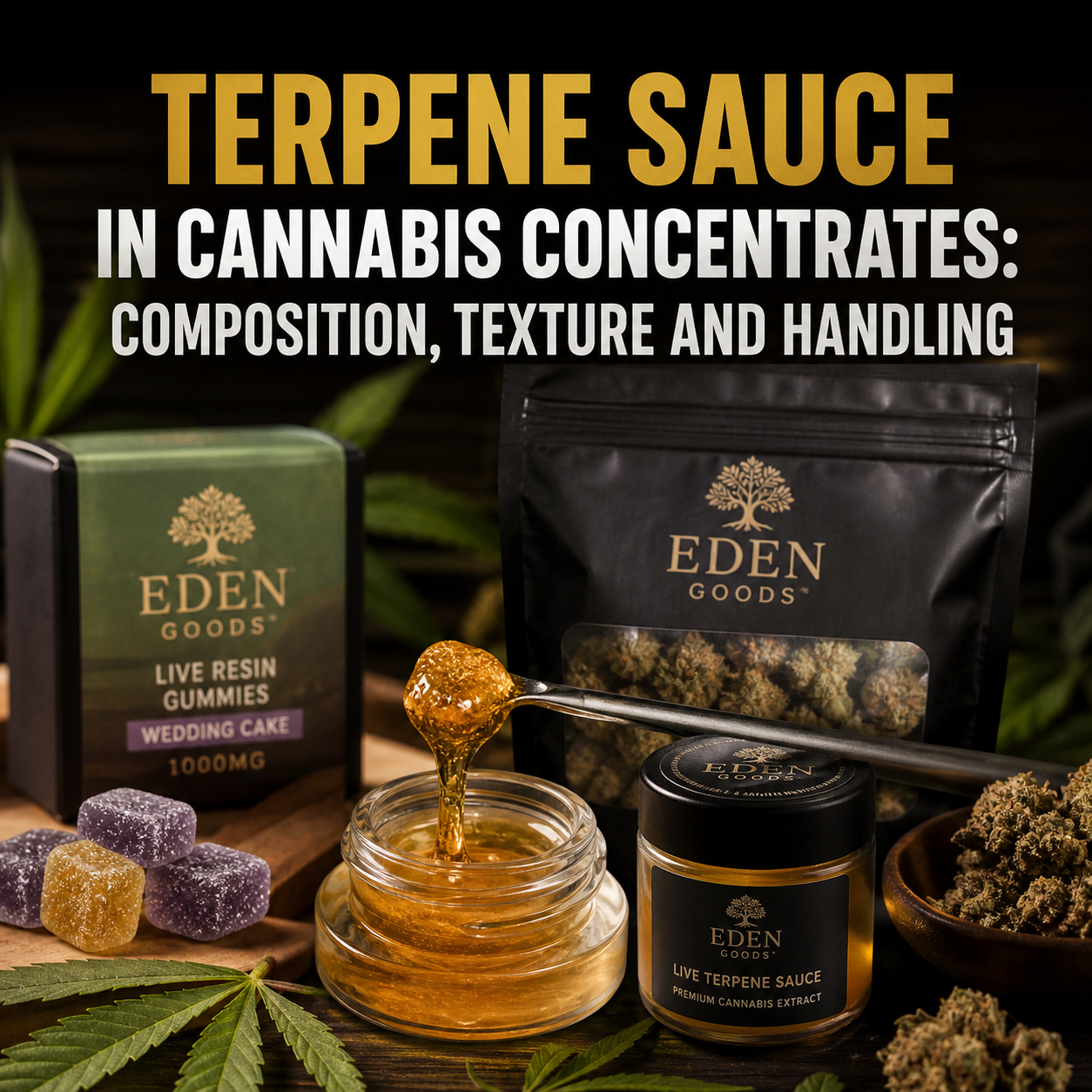
Terpene Sauce in Cannabis Concentrates: Composition, Texture and Handling
Terpene sauce is a cannabis concentrate known for its strong aroma, fluid consistency and visible cannabinoid crystals. It usually combines a terpene-rich liquid with solid crystals containing a high proportion of cannabinoid acids, often THCA. However, appearance and composition can vary widely between products.
Understanding terpene sauce cannabis concentrates requires more than looking at color or crystal size. Product labels, laboratory results, storage conditions and manufacturing quality all matter. This guide explains what terpene sauce is, how it differs from other extracts and how to handle it responsibly. It does not replace medical advice, and cannabis laws differ by location.
What Is Terpene Sauce?
Terpene sauce, sometimes shortened to sauce, describes a cannabis concentrate with a liquid or semi-liquid fraction rich in aromatic compounds. This fraction commonly surrounds small or large cannabinoid crystals. The resulting product may look glossy, granular, syrupy or similar to crystals suspended in honey.
The term is descriptive rather than strictly standardized. Two products sold under the same name may have different cannabinoid profiles, terpene levels and textures. Some contain prominent crystals. Others consist mostly of a thick aromatic liquid with fine grains.
Terpene sauce is often associated with hydrocarbon extraction and controlled crystallization. Manufacturers use specialized equipment to separate or encourage the formation of cannabinoid crystals within a terpene-rich fraction. This work involves flammable solvents, pressure and technical controls. It should only take place in licensed facilities. Attempting extraction at home can cause fire, explosion, poisoning or serious injury.
Why Is It Called Sauce?
The name comes from the concentrate’s wet, glossy appearance. It is not a food sauce, and it should never be treated as one. Its fluidity comes from its chemical composition, especially its mixture of volatile terpenes and other cannabis compounds.
Terms such as terp sauce, diamond sauce and THCA sauce are sometimes used interchangeably. They can overlap, but they do not always indicate exactly the same formulation. The product label and certificate of analysis provide more useful information than the marketing name alone.
Terpene Sauce Cannabis Composition
Most terpene sauce cannabis concentrates contain two visually distinct portions: a liquid aromatic fraction and a crystalline cannabinoid fraction. Their relative amounts determine much of the product’s texture and measured potency.
Cannabinoid Crystals
The crystals often contain THCA, the acidic precursor to THC. THCA itself is not identical to delta-9 THC. Heat can convert THCA into THC through a process called decarboxylation. Because of this conversion, a product with substantial THCA may still produce strong intoxicating effects when heated.
Depending on the source material, the product may also contain THC, CBDA, CBD or smaller amounts of other cannabinoids. The profile cannot be confirmed reliably by appearance. Independent laboratory testing is necessary.
The Terpene-Rich Liquid
Terpenes are volatile aromatic compounds found in cannabis and many other plants. They contribute to scent and flavor. Common cannabis terpenes include myrcene, limonene, beta-caryophyllene, pinene and linalool, although the actual mixture depends on the plant material and processing.
The liquid portion may also contain cannabinoids and other extractable compounds. Calling it terpene-rich does not mean that it consists only of terpenes. Nor does a strong smell automatically prove freshness, purity or safety.
Natural and Added Terpenes
Some concentrates retain cannabis-derived terpenes from the original material. Others may contain terpenes reintroduced after processing. Added terpenes can be cannabis-derived or sourced from other plants. Regulations and labeling requirements vary, so consumers should check the ingredient list and ask the licensed retailer when the origin is unclear.
Very high terpene concentrations can feel harsh or irritating when inhaled. More aroma is not necessarily better. A transparent label should identify added ingredients and provide relevant testing information.
| Component | Typical role | Important point |
| Cannabinoid crystals | Provide a concentrated cannabinoid fraction | Often rich in THCA, but laboratory results are needed |
| Terpene-rich liquid | Contributes aroma, flavor and fluidity | May also contain cannabinoids and other compounds |
| Minor cannabinoids | Add to the overall chemical profile | Amounts vary by plant material and processing |
| Added ingredients | May adjust aroma or consistency | Should appear clearly on the product label |
Why Texture and Appearance Vary
Terpene sauce can range from runny to thick. Crystal size can also vary from barely visible grains to large formations. These differences do not provide a simple ranking of quality.
Several factors influence consistency:
- The ratio of liquid to crystalline material
- The cannabinoid and terpene profile
- Processing and separation methods
- Storage temperature and temperature changes
- Product age and exposure to air or light
- Whether ingredients were added after extraction
A sauce with more liquid usually spreads more easily, while a crystal-heavy product may feel granular or chunky. Cold temperatures can make the concentrate thicker. Warm conditions can make it more fluid and may accelerate the loss of volatile aromatic compounds.
Color Is Not a Reliable Quality Test
Terpene sauce may appear pale gold, amber, yellow or darker brown. Color reflects the starting material, chemical profile, processing and age. A lighter product is not automatically purer, safer or more potent. Likewise, a darker shade does not prove contamination.
Unexpected discoloration, visible foreign material, a damaged seal or an unusual chemical odor deserves caution. Do not use a product if its identity or integrity is uncertain. Return it to the licensed retailer when possible.
Do Large Crystals Mean Higher Potency?
Not necessarily. Large crystals may contain a concentrated amount of THCA, but size alone does not reveal purity or total potency. A product with smaller crystals may have a similar cannabinoid profile. The distribution between crystals and liquid can also make individual portions inconsistent.
Only a batch-specific laboratory report can show the tested concentrations. Even then, results represent the submitted sample and should be read alongside the batch number, testing date and laboratory details.
Terpene Sauce Compared With Other Cannabis Concentrates
Concentrate terminology can be confusing because names may describe texture, production style or chemical composition. The following distinctions are useful, but commercial naming is not uniform.
| Concentrate | Usual texture | General distinction |
| Terpene sauce | Syrupy or wet with crystals | Combines a terpene-rich liquid with a concentrated cannabinoid fraction |
| Diamonds | Solid crystals | Usually refers to crystalline THCA with little surrounding liquid |
| Live resin | Varies from sticky to saucy | Commonly made from fresh-frozen cannabis to preserve volatile compounds |
| Badder or budder | Whipped, soft and creamy | Named mainly for consistency rather than a specific cannabinoid profile |
| Shatter | Firm and brittle | Usually forms a glass-like sheet that can break into pieces |
| Rosin | Sticky, creamy or firm | Produced with heat and pressure rather than hydrocarbon solvents |
A product can fit more than one description. For example, live resin may have a sauce-like texture. Rosin can also separate into crystalline and terpene-rich portions. Consumers should prioritize verified composition over category names.
How to Evaluate a Terpene Sauce Product
Visual appeal cannot confirm safety. Purchase only from legal, regulated sources where cannabis sales are permitted. Unregulated concentrates may lack meaningful testing or accurate ingredient disclosure.
Read the Label
A responsible product label should provide enough information to identify the product and its batch. Look for:
- Manufacturer or processor name
- Batch or lot number
- Packaging or production date
- Net weight
- Cannabinoid content
- Ingredient disclosure
- Required warnings
- Testing or certificate information
Percentages can be difficult to interpret. THCA and THC are usually listed separately, and total potential THC may be calculated according to local rules. Do not assume that the highest number represents the best choice. Concentrates can be very potent, especially for people with little or no tolerance.
Review the Certificate of Analysis
A certificate of analysis, often called a COA, reports results for a tested batch. The batch number on the report should match the package. Depending on local regulations and the laboratory panel, the report may cover cannabinoid potency, residual solvents, pesticides, heavy metals and microbial contaminants.
Check the laboratory name, test date and sample identifier. A missing, incomplete or mismatched report should prompt questions. A COA adds transparency, but it does not guarantee that every portion of a product is identical or risk-free.
Avoid Judging Quality by Aroma Alone
A pronounced aroma can indicate a substantial volatile-compound content, but smell is subjective. Added terpenes may also create a powerful scent. Laboratory data, proper packaging and legal traceability offer better evidence than aroma, color or crystal size.
Handling Terpene Sauce Safely
Terpene sauce is sticky, concentrated and often uneven in texture. Careful handling reduces spills, contamination and accidental exposure. Always follow the instructions supplied by the manufacturer.
Use Clean, Suitable Tools
A clean concentrate tool can help move a small quantity without introducing lint, dust or residue. Avoid touching the product directly. Skin contact can transfer oils and contaminants to the container, while the concentrate may leave difficult-to-remove residue on the skin.
Do not use painted, coated or unknown materials that may degrade with heat or contact. Keep all tools clean, dry and reserved for their intended purpose. Never leave them where children or pets can reach them.
Account for Separation
The liquid and crystals may shift during transport or storage. This can make one portion chemically different from another. Follow package directions before handling. Avoid vigorous mixing, which can create spills and increase exposure to air.
Because concentrates can contain high cannabinoid levels, inexperienced consumers face a greater risk of taking more than intended. Effects and impairment vary with potency, method of use, individual sensitivity and other substances. Do not drive, cycle, operate machinery or perform safety-sensitive tasks after using intoxicating cannabis.
Prevent Cross-Contamination
Close the container promptly after handling. Do not return material that has contacted an unclean surface. Wash hands after contact and clean spills according to the packaging guidance. Keep cannabis away from food preparation areas, medications and personal care products.
How to Store Terpene Sauce Cannabis Concentrates
Heat, light, oxygen and repeated temperature changes can alter a concentrate over time. Terpenes are volatile, so poor storage may reduce aroma and change consistency. Cannabinoids may also degrade during prolonged exposure to unfavorable conditions.
- Keep the product in its original child-resistant container.
- Close the lid tightly after every use.
- Store it upright to reduce leakage.
- Choose a cool, dark and dry location.
- Keep it completely out of reach and sight of children and pets.
- Follow any temperature instructions printed on the package.
Refrigeration is not automatically appropriate for every product. Cold storage can thicken the concentrate, while opening a cold container may allow condensation to form. If the manufacturer recommends refrigeration, let the sealed container approach room temperature before opening it. This may help limit moisture exposure.
Do not freeze terpene sauce unless the manufacturer specifically recommends it. Avoid repeatedly moving the container between hot and cold environments. Never leave it in a parked vehicle, near a heater or in direct sunlight.
How Long Does Terpene Sauce Last?
There is no universal shelf life. Packaging quality, composition and storage conditions all affect stability. Use the expiration or best-before information when provided. Contact the manufacturer or retailer if the date is missing or the product changes unexpectedly.
Discarding cannabis products requires care because residual concentrate may remain intoxicating. Follow local disposal rules. Do not place an accessible container in household waste where a child, animal or other person could retrieve it.
Health and Safety Considerations
Cannabis concentrates can deliver substantial amounts of THC. Possible adverse effects include anxiety, panic, dizziness, confusion, impaired coordination, rapid heart rate and excessive sedation. Responses differ between individuals, and combining cannabis with alcohol or sedating substances can increase impairment.
People who are pregnant or breastfeeding should avoid cannabis unless a qualified healthcare professional advises otherwise. Anyone with cardiovascular concerns, a history of psychosis, significant anxiety, or a complex medication regimen should speak with a clinician before considering cannabis. Medical guidance is also important when symptoms are persistent or when cannabis is being considered for a health condition.
Seek urgent medical help for severe confusion, loss of consciousness, chest pain, breathing difficulty, a seizure or another serious reaction. Contact an appropriate poison service or veterinarian promptly if a child or pet is exposed.
Inhalation carries respiratory risks, and heating concentrates may produce irritating or harmful by-products. Long-term health effects can depend on frequency, temperature, equipment and product composition. No cannabis concentrate should be described as risk-free.
Frequently Asked Questions
Is terpene sauce the same as live resin?
No. Live resin usually refers to an extract made from fresh-frozen cannabis, while terpene sauce describes a separated or sauce-like consistency. A live resin product can also be sold as sauce.
Does terpene sauce always contain THC?
Many products contain THCA, THC or both, but composition varies. Products based on other cannabinoids may also exist. Check a batch-specific label and laboratory report.
Why are there crystals in terpene sauce?
The crystals commonly form when cannabinoid acids, often THCA, separate from the liquid fraction. Crystal size does not establish overall quality, purity or safety.
Should terpene sauce be refrigerated?
Only if the manufacturer recommends it. Refrigeration may preserve some volatile compounds, but condensation and temperature cycling can create problems. Keep the container sealed while it warms.
Can terpene sauce go bad?
It can lose aroma, change texture or degrade over time. Contamination is also possible if it is handled poorly. Follow the labeled date and storage instructions.
Is darker terpene sauce lower quality?
Not necessarily. Color depends on the source material, composition, processing and age. Testing, traceability and proper packaging are more reliable quality indicators.
Are cannabis terpenes safe to inhale?
Natural origin does not make inhalation risk-free. Concentrated terpenes may irritate the airways, and risk depends on concentration, temperature and individual sensitivity.
Conclusion
Terpene sauce cannabis concentrates combine an aromatic liquid fraction with concentrated cannabinoids, often in crystalline form. Their color, crystal size and consistency can vary without offering a simple measure of quality.
Choose regulated products, read the label, match the certificate of analysis to the batch and follow the manufacturer’s storage guidance. Handle the container carefully and keep it secured away from children and pets. If cannabis may affect a health condition or interact with medication, discuss your situation with a qualified healthcare professional.
