


Blog
Dab Rig Water Filtration Explained: What the Water Chamber Does and Does Not Do

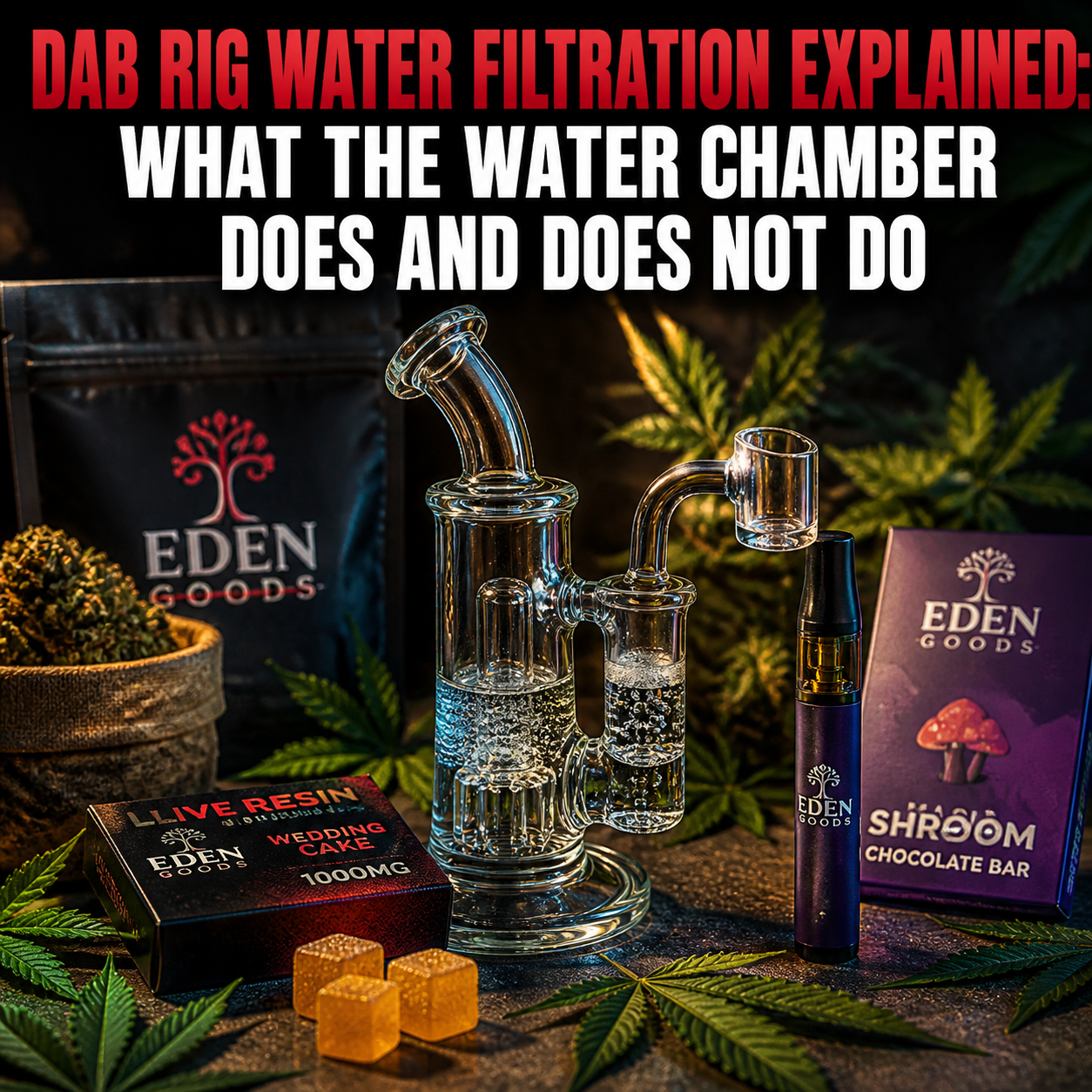
Dab Rig Water Filtration Explained: What the Water Chamber Does and Does Not Do
Dab rig water filtration can make concentrate vapor feel cooler and less dry before it reaches the mouthpiece. As vapor travels through the chamber, the water absorbs some heat, traps certain droplets and changes the way the aerosol moves. However, this process does not make dabbing harmless, remove every unwanted compound or turn the vapor into clean air.
Understanding that distinction helps you evaluate a rig without relying on exaggerated filtration claims. It also makes it easier to set an appropriate water level, recognize contamination and maintain the chamber correctly.
This guide explains what happens inside a water rig, what the water may capture, what it cannot reliably remove and which design factors affect the experience.
What Is Dab Rig Water Filtration?
A dab rig is designed to route concentrate aerosol through a water chamber before inhalation. When air is drawn through the rig, the vapor enters the water through one or more openings in the downstem or percolator. It then forms bubbles, rises through the chamber and travels toward the mouthpiece.
This contact between aerosol, glass, air and water produces several effects at once:
- The water absorbs part of the aerosol’s heat.
- Bubbling increases contact between the vapor and the water.
- Some larger droplets and particles may remain in the chamber.
- Condensation can deposit concentrate residue on cool glass surfaces.
- The water adds resistance and changes the rig’s airflow.
People often describe the result as filtration, but the term can be misleading. A water chamber is not a precision filter designed to remove a defined percentage of specific substances. Its most noticeable functions are usually cooling and aerosol conditioning.
How the Water Chamber Works
Cooling through heat transfer
Freshly produced concentrate aerosol can be hot. As it passes through water and touches cooler glass, energy moves from the warmer aerosol into those surfaces. This lowers the temperature before the aerosol reaches the mouthpiece.
The degree of cooling depends on several variables. These include the starting temperature, water volume, airflow, chamber shape and length of the vapor path. A larger rig is not automatically more effective. The internal design and actual contact time also matter.
Cooling can make an inhalation feel less harsh, but comfort should not be confused with safety. A cooler aerosol may still contain irritating substances, cannabinoids and other compounds.
Bubble formation and surface contact
A percolator divides incoming airflow into bubbles. More openings can create smaller bubbles and increase the surface area where vapor meets water. This may improve cooling and help some droplets remain in the chamber.
More diffusion also creates resistance. An overly restrictive percolator may require a stronger draw, while a very open design may offer less water contact. Good performance depends on balance rather than the largest possible number of slits or holes.
Condensation inside the rig
Some compounds in concentrate aerosol cool and condense on the inner walls of the rig. This creates the sticky residue often called reclaim. Deposition can occur in the joint, downstem, percolator, chamber and neck.
Not everything left behind was dissolved or filtered by the water. A substantial part of visible residue may come from condensation on glass. This distinction matters when judging what the water itself has accomplished.
What Dab Rig Water Filtration Can Do
Reduce the temperature of the aerosol
Cooling is the clearest function of the water chamber. Proper contact with water can lower the temperature and make the aerosol feel less dry or sharp. The glass pathway also contributes to cooling, especially when it provides enough distance between the heating surface and mouthpiece.
Capture some droplets and debris
Water may retain larger aerosol droplets, loose residue or small pieces of material that enter the airflow. The rig’s shape can also stop droplets from traveling directly toward the user.
This is not complete filtration. Very small aerosol particles and gaseous compounds may continue through the rig. Performance is not usually measured or standardized across consumer glassware.
Limit direct splash and hot material transfer
A well-designed chamber provides distance between the heating area and mouthpiece. Its bends, water chamber and splash guard can help prevent liquid or hot residue from moving directly through the neck.
This benefit depends on correct water levels and controlled airflow. Excess water or an aggressive draw can produce splashback instead of preventing it.
Change humidity and perceived smoothness
Passing warm aerosol through water can change its moisture content and how it feels in the throat. Many users perceive water-conditioned aerosol as smoother than aerosol from a dry device.
Perceived smoothness is subjective. It does not measure purity, potency or health risk. In fact, a smoother sensation may make it easier to inhale more than intended, so it remains important to proceed cautiously.
What the Water Chamber Does Not Do
It does not make dabbing safe
No water rig can eliminate all risks associated with inhaling concentrated cannabis aerosol. Water does not transform the aerosol into harmless vapor. Exposure still depends on the concentrate, device materials, surface temperature, amount used and individual health factors.
Cannabis concentrates may also contain high levels of THC. Water does not meaningfully prevent intoxication or protect against impairment. Avoid driving, operating machinery or combining intoxicating products.
It does not remove all contaminants
Water cannot be expected to remove pesticides, residual solvents, metals, degradation products or unknown additives. Different compounds behave differently, and many may remain in the aerosol.
The water chamber should never compensate for an unverified or contaminated concentrate. Where cannabis is legal, products from regulated and appropriately tested sources offer more information than products with an unknown origin. A clean rig cannot correct poor product quality.
It does not reliably preserve every desirable compound
Some users assume water removes unwanted material while allowing every cannabinoid and aromatic compound to pass through unchanged. The process is not that selective.
Cannabinoids have low water solubility, but losses can still occur through condensation, droplet capture and adhesion to glass. Some aromatic compounds may also change or deposit during cooling. Heavy diffusion and a long vapor path may produce smoother vapor while slightly reducing flavor intensity.
It does not prevent irritation
Cooling may reduce the immediate sensation of heat, but irritation can still result from concentrated aerosol, high temperatures, contaminants or repeated inhalation. Coughing and throat discomfort are not reliable indicators of potency or product quality.
If inhalation causes persistent coughing, chest pain, wheezing, shortness of breath or another concerning symptom, stop using the product and seek medical advice. Severe breathing difficulty requires urgent medical attention.
It does not disinfect the vapor
Water is not a disinfectant. Old water can support microbial growth and collect saliva, residue and airborne debris. Passing aerosol through neglected water does not sanitize it.
Adding household disinfectants, essential oils or cleaning chemicals to water used in a rig is unsafe. Such products can create inhalation hazards and should never replace plain, fresh water.
Factors That Affect Dab Rig Water Filtration
| Factor | Possible effect | Practical limit |
| Water level | Controls submersion, bubbling and airflow resistance | Too little water reduces diffusion; too much can cause splashback |
| Percolator design | Changes bubble size and vapor-to-water contact | More diffusion may increase drag and residue buildup |
| Chamber volume | Provides room for cooling and aerosol expansion | A larger chamber does not guarantee better filtration |
| Vapor path | Allows additional cooling and condensation | Long paths may reduce flavor and require more cleaning |
| Water cleanliness | Affects hygiene, taste and airflow | Stagnant water can collect residue and microorganisms |
| Airflow speed | Changes contact time and turbulence | A forceful draw may pull water toward the mouthpiece |
| Heating temperature | Affects aerosol composition, flavor and irritation | Water cannot fully correct the effects of excessive heat |
Finding the correct water level
The right level usually covers the percolator openings while leaving enough empty space to prevent water from reaching the mouthpiece. Because rigs differ, there is no universal measurement.
Before heating any component, draw clean air through the assembled rig. You should hear steady bubbling without receiving water at the mouthpiece. If the percolator does not bubble, add a small amount. If water splashes into the neck, remove some.
Repeat the test after moving the rig. Tilted glass can send water into areas that remain dry when the rig is upright.
Cold water versus room-temperature water
Cold water may provide more immediate cooling. However, very cool aerosol can feel deceptively smooth, and stronger condensation may reduce flavor or leave more residue inside the glass. Ice can also create excessive cooling and increase condensation in designs that accommodate it.
Room-temperature water often provides a balanced experience with less dramatic cooling. Personal preference plays a role, but no water temperature makes inhalation risk-free.
Do not expose glass to sudden temperature changes. Thermal shock can crack some pieces, particularly if they are damaged or made from lower-quality glass.
Percolators, Recyclers and Dry Rigs
Standard water rigs
A standard rig typically uses one chamber and a simple downstem or percolator. It offers direct feedback, straightforward cleaning and moderate water contact. Fewer internal sections also make it easier to see residue.
Multi-percolator rigs
Multiple percolators create additional bubbling stages. They may increase cooling and diffusion, but they also add resistance and internal surfaces. Complex chambers can be harder to rinse and may retain water or cleaning solution.
More percolation does not automatically mean cleaner aerosol. It mainly changes cooling, airflow and particle deposition.
Recycler rigs
A recycler continuously moves water and aerosol through connected chambers during a draw. This motion may improve cooling and help keep water away from the mouthpiece. Recycler performance depends on water level and flow balance, so small adjustments can noticeably affect function.
Dry rigs
A dry rig uses no water. It may preserve a more direct flavor profile and requires less preparation, but the aerosol can feel warmer and drier. It also lacks the droplet capture and splash-control benefits of a water chamber.
Neither dry nor water-assisted designs eliminate the risks of concentrate inhalation. The choice mainly affects temperature, airflow, flavor and maintenance.
How to Keep a Dab Rig Water Chamber Clean
Routine cleaning supports hygiene and keeps the rig functioning as intended. Residue can narrow percolator openings, alter flavor and make it difficult to inspect the chamber.
- Replace the water regularly. Empty it after a session rather than leaving dirty water in the chamber for extended periods.
- Rinse with warm water. A prompt rinse can remove loose residue before it hardens.
- Use a cleaner suitable for the material. Isopropyl alcohol is commonly used for compatible glass, but follow the glassware manufacturer’s instructions.
- Avoid mixing cleaning chemicals. Chemical combinations can produce hazardous fumes or leave unsafe residues.
- Rinse thoroughly. No cleaning liquid or odor should remain before the rig is used again.
- Allow complete drying. Place the rig in a secure, ventilated location where it cannot fall.
Do not heat a sealed chamber or apply an open flame to alcohol or alcohol vapor. Isopropyl alcohol is flammable. Keep cleaning products away from heat, children and pets.
When the water needs immediate replacement
Change the water if it becomes cloudy, develops an odor, contains floating material or has been contaminated by saliva or debris. Visible film around the waterline indicates that the chamber needs more than a quick refill.
If a rig has visible mold or residue in inaccessible areas, stop using it until every internal surface has been properly cleaned and fully rinsed. Replace damaged glass that cannot be safely restored.
Practical Ways to Reduce Avoidable Risks
Dab rig water filtration should be treated as one design feature, not a health safeguard. Practical precautions remain important:
- Use only products from lawful, transparent sources where cannabis is permitted.
- Avoid concentrates with unknown ingredients or an unusual appearance or odor.
- Keep the rig on a stable, heat-resistant surface.
- Inspect glass for chips, cracks and unstable joints.
- Keep hot components away from skin and combustible materials.
- Use fresh water and clean equipment.
- Avoid sharing mouthpieces, or use appropriate individual mouthpiece covers.
- Store cannabis products and equipment securely away from children and pets.
- Do not drive or perform safety-sensitive tasks while impaired.
People who are pregnant or breastfeeding, have heart or respiratory conditions, take medications or have concerns about cannabis use should speak with a qualified healthcare professional. Medical advice should reflect individual health history and local regulations.
Frequently Asked Questions
Does water filter THC out of dab vapor?
Water is not designed to remove THC selectively. Some cannabinoid-containing droplets may be lost through condensation or deposition, but substantial active aerosol can still pass through the rig.
Does more water provide better filtration?
Not necessarily. Too much water increases drag and splashback. The appropriate level covers the percolator openings while keeping water below the mouthpiece pathway.
Why does a dab rig become cloudy or sticky?
Aerosol can cool and condense on the glass, leaving sticky reclaim. Minerals in water may also create a cloudy film, especially when hard water evaporates inside the chamber.
Can I put anything other than water in a dab rig?
Plain, fresh water is the safest default. Do not add alcohol, oils, disinfectants, flavorings or household chemicals because inhaling their vapors or droplets may be hazardous.
How often should dab rig water be changed?
It is best to replace it after use rather than store the rig with dirty water. Change it immediately if it looks cloudy, smells unusual or contains visible debris.
Do percolators remove toxins?
Percolators increase bubbling and may retain some droplets, but they do not reliably remove all toxic or irritating compounds. Their main effects involve cooling, diffusion and airflow.
Is a smoother hit safer?
No. Smoothness describes sensation, not chemical composition or health risk. Cooled aerosol can feel gentle while still containing intoxicating or irritating substances.
Why am I getting water in my mouth?
The chamber may be overfilled, the draw may be too forceful or the rig may be tilted. Remove a small amount of water and test the airflow before heating the device.
Conclusion
Dab rig water filtration primarily cools and conditions concentrate aerosol. The water chamber can increase surface contact, capture some droplets and reduce direct splash, while the glass pathway promotes additional condensation.
Its limits are equally important. Water does not remove every contaminant, prevent intoxication, disinfect the aerosol or make dabbing safe. Complex percolation may change smoothness and airflow, but it should not be treated as proof of superior health protection.
Use the correct water level, replace dirty water promptly and clean the entire rig with care. If cannabis inhalation causes persistent respiratory symptoms or other health concerns, stop using it and consult a healthcare professional.
