


Blog
Cannabis Edible Food Pairing: How Flavour, Fat and Texture Affect the Experience

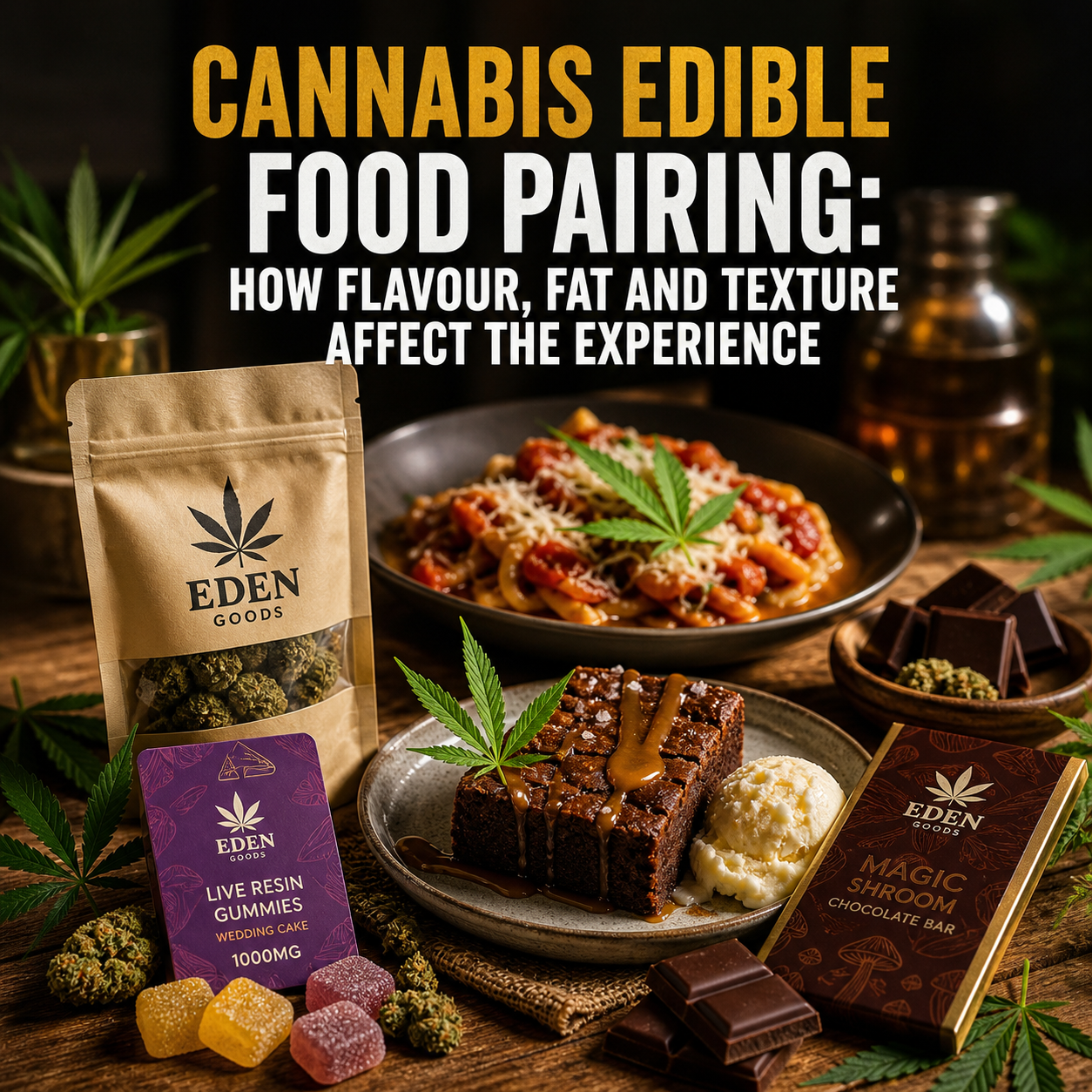
Cannabis Edible Food Pairing: How Flavour, Fat and Texture Affect the Experience
Cannabis edible food pairing is about more than placing a gummy beside a snack. Flavour, aroma, dietary fat, texture, meal size and timing can all shape how enjoyable an edible feels to eat. Some of these factors may also influence how the body processes orally consumed cannabinoids, although the result is not always predictable.
The most useful approach is simple: choose complementary flavours, keep portions controlled and avoid using food as a way to chase stronger effects. Pairing cannot correct an excessive dose. It also cannot guarantee a particular onset time or intensity.
This guide explains how to pair edibles thoughtfully while keeping safety at the centre of the experience. It applies to adults who can legally use cannabis where they live. If you take medication, have a health condition, are pregnant or breastfeeding, or have concerns about cannabis, speak with a doctor or pharmacist before use.
What Does Cannabis Edible Food Pairing Mean?
Food pairing usually refers to combining ingredients that share or balance flavours, aromas and textures. With cannabis edibles, it can have a second meaning. The surrounding meal may affect digestion and the absorption of cannabinoids such as THC and CBD.
A pairing therefore has two separate dimensions:
- The sensory pairing: how sweetness, acidity, bitterness, aroma and texture work together.
- The physiological context: whether the edible is taken with food, after a meal or on an empty stomach.
These dimensions should not be confused. A rich dessert may taste excellent with a chocolate edible, but that does not make the resulting effects precise or predictable. Individual response still depends on the product, dose, tolerance, metabolism and recent food intake.
Anyone new to edibles should first understand the product label and serving size. See [[LIEN_INTERNE: cannabis edibles]] and [[LIEN_INTERNE: edible dosing]] for additional guidance.
Why Flavour Matters in Cannabis Edible Food Pairing
Cannabis extracts can introduce herbal, grassy, bitter or resinous notes. Some products mask these characteristics almost completely. Others retain them intentionally. A successful pairing can soften an unwanted note or highlight a flavour that is already present.
Sweetness softens bitterness
Sweet ingredients can make bitter or earthy flavours seem less dominant. This is why cannabis chocolate often works well with berries, banana, vanilla, coconut or lightly sweetened coffee. The goal is balance rather than adding as much sugar as possible.
Very sweet combinations can become tiring. A touch of salt, acidity or roasted flavour often provides a cleaner finish.
Acidity creates contrast
Citrus, tart berries, yoghurt and other acidic foods can brighten rich gummies, baked goods and chocolates. Acidity also helps cut through fatty textures that might otherwise feel heavy.
Lemon, lime, orange and grapefruit flavours may appear in edible recipes, but grapefruit can interact with a range of medicines. The concern relates to the fruit and medication, not to a special cannabis-enhancing property. Ask a pharmacist if your medicine carries a grapefruit warning.
Salt can improve balance
A small amount of salt can reduce the perception of bitterness and make chocolate, caramel or nut flavours feel more rounded. Salted nuts or plain crackers can therefore complement a sweet edible without creating another heavily sweet element.
People who have been advised to limit sodium should choose an option that fits their dietary plan.
Herbal and earthy flavours can be matched rather than hidden
Some consumers prefer to work with the plant-like character of an edible. Rosemary, mint, basil, dark chocolate, toasted nuts and tea can complement earthy notes. Strongly aromatic ingredients should be used carefully, however, because they can overwhelm delicate products.
| Edible flavour | Possible pairing | Why it works |
| Dark chocolate | Berries, orange, almonds or coffee | Fruit adds brightness while roasted flavours echo the cocoa |
| Fruit gummy | Plain yoghurt, fresh fruit or unsalted nuts | Creates contrast and reduces excessive sweetness |
| Caramel | Apple, pear or lightly salted crackers | Balances richness with freshness or salt |
| Mint chocolate | Tea, berries or a plain biscuit | Keeps the pairing clean and familiar |
| Herbal or earthy edible | Dark chocolate, mint tea or toasted nuts | Complements rather than disguises botanical notes |
How Dietary Fat May Affect Cannabis Edibles
THC and CBD are fat-soluble compounds. In practical terms, dietary fat can influence the digestive environment in which orally consumed cannabinoids are processed. Research on oral cannabinoid medicines and formulations indicates that food, especially a substantial meal containing fat, can alter exposure. However, the size and direction of the effect depend on the formulation and the individual.
This does not mean that adding butter, oil or avocado will reliably make an edible stronger. Commercial gummies, chocolates, capsules, baked products and beverages use different formulations. Their behaviour cannot be assumed to be identical.
A high-fat meal may change how much cannabinoid reaches circulation or how long absorption takes. This can contribute to a later, longer or more noticeable experience in some circumstances. In other cases, the difference may feel minimal. It is not a precise dosing method.
Choose moderate, familiar sources of fat
If an edible is taken with food, there is usually no need to build an unusually fatty meal around it. A balanced meal or snack can provide an adequate digestive context.
- Plain yoghurt or a dairy-free alternative
- Nuts or nut butter
- Avocado
- Eggs
- Olive oil used in a normal meal
- Cheese in a suitable portion
Choose foods that suit your dietary needs. Anyone managing gallbladder problems, pancreatitis, reflux, food allergies or another digestive condition should follow advice from a qualified health professional.
Do not use fat to compensate for a weak effect
Delayed onset is one of the main risks associated with edibles. Eating a fatty snack and taking another serving because nothing seems to be happening can lead to an unexpectedly intense experience later.
Follow the product label and allow sufficient time before considering any additional amount. Effects from edibles can take considerably longer to appear than inhaled cannabis and may last for several hours. Product formulation and personal factors create wide variation.
Texture Changes the Eating Experience
Texture affects pace, satisfaction and palate perception. A dense brownie, chewy gummy and fast-dissolving sweet may contain the same labelled amount of THC, yet they do not feel the same to eat.
Chewy textures slow the mouth experience
Gummies and caramels remain in the mouth longer than many baked products. Their sweetness and flavour may therefore feel more pronounced. Pairing them with water, unsweetened tea, crisp fruit or plain yoghurt can refresh the palate.
Chewy products may be unsuitable for people with dentures, dental pain or swallowing difficulties. In that case, select a legally available product with a more appropriate texture and clear dosing information. Do not alter a product unless its instructions allow it.
Creamy foods soften dry or crumbly edibles
Baked edibles can feel dry, especially when portioned into small servings. Yoghurt, fruit purée or a modest spoonful of nut butter can add moisture. A warm non-alcoholic drink may also make the pairing more comfortable.
Crisp foods provide contrast
Apple slices, pears, crackers and toasted nuts can balance soft chocolate or creamy desserts. This contrast makes a small portion feel more complete without requiring another cannabis serving.
| Texture | Pairing goal | Food idea |
| Chewy | Refresh the palate | Crisp fruit, yoghurt or unsweetened tea |
| Dense or fudgy | Add freshness | Berries, orange segments or coffee |
| Dry or crumbly | Add moisture | Fruit purée, yoghurt or a warm drink |
| Creamy | Create contrast | Plain crackers, nuts or apple slices |
| Hard sweet | Keep flavours simple | Water or a mild, non-alcoholic drink |
Meal Timing and the Edible Experience
Whether an edible is consumed on an empty stomach, with a snack or after a full meal may affect onset and intensity. Unfortunately, there is no universal timing rule that guarantees the same outcome for everyone.
Taking an edible on an empty stomach
An empty stomach may make the experience feel less predictable. Some people may notice effects sooner, while others may experience stomach discomfort. It is not a reliable way to achieve a faster result.
For a beginner, taking a clearly labelled serving in a calm setting after a familiar meal may provide a more comfortable context. This is practical harm-reduction guidance, not a promise of predictable absorption.
Taking an edible with a large meal
A substantial meal can delay stomach emptying. Depending on the edible, this may postpone noticeable effects. The meal may also alter cannabinoid absorption. The combination can create a common mistake: assuming the product has failed and taking more too soon.
Consistency helps you understand your response
If cannabis use is legal and appropriate for you, keeping the context consistent can reduce uncertainty. Use the same product, follow the same labelled serving and choose a similar type of meal. Avoid testing several variables at once.
Recording the product, serving size, meal and timing can help you discuss your response accurately with a doctor or pharmacist. It should not be used to self-diagnose or replace professional advice.
Practical Cannabis Edible Food Pairing Ideas
The best pairing is often modest and familiar. It should support the flavour without hiding the serving size or encouraging mindless consumption.
For chocolate edibles
- Dark chocolate edible with raspberries and plain yoghurt
- Milk chocolate edible with apple slices and almonds
- Mint chocolate edible with unsweetened peppermint tea
- Chocolate brownie portion with strawberries
For fruit gummies
- Citrus gummy with plain yoghurt and a few nuts
- Berry gummy with fresh blueberries or strawberries
- Peach gummy with sliced pear and a plain cracker
- Tropical gummy with coconut yoghurt
For savoury edibles
- Herb-flavoured edible with tomato, cucumber and olive oil
- Seed cracker edible with hummus and crisp vegetables
- Savoury baked portion with a simple soup or salad
For a balanced tasting plate
A small tasting plate can include one clearly measured edible serving, fresh fruit, a plain food and water. Keep the cannabis item visibly separate. This prevents confusion about which foods contain THC or CBD.
Never place infused and non-infused versions of the same food together without unmistakable labels. Guests should be told exactly which item contains cannabis before anything is served.
Pairings and Habits to Avoid
Some combinations increase risk rather than improving flavour or comfort.
- Alcohol: combining alcohol with THC can increase impairment, dizziness, nausea and poor judgement. The safer choice is a non-alcoholic drink.
- Extra servings disguised as a tasting: several small pieces can quickly add up. Calculate the total labelled cannabinoid amount before eating.
- Unknown homemade potency: cannabinoids may not be distributed evenly in homemade products. Use particular caution and comply with local law.
- Unlabelled shared food: no one should consume cannabis without informed consent.
- Driving or operating machinery: do not drive after consuming an intoxicating edible. Effects can persist longer than expected.
- Mixing with medicines without advice: THC and CBD can interact with some medicines. Ask a doctor or pharmacist about your specific treatment.
Cannabis may be unsuitable for some people, including those with certain mental health or cardiovascular conditions. Personal and family history can matter. Professional medical advice is recommended when there is any uncertainty.
How to Serve and Store Edibles Safely
Good food pairing never takes priority over secure handling. Cannabis sweets and baked goods can look identical to ordinary food. This creates a serious risk for children, pets and adults who do not know that a product is infused.
- Keep the original packaging and label whenever possible.
- Store edibles in a locked place, out of sight and reach of children and pets.
- Do not use ordinary sweet jars, biscuit tins or unmarked containers.
- Keep infused foods separate from everyday snacks.
- Check the amount of THC or CBD per serving, not only the package total.
- Do not serve an edible to another person without clear information and consent.
- Dispose of unwanted products according to local guidance.
Learn more at [[LIEN_INTERNE: cannabis storage]] and [[LIEN_INTERNE: cannabis edible safety]].
If a child or pet consumes cannabis, seek urgent professional help. Contact local emergency services, a poison control service or a veterinarian as appropriate. If an adult develops severe symptoms, chest pain, breathing difficulty, loss of consciousness or extreme confusion, obtain emergency assistance.
Frequently Asked Questions About Cannabis Edible Food Pairing
Does eating fat make cannabis edibles stronger?
Dietary fat may alter the absorption of orally consumed cannabinoids, but it does not produce a consistent or predictable increase. The product formulation, meal and individual all matter. Never add another dose based on this assumption.
Is it better to take an edible with food?
Many people find a familiar meal or snack more comfortable than an empty stomach. Food can change onset and absorption, however, so follow the label and avoid redosing too soon.
What drink pairs best with an edible?
Water, unsweetened tea, coffee or another non-alcoholic drink can work well. Choose a flavour that complements the product. Avoid alcohol because it can increase impairment and unpleasant effects.
Can food reduce an edible high?
Food cannot reliably reverse THC intoxication. A calm environment, reassurance and hydration may support comfort, but severe or worrying symptoms require professional help.
Can I pair CBD edibles in the same way as THC edibles?
The same flavour and texture principles apply. However, CBD can still cause side effects and interact with medicines. A non-intoxicating label does not remove the need for caution.
Why did the same edible feel different after a meal?
Meal size, fat content, timing, digestion, sleep, stress and product variation may all contribute. Edible effects are not perfectly repeatable, even when the labelled serving is unchanged.
How should edibles be served at a gathering?
Keep them separate, labelled and inaccessible to children. Tell every adult exactly what they contain and the amount per serving. Provide non-infused alternatives and never pressure anyone to consume cannabis.
Conclusion
Cannabis edible food pairing works best when flavour, fat and texture are considered together without treating any of them as a dosing shortcut. Sweetness can soften bitterness. Acidity can brighten rich products. Texture can make a small serving feel more satisfying. A meal containing fat may influence absorption, but the result remains variable.
Choose a clearly labelled product, keep the serving controlled and allow ample time for effects to develop. Avoid alcohol, driving and unadvised combinations with medication. When health conditions or treatments are involved, speak with a doctor or pharmacist.
For carefully selected everyday wellbeing and care products, discover the Sphère Santé product range. Product choice should always reflect your personal needs and any guidance provided by your healthcare professional.