


Blog
Cannabis Flower Phenotypes: Why Plants From the Same Genetics Can Differ

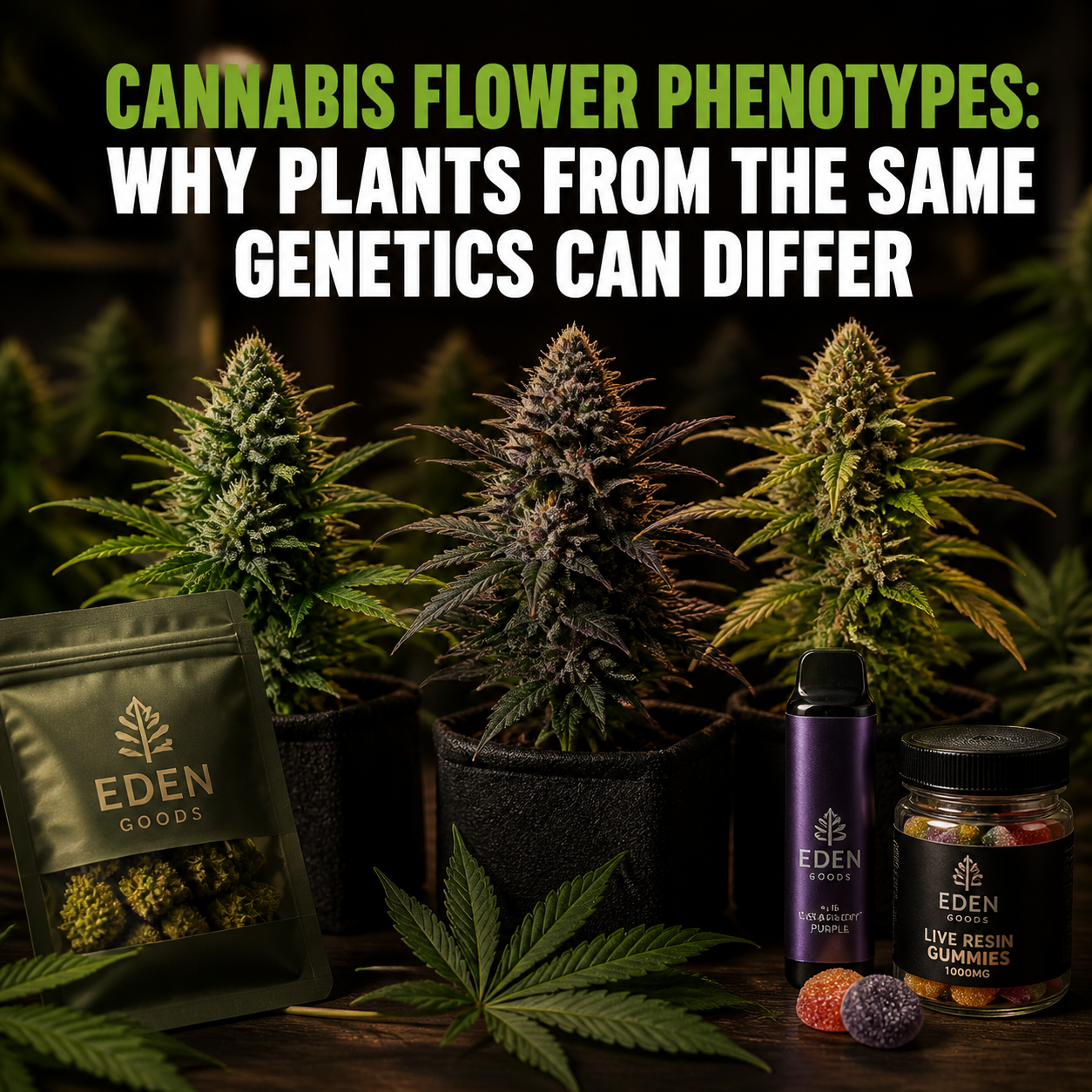
Cannabis Flower Phenotypes: Why Plants From the Same Genetics Can Differ
Two cannabis plants can come from the same named genetics yet produce flowers that look, smell, and test differently. One may develop dense purple buds with a fruit-forward aroma. Its sibling may stay green, grow looser flowers, and express more earthy notes. These differences are examples of cannabis flower phenotype variation.
A phenotype is the set of observable traits expressed by a plant. Genetics provide the possibilities, while the growing environment influences how those possibilities appear. This is why a cultivar name alone cannot guarantee identical flower from every seed, harvest, or producer.
Understanding phenotypes makes cannabis labels easier to interpret. It also explains why appearance does not always predict aroma, cannabinoid content, or personal experience. Here is what consumers need to know without getting lost in technical language.
What Is a Cannabis Flower Phenotype?
A cannabis flower phenotype is the collection of characteristics that a plant expresses and that people can observe or measure. These characteristics may include plant structure, flower density, color, trichome coverage, aroma, cannabinoid levels, and terpene composition.
In simple terms, genotype is the genetic blueprint, while phenotype is the visible or measurable result. The phenotype develops through an interaction between genetics and environmental conditions.
A useful way to express this relationship is:
Genotype + environment + development = phenotype
This formula is a simplification, but it captures the central idea. A plant cannot express a trait that its genetic background does not support. At the same time, environmental conditions can affect how strongly many traits appear.
Common phenotype traits in cannabis flower
- Flower structure: compact, elongated, rounded, airy, or irregular buds
- Color: shades of green, purple, red, orange, or combinations of these colors
- Trichome expression: the visible abundance and distribution of resin glands
- Aroma: citrus, floral, herbal, fuel-like, earthy, spicy, sweet, or other scent families
- Cannabinoid profile: measured concentrations of THC, CBD, and minor cannabinoids
- Terpene profile: the types and proportions of aromatic compounds detected by testing
- Plant form: height, branching pattern, spacing, and overall growth habit
- Development timing: differences in how quickly plants mature under comparable conditions
Not every trait is equally stable. Some characteristics are strongly influenced by genetics. Others change more noticeably in response to light, temperature, nutrition, water availability, harvest timing, drying, and storage.
Genotype, Phenotype, Chemotype, Cultivar, and Strain
Cannabis terminology is often inconsistent. Several words may appear interchangeable on product pages even though they describe different concepts. Knowing the distinction helps prevent unrealistic expectations.
| Term | What it means | What it does not guarantee |
| Genotype | The genetic information carried by an individual plant | Identical appearance or chemistry in every environment |
| Phenotype | The observable and measurable traits expressed by a plant | A unique genetic line or a consistent consumer experience |
| Chemotype | A classification based on chemical composition, often focused on dominant cannabinoids | Exact aroma, flavor, or effect |
| Cultivar | A cultivated plant selection maintained for recognizable characteristics | Perfect uniformity across all producers and harvests |
| Strain | A widely used commercial term for a named cannabis variety | Formal botanical precision or standardized chemistry |
Phenotype and chemotype are not synonyms. A purple flower with broad leaves describes visible traits, not its chemical composition. Two visually similar flowers may have different cannabinoid or terpene profiles. Conversely, flowers that look different may have broadly comparable laboratory results.
The word strain remains common because shoppers recognize it. However, a strain name is not a universal technical specification. The same name may refer to somewhat different genetic selections, phenotypes, or products depending on the breeder, producer, and market.
Why Plants From the Same Genetics Can Differ
The phrase same genetics can mean several things. It may describe seeds from the same cross, plants with the same named parentage, or clones taken from one selected mother plant. These situations do not offer the same degree of genetic consistency.
Seeds from the same parents are siblings, not copies
Seeds created from the same parental lines are genetically related, but they are usually not genetically identical. Each seed receives a different combination of inherited variants, much as siblings in a family can share parents without looking exactly alike.
This genetic recombination creates a range of possible expressions. One seed may inherit traits associated with compact flowers and a sharp aroma. Another may lean toward a taller structure and a sweeter scent. Both can legitimately belong to the same cross.
The amount of variation depends partly on how uniform the parental lines are. Highly consistent lines may produce a narrower range of offspring. Less stabilized crosses can produce wider variation. Still, seed-grown plants should not automatically be expected to match one another in every detail.
Clones are more uniform, but not perfectly identical in practice
A clone is a cutting taken from another plant. Clones from the same source generally share the same genetic starting point, which can improve consistency. Yet shared DNA does not mean every harvested flower will be indistinguishable.
Environmental differences can change plant development. Plant age, health, root conditions, pest pressure, pathogens, physical stress, and harvest timing may also affect the final product. Occasional genetic or epigenetic changes can occur over time, although not every observed difference should be attributed to mutation.
For consumers, the practical point is simple: clonal production may narrow variation, but production quality and post-harvest handling still matter.
How Environment Shapes a Cannabis Flower Phenotype
Genes define a range of potential traits. The environment helps determine where within that range a plant develops. Growers often call this interaction genetics by environment.
Important environmental influences include:
- Light intensity, spectrum, and distribution
- Day and night temperatures
- Humidity and airflow
- Water availability and root-zone conditions
- Nutrient availability and balance
- Plant density and physical space
- Stress from pests, disease, damage, or unstable conditions
- Harvest timing
These factors do not rewrite the plant into an unrelated cultivar. Instead, they influence how existing genetic potential is expressed. For example, temperature can affect pigment expression, while light exposure can influence plant form and flower development.
Environmental stress does not automatically improve flower quality. Claims that stress always creates stronger or more desirable cannabis oversimplify plant biology. Excessive stress may reduce plant health, yield, consistency, or product quality.
Post-harvest handling changes the finished flower
A cannabis flower phenotype develops on the living plant, but the product in a package also reflects what happened after harvest. Drying, curing, trimming, packaging, transport, and storage can alter aroma, texture, color, and perceived freshness.
Terpenes are volatile compounds. Poor storage or prolonged exposure to heat, air, and light may reduce aromatic intensity. Excessive dryness can make flower brittle, while unsuitable moisture conditions can create quality and safety concerns.
As a result, a muted aroma does not necessarily mean the plant lacked aromatic potential. It may indicate that volatile compounds were lost or changed after harvest.
Cannabis Flower Phenotype Versus Cannabinoid and Terpene Profile
Appearance can provide clues about condition and handling, but it cannot reveal a complete chemical profile. Thick trichome coverage may look impressive, yet the eye cannot accurately measure THC, CBD, minor cannabinoids, contaminants, or specific terpene concentrations.
Laboratory testing offers a more useful chemical snapshot. Depending on local rules and testing practices, a certificate of analysis may include:
- THC, THCA, CBD, and CBDA results
- Selected minor cannabinoids
- Terpene results, when included in the test panel
- Moisture or water activity measurements
- Screening for pesticides, microbes, mycotoxins, heavy metals, or residual solvents
Testing also has limits. Results usually describe the submitted sample, not every individual flower in a batch. Natural variation, sampling methods, laboratory procedures, and storage can affect how well a result represents the product in hand.
Can a phenotype predict effects?
A phenotype may help identify a recurring combination of traits, but it cannot guarantee how someone will feel. Personal response can vary with dose, tolerance, product composition, method of use, medications, health conditions, and setting.
Terms such as indica, sativa, and hybrid are often used as broad commercial categories. They do not reliably predict an individual experience on their own. Current batch information and measured composition are more informative than appearance or category labels, although they still cannot promise a specific effect.
Cannabis can cause unwanted effects and may interact with medicines. People who are pregnant or breastfeeding, have a relevant medical condition, take prescription medication, or have concerns about mental health should speak with a qualified healthcare professional. Do not drive or operate machinery while impaired.
What Is Phenotype Hunting?
Phenotype hunting is the process of evaluating multiple plants from a seed population to identify individuals with preferred characteristics. Breeders and producers may compare aroma, flower structure, vigor, maturation, chemical profile, resilience, and overall quality.
A selected plant may then be preserved through cloning or used in further breeding. The goal depends on the project. One producer may prioritize a distinctive terpene profile. Another may value uniform structure, reliable performance, or a balanced cannabinoid profile.
A numbered phenotype name, such as a cultivar followed by a number, often identifies one selection from a broader population. The number does not indicate potency or quality by itself. It usually acts as an internal or commercial identifier.
Selection is not the same as stabilization
Finding one desirable plant does not mean its seeds will reproduce every trait consistently. A clone can preserve the selected individual more directly. Producing seed offspring with predictable characteristics typically requires further selection across generations.
This explains why a famous selected phenotype may remain available primarily as a clone. Seed versions with similar branding may show greater variation unless the breeder has worked to create a more consistent line.
How to Compare Cannabis Flower Phenotypes as a Consumer
Consumers rarely need to identify phenotypes by sight. A better approach is to compare specific, verifiable product details. Focus on the current batch rather than assuming that a familiar cultivar name will always deliver the same flower.
- Read the complete label. Check the cultivar, producer, batch number, packaging date, cannabinoid values, and any available terpene information.
- Look for batch-specific testing. A current certificate of analysis is more useful than a generic description of the cultivar.
- Assess condition, not beauty alone. Color and trichomes can be appealing, but proper texture, freshness, and clean handling matter more than a dramatic photograph.
- Use aroma as one clue. A clear aroma can reflect terpene retention, but scent intensity does not prove potency or safety.
- Keep expectations flexible. Harvests can differ even when the producer and named genetics remain the same.
- Follow local laws and age restrictions. Purchase only from lawful sources where cannabis products are permitted.
Questions worth asking about a product
- Is the flower seed-grown or produced from a selected clone?
- Does the phenotype number identify a specific preserved selection?
- Are the laboratory results linked to this exact batch?
- When was the flower harvested or packaged?
- Which cannabinoids and terpenes were actually measured?
- How should the unopened and opened product be stored?
Reliable sellers should distinguish measured facts from descriptive language. Words such as premium, exotic, frosty, or uplifting are not laboratory standards. They may communicate positioning or expected qualities, but they should not replace accurate batch information.
Common Misconceptions About Cannabis Flower Phenotypes
One cultivar name means one identical product
Cultivar names can group related products, but they do not guarantee identical genetics, production methods, or chemistry across companies. Provenance and batch data provide important context.
Purple flower is always more potent
Purple coloration often involves anthocyanin pigments and can reflect both genetics and environmental conditions. Color alone does not establish cannabinoid potency, terpene content, purity, or overall quality.
More visible trichomes always mean more THC
Visible resin glands may suggest strong trichome expression, but appearance cannot accurately quantify cannabinoids. Trichomes also contain compounds other than THC, and laboratory measurement remains the better guide.
The strongest-smelling flower is the strongest product
A strong aroma may indicate abundant or well-preserved volatile compounds. It does not directly measure THC concentration. Potency, aroma, and personal response are related to different product characteristics.
A clone produces identical flower forever
Clones share a genetic origin, but differences in plant health, environment, harvest, and post-harvest handling can change the finished flower. Consistency requires more than genetic replication.
Frequently Asked Questions About Cannabis Flower Phenotypes
What does phenotype mean in cannabis?
It means the observable or measurable traits expressed by a cannabis plant, including structure, color, aroma, cannabinoid levels, and terpene composition.
Can two seeds from the same cannabis plant look different?
Yes. Seeds are usually genetically distinct siblings. Each can inherit a different combination of traits, leading to noticeable phenotype variation.
Are phenotype numbers a measure of quality?
No. A phenotype number generally identifies a selected plant from a group. It does not independently prove potency, safety, or superior quality.
Is a phenotype the same as a strain?
No. A strain or cultivar name refers to a broader named variety, while a phenotype describes the traits expressed by an individual plant within that genetic population.
Can the same clone produce different THC results?
Yes. Growing conditions, plant health, harvest timing, sampling, and laboratory variation can contribute to different results, even among genetically related clones.
Does flower color identify its phenotype?
Color is one phenotype trait, but it is not enough to identify the complete phenotype. Structure, aroma, chemistry, and other characteristics also matter.
Can you determine effects from appearance?
No. Appearance cannot reliably predict effects. Chemical composition, amount used, tolerance, health factors, and individual sensitivity all play a role.
Conclusion
A cannabis flower phenotype is the expressed result of genetics interacting with environment and development. Plants from the same seed cross can differ because they are siblings rather than copies. Clones offer greater genetic consistency, but growing conditions and post-harvest handling can still change the final flower.
For consumers, phenotype language is most useful when it connects to clear provenance, batch-specific testing, and accurate product details. Color, aroma, and trichome coverage may enrich the description, but none can replace chemical analysis or responsible labeling.
Understanding these limits makes it easier to compare products without relying on myths. Focus on the current batch, use cannabis only where lawful, and seek professional medical advice when health conditions or medications could affect your situation.