


Blog
Hash Rosin vs Live Resin: Extraction, Aroma, Potency and Value

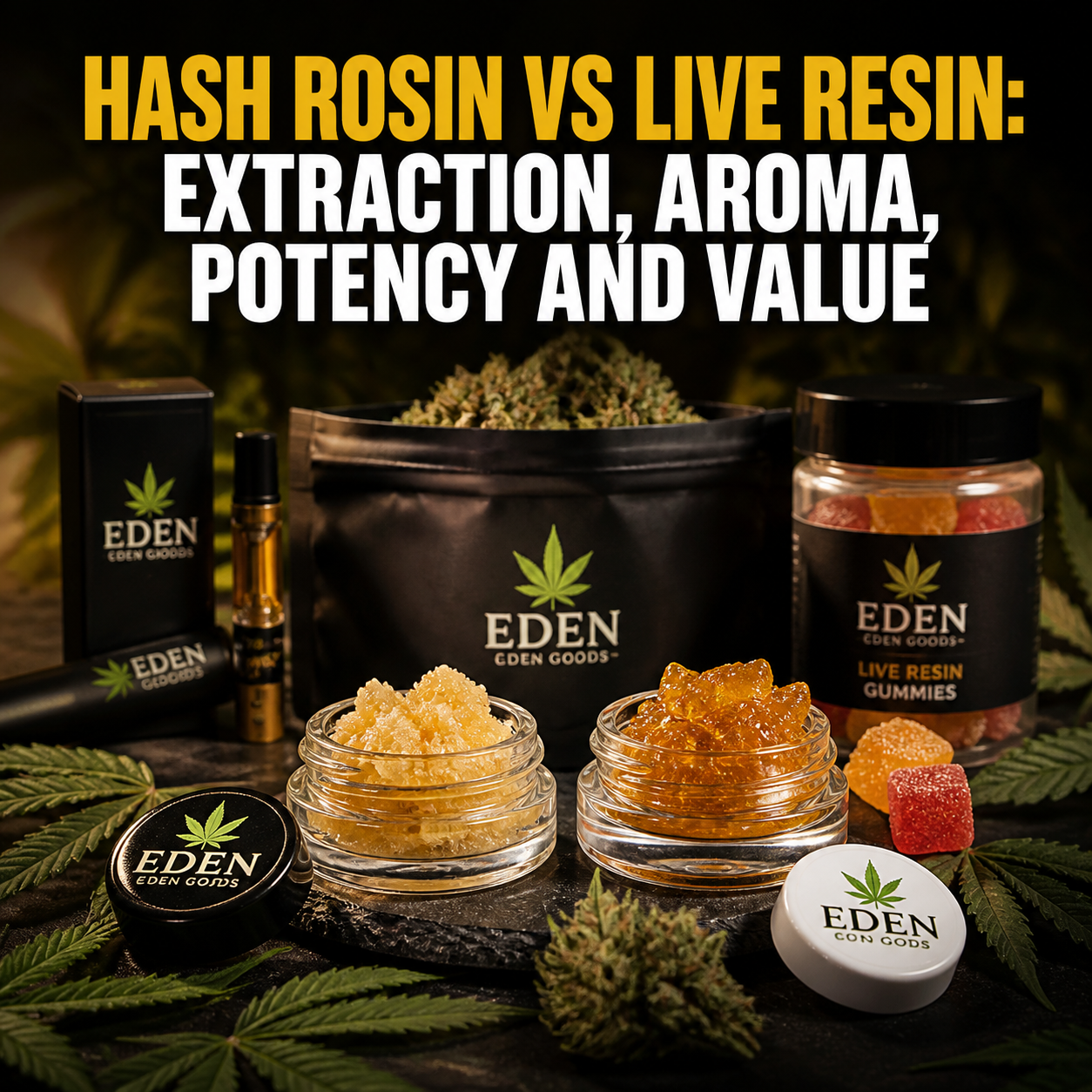
Hash Rosin vs Live Resin: Extraction, Aroma, Potency and Value
Comparing hash rosin vs live resin can feel confusing. Both are aromatic cannabis concentrates associated with fresh-frozen material, rich terpene profiles and premium product lines. However, they reach the jar through very different extraction methods.
Hash rosin is a solventless concentrate pressed from mechanically separated trichomes, usually ice water hash. Live resin is generally produced by extracting fresh-frozen cannabis with hydrocarbons in a controlled commercial system. Neither is automatically stronger, safer or better. The best choice depends on verified quality, aroma, texture, storage, price and your personal priorities.
This guide explains the differences without treating potency as the only measure of quality. Cannabis laws vary by location, and concentrates can cause significant impairment. Buy only where legal, review the available laboratory report and seek professional medical advice if cannabis could interact with your health condition or medication.
Hash Rosin vs Live Resin at a Glance
The shortest answer concerns the extraction method. Hash rosin relies on mechanical separation, heat and pressure rather than hydrocarbon solvents. Live resin uses a solvent-based process to recover cannabinoids and aromatic compounds from material frozen soon after harvest.
| Feature | Hash rosin | Live resin |
| Starting material | Usually ice water hash made from fresh-frozen or cured cannabis | Usually fresh-frozen cannabis flower |
| Extraction category | Solventless mechanical extraction | Solvent-based extraction, commonly using hydrocarbons |
| Typical character | Full, strain-specific and sometimes complex | Bright, aromatic and strongly expressive |
| Common textures | Fresh press, badder or cold-cured consistency | Sauce, sugar, badder or other formulated consistencies |
| Potency | Often high, but varies by batch | Often high, but varies by batch and formulation |
| Typical price | Frequently higher due to labor and yield | Often less expensive at a comparable quality level |
| Main buying priority | Solventless processing and craft production | Aromatic intensity, consistency and relative value |
These descriptions reflect common practices, not universal rules. Product names are not always standardized across markets. Packaging and an independent certificate of analysis provide more useful information than broad labels alone.
How Hash Rosin and Live Resin Are Made
Hash rosin uses mechanical separation
Hash rosin begins with concentrated trichome heads. Producers commonly separate those resin glands from cannabis through ice water agitation and filtration. The resulting hash is carefully dried, then pressed with controlled heat and pressure. The extracted resin becomes hash rosin.
This process does not use butane, propane or another hydrocarbon extraction solvent. That is why hash rosin belongs to the solventless category. However, solventless should not be interpreted as automatically pure or contaminant-free. Cultivation inputs, poor handling, microbial growth and environmental contaminants can still affect the finished product.
Hash quality matters at every stage. Mature trichomes, suitable genetics, careful freezing, effective drying and clean handling all influence flavor, color and stability. Because not every cultivar produces abundant, easily separated trichomes, premium hash rosin can require substantial plant material and labor.
Live resin uses fresh-frozen cannabis
Live resin typically starts with cannabis frozen shortly after harvest rather than flower that has completed a conventional drying and curing process. Freezing helps preserve volatile aromatic compounds that may otherwise change or dissipate over time.
A licensed processor then uses a closed-loop extraction system, commonly with butane, propane or a blend. The extract undergoes professional refinement and solvent removal before testing and sale. This is industrial work that requires specialized equipment, ventilation, training and regulatory controls. It should never be attempted with improvised equipment or in a residential setting.
Residual solvent testing is therefore important when evaluating live resin. A compliant laboratory result should show that tested compounds fall within the limits set by the relevant jurisdiction. The mere use of a solvent does not prove that a finished concentrate contains an unsafe amount, just as a solventless label does not guarantee overall cleanliness.
Why fresh-frozen does not mean solventless
A common source of confusion is the word live. It describes how the source material is preserved, not whether solvents are used. Live resin is usually solvent-extracted. Live rosin is solventless rosin made from hash or flower associated with fresh-frozen material. Hash rosin can be live hash rosin, but it can also come from cured material.
Aroma and Flavor: Which Preserves More Terpenes?
Both concentrates can deliver a pronounced aroma. Live resin became popular largely because fresh-frozen processing can retain a vivid profile. Depending on the cultivar, that profile may seem citrus-forward, floral, earthy, fuel-like, spicy or sweet.
Hash rosin can offer a similarly expressive experience, often with a dense or layered character. Mechanical separation may retain compounds beyond the major cannabinoids and headline terpenes. Yet extraction category alone does not predict whether a particular jar will smell or taste better.
Aroma depends on several connected factors:
- The cannabis cultivar and its natural chemical profile
- Plant health and maturity at harvest
- How quickly and carefully material was frozen
- Extraction, drying and post-processing conditions
- Time spent in storage before purchase
- Exposure to heat, oxygen and light
- Whether terpenes were separated and reintroduced
A high terpene percentage is not a complete quality score. The balance of aromatic compounds matters, and excessive or poorly integrated terpenes can create a harsh impression. A fresh production date, appropriate storage and a clean, cultivar-consistent aroma may tell you more than one large number on a label.
Hash Rosin vs Live Resin Potency
It is inaccurate to say that hash rosin is always more potent than live resin, or the reverse. Both can contain substantial levels of THC and cause strong intoxication. The exact result depends on the source material, extraction efficiency, formulation and batch.
Live resin products may contain varying proportions of cannabinoid crystals and terpene-rich sauce. Adjusting that ratio can change potency, texture and aroma. Hash rosin also varies according to trichome quality, filtration grade and processing. Two jars in the same category may have noticeably different laboratory profiles.
When comparing potency, review the batch-specific certificate of analysis rather than relying on product type. Consider:
- Total THC and the way the laboratory reports acidic and active cannabinoids
- Other listed cannabinoids, where available
- Terpene information, if tested
- Serving information required by local regulations
- The batch number and whether it matches the package
- The laboratory name and testing date
Higher THC does not necessarily mean higher quality. Aroma, smoothness, freshness, handling and contaminant testing may matter more than a small difference in potency. Individual response also varies. Concentrates can be overwhelming for people with limited tolerance.
Texture and Appearance
Hash rosin may appear as glossy fresh press, creamy badder or a more granular cured consistency. Natural changes can occur as cannabinoids and terpenes interact over time. Color ranges from pale cream and gold to darker amber or brown. A lighter color is not automatically superior because genetics, trichome maturity and processing all affect appearance.
Live resin is sold in textures such as sauce, sugar, badder and diamonds with sauce. These terms describe consistency rather than a single standard composition. Some products remain runny because of their terpene-rich fraction, while others are whipped or crystallized.
Avoid judging either concentrate by social media appearance alone. Unusually pale material can still lack character, while a darker product may remain aromatic and well made. More important warning signs include damaged packaging, an absent batch number, an unusual chemical odor, visible foreign matter or evidence of poor temperature control.
Price and Value: Why Hash Rosin Often Costs More
Hash rosin often commands a higher retail price because its production can require more labor and may produce lower yields. Cultivars suitable for solventless extraction are also selected for specific trichome characteristics. Washing, filtration, drying, pressing and curing demand careful handling.
Live resin extraction can process plant material efficiently at commercial scale. This may make a high-quality product available at a lower price than premium hash rosin. The necessary equipment and compliance systems are still costly, but scalable production can improve the price per unit.
Value should not mean choosing the cheapest jar or the highest THC percentage. Compare the following:
- Price per gram or unit
- Batch date and apparent freshness
- Complete contaminant testing
- Ingredient transparency
- Storage conditions at the retailer
- Brand consistency and traceable production
- Whether the aroma and texture suit your preferences
Hash rosin may offer better value if solventless processing is your priority. Live resin may offer better value if you want a strong, fresh aroma at a more accessible price. A carefully produced live resin can be preferable to poorly handled rosin, regardless of the premium label.
Quality, Testing and Safety
No cannabis concentrate is risk-free. High-potency products can impair coordination, attention and judgment. They may also cause anxiety, dizziness or other unwanted effects in some people. Do not drive, operate machinery or combine intoxicating cannabis with alcohol or other impairing substances.
Purchase only from a legal, regulated source where products must follow local packaging and testing rules. Laboratory requirements differ between jurisdictions, but a useful report may include screening for residual solvents, pesticides, heavy metals and microbial contamination. Hash rosin does not need residual hydrocarbon removal, yet it still benefits from broad contaminant testing.
People who are pregnant or breastfeeding should seek medical guidance and generally avoid cannabis unless a qualified clinician advises otherwise. Speak with a healthcare professional before using cannabis if you have a cardiovascular or mental health condition, take prescription medicine, or have experienced problematic substance use. Product descriptions are not a substitute for individualized medical care.
How to read a certificate of analysis
First, confirm that the report matches the product name and batch or lot number. Check the testing date and the laboratory identity. Then review potency and each safety panel. A simple pass statement is helpful, but numerical results and reporting limits provide more context when available.
Be cautious if a seller cannot connect the jar to a batch-specific report. A generic document or screenshot may not describe the product in front of you. Laboratory results also represent a sample, so they complement rather than replace responsible production and storage.
How to Choose Between Hash Rosin and Live Resin
Your priorities provide a better answer than a universal ranking. Choose hash rosin when solventless production, small-batch craftsmanship and the character of mechanically separated trichomes matter most. Be prepared for a higher price and potentially greater sensitivity to storage conditions.
Choose live resin when you value an aromatic fresh-frozen profile, a broad range of textures and often a more approachable price. Confirm that the product comes from a regulated processor and has passed the required residual solvent and contaminant tests.
Before purchasing either option, ask:
- Does the batch have a verifiable laboratory report?
- Was the concentrate stored away from heat and direct light?
- Are all ingredients and added terpenes disclosed?
- Does the package show a production or packaging date?
- Is the price reasonable for the tested quality and freshness?
- Is this product legal where I live?
Storage and Freshness
Heat, oxygen, light and repeated temperature changes can alter aroma and texture. Keep concentrates sealed in their original child-resistant container and follow the producer’s storage instructions. Store them securely away from children, teenagers and pets.
Cool storage may help protect volatile compounds, but freezing and thawing can introduce condensation if packaging is handled poorly. Allowing a sealed container to adjust gradually before opening can reduce moisture exposure. Do not use a product that shows mold, foreign material, compromised packaging or a distinctly abnormal odor.
Common Misconceptions
Solventless always means safer
Solventless production avoids hydrocarbon extraction solvents, but safety also depends on cultivation, sanitation, drying, packaging and testing. A well-tested live resin may offer more assurance than untested hash rosin from an unknown source.
Live resin is the same as live rosin
They are different. Both may use fresh-frozen cannabis, but live resin generally relies on solvent extraction. Live rosin is produced through mechanical separation and pressing.
The highest THC product is the best
THC is only one part of the experience. Freshness, aromatic balance, contaminant testing, texture and personal tolerance also matter. Very high potency may increase unwanted effects without improving overall quality.
Pale color proves premium quality
Color can reflect genetics, harvest timing, oxidation and processing. It is not a dependable stand-alone grade. Traceability, aroma and batch testing offer stronger evidence.
Frequently Asked Questions
Is hash rosin better than live resin?
Not universally. Hash rosin suits buyers who prioritize solventless processing. Live resin may provide excellent aroma and value. Batch quality matters more than category alone.
Which is stronger, hash rosin or live resin?
Either can be stronger. Compare batch-specific laboratory results, since potency varies with the cultivar, extraction and formulation.
Does live resin contain butane?
Hydrocarbons are commonly used during production, but licensed processors remove them to regulated limits. Check the residual solvent results for the exact batch.
Is hash rosin always made from fresh-frozen cannabis?
No. Many premium products use fresh-frozen material, but hash rosin can also be made from hash produced with cured cannabis.
Why is hash rosin more expensive?
It often requires suitable genetics, substantial starting material, careful mechanical separation, specialized drying and significant labor, sometimes with relatively low yields.
How should concentrates be stored?
Keep them sealed, protected from heat and light, and stored according to the producer’s instructions. Always secure cannabis away from children and pets.
Conclusion
In the hash rosin vs live resin comparison, extraction method creates the clearest difference. Hash rosin is mechanically produced without hydrocarbon solvents, while live resin generally uses controlled solvent extraction on fresh-frozen cannabis. Both can provide rich aroma, high potency and premium quality.
Hash rosin often appeals to solventless enthusiasts and craft-product buyers. Live resin frequently offers strong aromatic character at a lower price. Neither label guarantees purity or superiority. Look for legal sourcing, batch-specific testing, transparent ingredients, suitable storage and realistic potency information. If cannabis raises concerns because of your health, medication or personal history, discuss them with a qualified healthcare professional.
