


Blog
Full Melt vs Bubble Hash: Melt Quality, Grades and Handling Differences

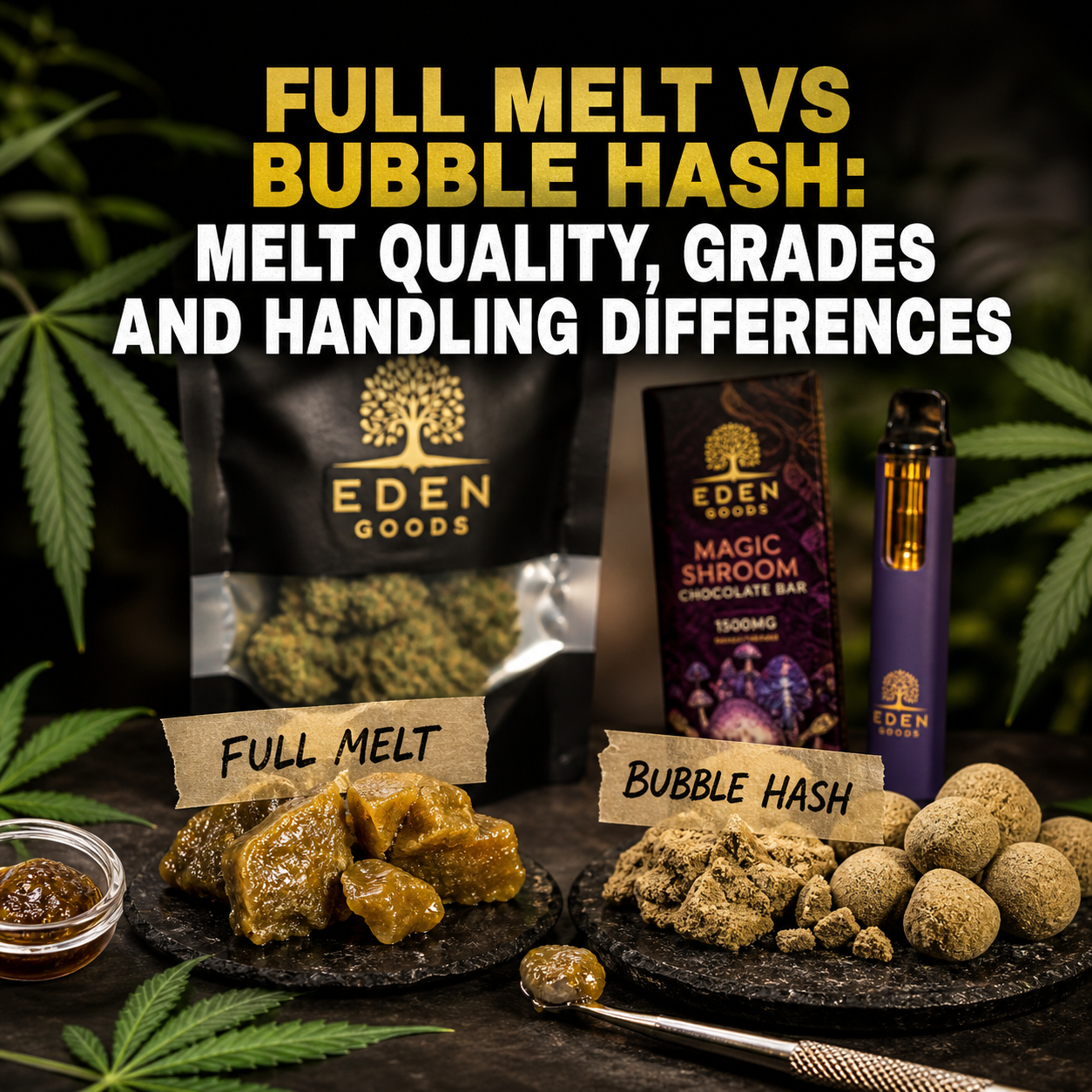
Full Melt vs Bubble Hash: Melt Quality, Grades and Handling Differences
The full melt vs bubble hash comparison often causes confusion because these terms do not describe two completely separate concentrates. Bubble hash is a solventless cannabis concentrate made by separating resin glands, or trichomes, from plant material with ice water and filtration. Full melt is bubble hash of exceptional purity that melts almost completely when heated and leaves very little residue.
In simple terms, all traditional full melt is bubble hash, but not all bubble hash qualifies as full melt. The difference comes down to resin quality, cleanliness, plant material content, drying, storage and melt performance. Star ratings can help describe these qualities, although no universal grading authority enforces them.
This guide explains what the labels mean, how the grades compare and why texture and handling matter. Cannabis laws vary, so purchase and possess concentrates only where permitted. These products may contain high levels of THC and are intended only for adults of legal age.
What Is Bubble Hash?
Bubble hash is a concentrated collection of cannabis trichomes. Trichomes are the small resin-producing structures found mainly on cannabis flowers. They contain cannabinoids, terpenes, waxes and other natural compounds.
Producers generally use cold water, ice and agitation to separate these fragile resin glands from the plant. Mesh filtration bags then sort the material by particle size. This process does not require hydrocarbon solvents such as butane or propane, which is why bubble hash belongs to the broader solventless concentrate category.
The finished product can vary greatly. Some bubble hash is dark, dense and rich in plant particles. Higher-quality material may appear sandy, pale or golden before becoming glossy and cohesive at warmer temperatures. Color alone, however, cannot prove purity.
Why bubble hash quality varies
The name describes a production category rather than a single quality level. Several factors influence the final result:
- The quality, freshness and maturity of the starting cannabis
- The condition and structure of the trichome heads
- The amount of unwanted plant material collected
- The filtration range used during separation
- Temperature control during processing
- Drying speed and uniformity
- Exposure to oxygen, heat, light and moisture
- Storage conditions after production
Bubble hash may therefore range from cooking-grade material to highly refined, dabbable full melt. A label that says bubble hash does not reveal the grade on its own.
What Is Full Melt Hash?
Full melt is a quality designation for hash that liquefies readily under heat and leaves minimal visible residue. This behavior suggests a high proportion of clean resin heads and a low proportion of leaf fragments, stalks, dust or other non-melting material.
Well-preserved full melt may offer a pronounced aroma because its trichomes retain volatile compounds. Its consistency can change quickly with temperature. Cold material may look granular or powdery, while warmth and pressure can make it sticky, glossy or grease-like.
The term does not refer to a regulated laboratory category. One producer may apply it more generously than another. A product described as full melt should still come with clear labeling, batch details and required compliance testing where regulated sales exist.
Does full melt mean six-star hash?
Full melt and six-star hash are often treated as equivalent terms. In common industry language, six-star usually describes the cleanest, most complete melt. Five-star material may also melt very well but leave slightly more residue. Lower grades generally contain increasing amounts of non-melting matter.
This star system remains subjective. There is no universally accepted test that guarantees one company’s five-star grade matches another company’s. Treat the rating as a useful description, not a certified measurement.
Full Melt vs Bubble Hash at a Glance
| Feature | Full melt | Bubble hash in general |
| Category | A premium grade of bubble hash | A broad solventless concentrate category |
| Melt behavior | Liquefies almost completely | Ranges from limited melting to near-complete melting |
| Residue | Very little when quality is accurately represented | Amount varies by grade and cleanliness |
| Plant material | Minimal | Low to substantial, depending on grade |
| Typical texture | Sandy when cold; sticky or greasy when warm | Powdery, crumbly, pressed, sticky or dense |
| Handling sensitivity | Very sensitive to warmth and pressure | Varies, with lower grades often easier to handle |
| Availability | Limited and usually more expensive | More widely available across several grades |
| Best quality evidence | Clean melt, aroma, appearance and verified testing | Accurate grade information and verified testing |
Full Melt vs Bubble Hash Grades Explained
Hash grading tries to summarize purity and melt performance. It does not directly measure potency, safety or flavor. A higher star count often indicates cleaner resin, but the label should never replace regulated laboratory information.
One- and two-star hash
These grades generally contain a noticeable amount of plant material and may barely melt. They can appear greenish, brown or compressed. Producers and consumers commonly reserve them for preparations in which complete melting is not the priority.
Three- and four-star hash
Mid-grade bubble hash may bubble and partially melt while leaving visible residue. Four-star material is sometimes called half melt. It can still have an appealing aroma and good resin content, but it lacks the cleanliness associated with true full melt.
Five-star hash
Five-star hash often melts extensively and leaves only a modest residue. It may sit close to full-melt quality, depending on the producer’s criteria. Differences between excellent five-star and lower-end six-star products can be subtle and subjective.
Six-star full melt
Six-star hash represents the top of the informal scale. It should liquefy quickly, preserve a strong cultivar-specific aroma and leave little contamination behind. It is also delicate. Poor drying or warm storage can reduce its quality even when the original resin was excellent.
| Informal grade | Expected melt | Likely residue |
| One to two stars | Low | Heavy |
| Three stars | Partial | Noticeable |
| Four stars | Moderate to strong | Moderate |
| Five stars | Strong to nearly complete | Low |
| Six stars | Near-complete or complete | Minimal |
These descriptions reflect common trade usage rather than enforceable standards. Sellers should be able to explain what their grading terms mean.
How to Assess Melt Quality Without Relying on Marketing
No single visible feature proves that a concentrate is full melt. A better evaluation considers several indicators together. Regulated testing and transparent product information remain more reliable than appearance alone.
Melt and residue
True full melt becomes a fluid resin under suitable heat and leaves very little solid material. By contrast, lower-grade bubble hash may char, retain its original shape or produce a substantial layer of residue.
A dramatic bubble does not automatically mean high purity. Moisture and trapped air can also produce bubbling. Applying an open flame directly to a product is not a reliable quality test and creates avoidable fire and inhalation risks.
Color and trichome maturity
Premium hash often appears cream, blond, tan or golden, but darker material is not automatically poor. Cultivar genetics, trichome maturity, oxidation, pressing and storage all affect color. Very green material may suggest excess leaf contamination, yet color should remain only one part of the assessment.
Aroma
Fresh, well-stored resin often has a clear aroma consistent with the source cultivar. A weak smell may reflect age or volatile compound loss. Sharp chemical, musty or ammonia-like odors are warning signs. Do not use a product that appears contaminated or smells abnormal.
Texture
High-quality loose hash may resemble fine sand when cold. It can clump or become glossy as it warms because the resin heads soften. A wet, spongy or unusually damp texture may indicate incomplete drying, which raises storage concerns.
Testing and traceability
Where legal markets require testing, review the product label or certificate for cannabinoids and screened contaminants. Relevant panels may include pesticides, microbial contamination, heavy metals and other substances required by local rules. Testing requirements differ between jurisdictions, so confirm what a result actually covers.
Handling Differences Between Full Melt and Bubble Hash
Handling is one of the clearest practical differences in the full melt vs bubble hash comparison. Full melt reacts readily to body heat, room temperature and pressure. Lower grades tend to stay crumbly or pressed for longer.
Keep full melt cool
Cool conditions help preserve texture and aroma. Full melt can grease up quickly when left in a warm room. This change does not always mean the product is spoiled, but repeated warming accelerates oxidation and makes precise handling more difficult.
Use clean, dry tools rather than warm fingers. Limit the time the container remains open. Avoid placing it near a sunny window, heater, appliance or hot vehicle.
Prevent condensation
Cold storage requires care. Opening a very cold container immediately in a humid room can allow condensation to form on the concentrate. Moisture may affect texture and create conditions that favor microbial growth.
Keep the sealed container closed while it gradually approaches the surrounding temperature. Once condensation is no longer a concern, open it briefly and return it to suitable storage.
Protect lower-grade bubble hash too
Mid- and lower-grade bubble hash may tolerate handling better, but it still degrades with heat, oxygen and light. Store it in a clean, airtight, food-safe container. Avoid repeated compression, unnecessary exposure and contact with dirty surfaces.
Separate products and label them
Clearly label containers with the product name and relevant purchase information. Keep different grades or cultivars separate. Store all cannabis products locked away from children, teenagers, pets and anyone who could consume them accidentally.
Drying and Storage Matter as Much as Initial Purity
Freshly separated resin retains moisture and must be dried correctly by the producer. If moisture remains trapped inside, the hash may degrade or develop microbial contamination. Excessive heat during drying can also damage aroma and texture.
Consumers cannot reliably correct improperly dried hash at home. If a product seems wet, musty or visibly altered, do not attempt to rescue it through improvised heating. Contact the licensed retailer or producer and follow local disposal guidance.
For packaged products, follow the manufacturer’s storage directions. In general, stable cool temperatures, darkness, limited oxygen exposure and a tightly closed container support quality. Long-term freezing can preserve some products, but repeated freeze-and-thaw cycles and condensation may cause damage.
Potency, Effects and Health Considerations
Full melt is often resin-rich, but melt quality is not the same as THC percentage. A cleaner product can have excellent melt behavior without being the most potent concentrate on the shelf. Only verified testing can provide meaningful cannabinoid information for a specific batch.
Cannabis concentrates can produce strong effects, especially for people with little tolerance. Possible adverse effects include anxiety, dizziness, impaired coordination, rapid heart rate and confusion. Effects vary with potency, amount, individual sensitivity and other substances used at the same time.
- Do not drive or operate machinery after using cannabis.
- Avoid combining cannabis with alcohol or other intoxicating substances.
- Keep concentrates in child-resistant packaging when available.
- Do not use products that show mold, unusual moisture or damaged packaging.
- Seek urgent help after severe symptoms or accidental ingestion.
People who are pregnant or breastfeeding, have cardiovascular concerns, experience mental health symptoms, or take prescription medication should speak with a qualified healthcare professional before considering cannabis. This article provides product education and does not replace medical advice.
How to Choose Between Full Melt and Other Bubble Hash
The right choice depends on priorities, local availability and budget. Full melt commands a premium because clean separation requires suitable plant material, careful processing and strict temperature control. It may appeal to experienced adult consumers who value minimal residue and preserved resin characteristics.
Other bubble hash grades can offer better value and easier handling. A well-made mid-grade product may still provide an attractive aroma and consistent quality. It should not be dismissed merely because it does not liquefy completely.
Before buying in a legal market, consider the following questions:
- Does the seller define the stated grade?
- Is the product from a licensed and traceable source?
- Does the package show batch and testing information?
- Has the hash been stored at an appropriate temperature?
- Does the texture look dry and consistent rather than damp?
- Is full melt performance important enough to justify the price?
A trustworthy description should distinguish objective details from subjective ratings. Be cautious when a seller uses premium terms without explaining the product’s source, grade or testing.
Common Full Melt vs Bubble Hash Misconceptions
Full melt is not a separate extraction family
Full melt usually refers to a top grade within bubble hash. It is not automatically a different extraction process. Both can come from ice-water separation.
More bubbles do not always mean better hash
Bubbling can reflect resin content, but moisture may also contribute. Clean melting and low residue provide more useful clues than bubbles alone.
A lighter color does not guarantee purity
Genetics, harvest timing and oxidation influence color. Pale hash can still contain contaminants, while darker hash can be resin-rich and carefully produced.
Micron size is not a grade by itself
Mesh size describes the particle range collected during filtration. The best range differs among cultivars because trichome heads vary in size. A specific micron label does not guarantee full melt.
Solventless does not mean risk-free
Bubble hash avoids hydrocarbon extraction solvents, but it can still contain agricultural residues, microbes or unwanted plant matter. It also remains an intoxicating cannabis product. Responsible sourcing, testing and storage are essential.
Frequently Asked Questions
Is full melt better than bubble hash?
Full melt is a premium type of bubble hash with greater purity and less residue. Whether it is better depends on your priorities, budget and preference for melt performance.
Is all six-star hash full melt?
Six-star generally means full melt, but the scale is not regulated. Confirm how the producer defines the rating and review independent testing where available.
Why does full melt turn sticky?
Its resin-rich trichomes soften with warmth and pressure. Stickiness is common, although excessive heat and repeated temperature changes can reduce quality.
Does bubble hash need refrigeration?
Storage needs depend on the product and expected storage period. Cool, dark and airtight conditions are generally helpful. Follow the producer’s directions and prevent condensation.
What does half melt mean?
Half melt usually describes mid-grade hash that liquefies partly but leaves noticeable residue. It often corresponds loosely to three- or four-star material.
Does a micron number identify full melt?
No. Micron size identifies a filtration range, not guaranteed quality. Cultivar, trichome maturity, contamination, drying and storage all influence melt performance.
Can color reveal bubble hash quality?
Color offers clues but cannot confirm quality. Genetics, maturity, oxidation and processing affect appearance, so testing and traceability matter more.
Conclusion
The key to understanding full melt vs bubble hash is recognizing that full melt belongs within the bubble hash category. It represents exceptionally clean resin that melts almost completely and leaves minimal residue. Standard bubble hash covers a much wider range of purity, texture and performance.
Star grades, color and micron labels can guide a comparison, but none offers a universal guarantee. Look for transparent sourcing, careful storage, accurate labeling and required laboratory testing. Handle full melt with clean tools and controlled temperatures, and protect every concentrate from heat, moisture, children and pets.
Finally, remember that melt quality does not determine safety or medical suitability. Cannabis concentrates may be highly intoxicating. Follow local laws and speak with a healthcare professional if you have questions related to your health, medication or personal risk factors.
