


Blog
Best Voltage for THC Vape Cartridges: Finding a Smoother Vape Setting

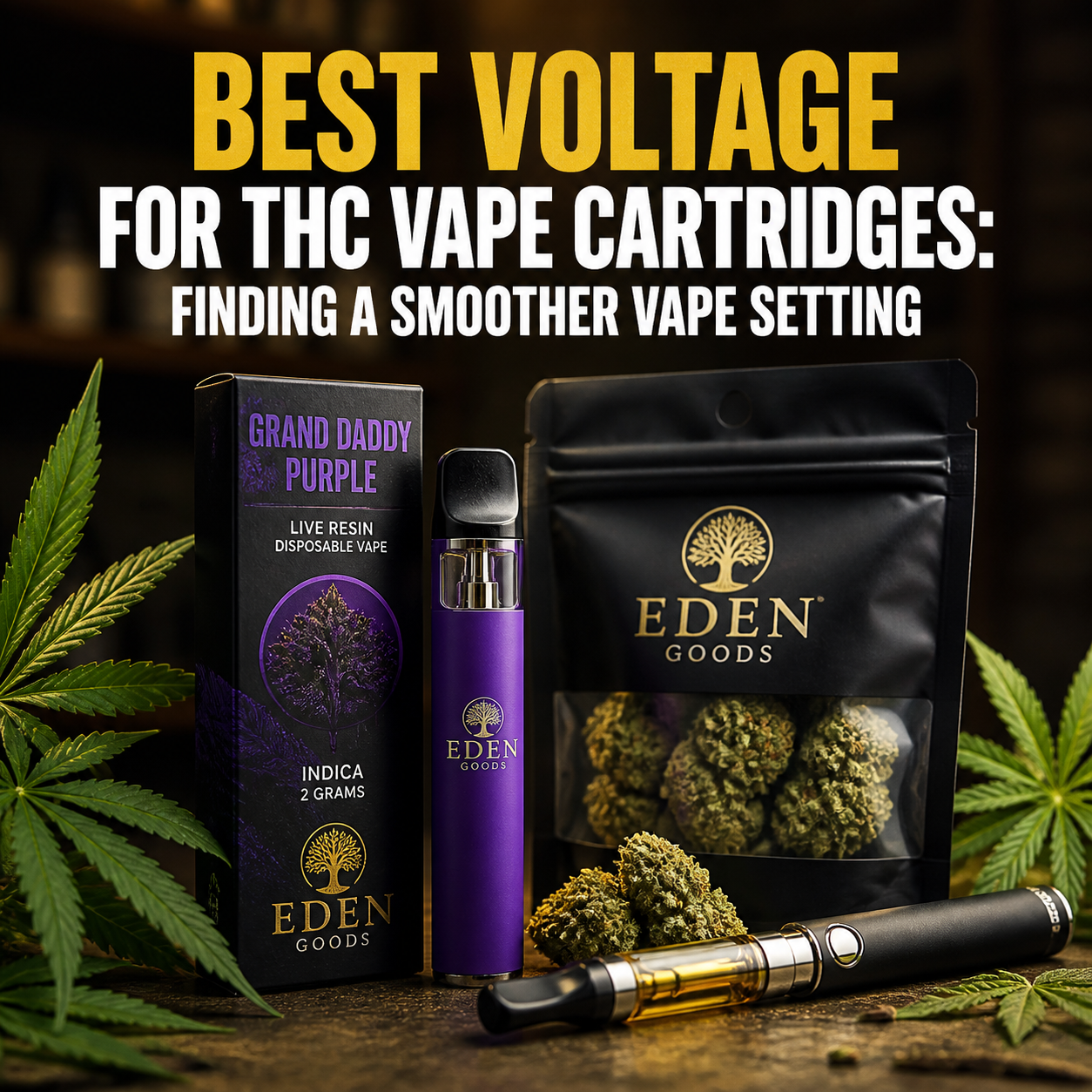
Best Voltage for THC Vape Cartridges: Finding a Smoother Vape Setting
The best voltage for a THC vape cartridge is usually between 2.4 and 2.8 volts. This range often provides a practical balance of flavor, vapor production, and cartridge life. However, there is no universal setting. Oil thickness, coil resistance, cartridge design, airflow, and battery accuracy can all affect the result.
If your battery has adjustable voltage, begin near the lower end of the cartridge manufacturer’s recommended range. Take a short, gentle draw and increase the voltage in small steps only if needed. This approach may help you avoid burnt flavors, throat irritation, leaking, and unnecessary oil consumption.
This guide explains how voltage affects a THC cartridge, how to find a comfortable setting, and what to do when the vapor tastes burnt or feels unusually harsh. It also covers important safety limits. Vaping THC is not risk-free, and voltage adjustment cannot make an unsafe or unverified product safe.
What Is the Best Voltage for a THC Vape Cartridge?
For many standard 510-thread cartridges, 2.4 to 2.8 volts is a sensible starting range. Lower settings tend to produce cooler, lighter vapor. Higher settings create more heat and may produce a denser draw, but they can also degrade flavor and overheat the oil or coil.
| Voltage range | Typical experience | Points to consider |
| 2.0–2.4 V | Cool, light vapor with a gentle draw | Useful for flavor testing or sensitive throats, but some cartridges may produce little vapor |
| 2.4–2.8 V | Balanced flavor and vapor | A suitable starting range for many compatible cartridges |
| 2.8–3.2 V | Warmer and denser vapor | May feel harsher and consume oil more quickly |
| Above 3.2 V | Very warm vapor | Greater risk of burnt flavor, coil damage, irritation, and oil degradation |
These ranges are general guidance, not fixed rules. Some cartridges are designed for lower power, while others require slightly more. Always follow the instructions supplied by the cartridge and battery manufacturers. If those instructions conflict with a general voltage chart, use the product-specific guidance.
Why Voltage Changes the Vaping Experience
Voltage controls how much electrical energy the battery sends to the heating element. As voltage increases, the coil generally becomes hotter and vaporizes more oil during a draw. The relationship also depends on coil resistance, measured in ohms.
In simple terms, a higher voltage usually means more power. More power can increase vapor production, but it does not automatically improve the experience. Excess heat may overwhelm the wick, alter flavor, or cause the remaining oil to darken.
Flavor and terpene character
Lower voltage often preserves a cartridge’s flavor more effectively. Aromatic compounds can be sensitive to heat. A cooler setting may therefore provide a clearer taste, although the result depends heavily on the formulation and hardware.
A high setting can make different oils taste similarly toasted, peppery, or burnt. If the original flavor disappears after increasing the voltage, return to a lower level and allow the cartridge to cool.
Vapor density
Increasing the voltage usually creates a fuller cloud. However, visible vapor is not a reliable measure of quality, potency, or safety. A large draw can deliver more THC than expected and may increase coughing, dizziness, anxiety, or impairment.
Cartridge life and oil consumption
Higher heat vaporizes more liquid and can drain a cartridge faster. It may also shorten coil life. Using the lowest setting that delivers a satisfactory draw can help preserve the oil and reduce stress on the heating element.
How to Find Your Best THC Cartridge Voltage
The goal is not to find the highest setting you can tolerate. It is to identify the lowest voltage that produces consistent vapor without burnt flavor, leaking, or excessive irritation.
- Read the product instructions. Check the cartridge packaging and battery manual for a recommended voltage or wattage range.
- Inspect the hardware. Do not use a cracked, leaking, damaged, or badly discolored cartridge. Make sure the battery connection is clean and dry.
- Start low. Begin around 2.4 volts unless the manufacturer specifies a different minimum.
- Take a short draw. Inhale gently rather than pulling hard. Strong suction can draw excess oil into the airway and cause clogging.
- Wait before adjusting. Give the device and yourself time between draws. THC effects can build, and repeated inhalations may deliver more than intended.
- Increase gradually. If vapor production is too low, raise the setting by approximately 0.1 or 0.2 volts.
- Stop when the draw feels balanced. Do not continue increasing the voltage once flavor and vapor are satisfactory.
If your battery offers only preset levels, begin with the lowest setting. Battery indicator colors are not standardized. Green, blue, or red can represent different voltages on different devices, so consult the manual rather than relying on color alone.
Best Voltage by Cartridge Type
The liquid inside a cartridge influences how it responds to heat. Hardware quality matters just as much. Two cartridges containing similar extracts may perform differently because they use different coils, intake holes, or wicking materials.
Distillate cartridges
THC distillate is often relatively thick and may need moderate heat to wick and vaporize consistently. Many distillate cartridges perform well within the broad 2.4-to-2.8-volt range. Thick oil does not mean that maximum voltage is appropriate. Gentle preheating, when specifically supported by the device, may be preferable to sustained high heat.
Live resin and terpene-rich cartridges
Flavor-focused formulations often benefit from a lower setting. Starting around 2.2 to 2.5 volts may help preserve their aromatic profile. Increase the voltage only if the cartridge produces weak or inconsistent vapor and the manufacturer permits it.
Rosin cartridges
Rosin formulations can be sensitive to excess heat and may vary in consistency. A low-voltage approach is usually prudent. Follow the producer’s range carefully because the correct setting depends on both the extract and the cartridge design.
Ceramic and metal coils
Ceramic heating elements often distribute heat differently from conventional metal coils. They may provide consistent flavor at modest voltage, but the word “ceramic” does not establish one ideal setting. Coil size, resistance, and airflow still matter.
Explore related hardware and educational resources in [[LIEN_INTERNE: cannabis vapes]]. Product compatibility should always take priority over general recommendations.
Voltage, Wattage, and Temperature Are Not the Same
Voltage describes electrical potential. Wattage describes the power delivered to the coil. Temperature describes how hot the heating element becomes. These terms are related, but they are not interchangeable.
A cartridge with lower electrical resistance can receive more power than a higher-resistance cartridge at the same voltage. This is why the same battery setting can feel mild with one cartridge and harsh with another.
Most simple vape pens regulate voltage rather than the coil’s exact temperature. A 2.6-volt setting does not guarantee one specific vaporization temperature. Draw length, airflow, oil level, resistance, and pauses between inhalations all influence heat.
If a device displays watts, use the cartridge manufacturer’s wattage recommendation. Do not convert settings based on guesswork when resistance information is unavailable.
Signs That Your Voltage Is Too High
A harsh draw is not something to push through. It often indicates too much heat, an oversaturated airway, a damaged coil, or a product problem. Stop using the device if anything seems abnormal.
- Burnt, metallic, or unusually bitter flavor
- Vapor that feels excessively hot
- Immediate coughing or throat discomfort
- Oil becoming dark quickly near the intake holes
- Rapid cartridge consumption
- Persistent leaking, popping, or spitting
- A cartridge or battery that becomes uncomfortably hot
Lower the voltage and let the cartridge cool in an upright position. If the burnt taste remains, the wick or coil may already be damaged. Continuing to heat a compromised cartridge is not recommended.
What If the Voltage Is Too Low?
A very low setting may produce little vapor or inconsistent activation. Oil can also collect in the airway if it is drawn into the center tube without being vaporized effectively.
Before raising the voltage, confirm that the battery is charged and the contact points are clean. Avoid overtightening the cartridge. A connection that is too tight may interfere with airflow or damage the center pin.
Cold oil can become more viscous. Warm the cartridge naturally in your hands or keep it at normal room temperature. Do not use open flames, boiling water, hair dryers, microwaves, or other uncontrolled heat sources.
How to Prevent Burnt Hits and Clogs
Voltage is only one part of cartridge care. Drawing technique and storage can also affect performance.
- Keep the cartridge upright whenever possible.
- Use slow, gentle inhalations instead of forceful pulls.
- Allow time between draws so the wick can absorb more oil.
- Avoid leaving the device in a hot vehicle or direct sunlight.
- Do not chain-vape, especially when the cartridge is nearly empty.
- Keep the mouthpiece and battery connection clean and dry.
- Replace a damaged or persistently leaking cartridge.
A preheat function may loosen thick oil, but it should be used only as directed. Repeated preheating can flood the airway, waste oil, and expose the contents to unnecessary heat.
THC Vape Safety: Important Limits
Finding the best voltage for a THC vape cartridge may improve consistency, but it does not remove the health risks associated with inhalation or THC. Avoid cartridges from informal or unverified sources. Product labeling should clearly identify the manufacturer, contents, and applicable testing or compliance information.
Do not modify a cartridge, refill a single-use unit, mix substances, or add diluents. Never use oils intended for oral or topical use in a vaporizer. They may contain ingredients that are not suitable for inhalation.
THC can affect attention, coordination, memory, reaction time, and judgment. Do not drive, cycle in traffic, operate machinery, or perform hazardous tasks after use. Store all cannabis products securely away from children, teenagers, and pets.
People who are pregnant or breastfeeding should avoid cannabis unless a qualified healthcare professional provides individualized medical guidance. Anyone with heart, lung, or mental health concerns should discuss cannabis use with a clinician. THC may interact with medicines and can worsen certain symptoms in some people.
Seek urgent medical help for chest pain, severe breathing difficulty, fainting, confusion, seizures, or other serious symptoms. Persistent cough, shortness of breath, vomiting, or worsening anxiety also warrants professional advice. This article provides general harm-reduction information and does not replace medical care.
Frequently Asked Questions
Is 3.7 volts too high for a THC cartridge?
For many cartridges, 3.7 volts is hotter than necessary and may cause harsh or burnt vapor. Some hardware may support it, but you should use the cartridge manufacturer’s range rather than assuming it is safe.
What voltage gives the smoothest hit?
A setting around 2.4 to 2.6 volts often provides a smooth draw on compatible 510 cartridges. Start low and adjust gradually because oil and coil designs vary.
Does a higher voltage make THC stronger?
Higher voltage can vaporize more oil in one draw, which may deliver more THC. It does not improve the oil’s quality or concentration and can increase unwanted effects.
Why does my cartridge taste burnt at low voltage?
The coil may already be damaged, the wick may be dry, or the cartridge may be nearly empty. A manufacturing defect, poor connection, or repeated long draws can also contribute.
What voltage should I use for live resin?
Many users begin around 2.2 to 2.5 volts to prioritize flavor. The correct range depends on the cartridge, so follow its specific instructions.
Can I use any 510 cartridge with an adjustable battery?
A matching thread does not guarantee electrical or physical compatibility. Check the cartridge resistance, recommended output, airflow design, and battery instructions before use.
Should I use the preheat setting every time?
Usually not. Preheat is mainly useful for thick or cold oil when the manufacturer supports it. Frequent preheating may overheat the contents or contribute to leaking.
Conclusion: Choose a Lower, Controlled Setting
The best voltage for a THC vape cartridge is commonly between 2.4 and 2.8 volts, but the correct setting always depends on the cartridge and battery. Start low, take short draws, and make small adjustments. Stop if the vapor tastes burnt, feels unusually hot, or causes concerning symptoms.
Good hardware cannot make an unverified product safe. Choose legally compliant products where applicable, follow manufacturer instructions, and speak with a healthcare professional if THC use raises medical concerns.
For carefully selected wellness and everyday care solutions, discover the Sphère Santé products and choose options suited to your personal needs.