

Blog
Tinctures vs Edibles: Which Cannabis Format Fits Your Routine?

Tinctures vs Edibles: Which Cannabis Format Fits Your Routine?
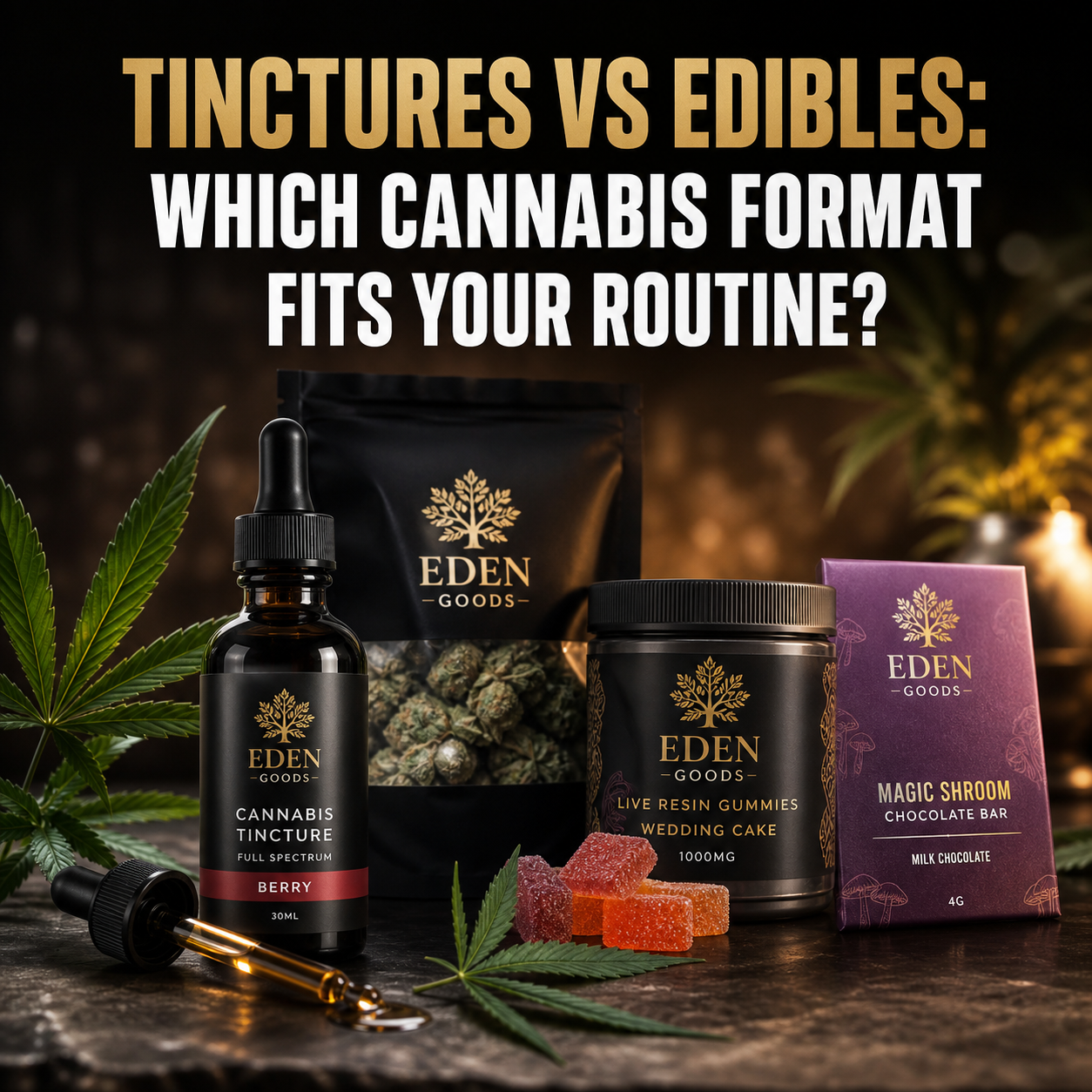
Choosing between tinctures vs edibles often comes down to timing, control, convenience, and personal preference. Tinctures may begin working sooner when used under the tongue. Edibles usually take longer to act, but their effects can last longer. Neither format is automatically better for everyone.
Your ideal option depends on when you plan to use cannabis, how precisely you want to measure it, and how your body responds. THC and CBD content also matter. This guide explains the practical differences without promising specific health outcomes. If you use medication, manage a health condition, or have concerns about cannabis, speak with a qualified healthcare professional.
Tinctures vs Edibles at a Glance
Cannabis tinctures are concentrated liquid extracts. You usually measure them with a marked dropper. Depending on the product instructions, you may hold the liquid under your tongue or swallow it.
Edibles are foods, beverages, capsules, or lozenges containing cannabinoids. Gummies and chocolates are common examples. The digestive system processes most edibles before the cannabinoids reach the bloodstream.
| Feature | Cannabis tinctures | Cannabis edibles |
| Typical form | Liquid extract in a dropper bottle | Gummies, chocolates, drinks, baked goods, capsules, or lozenges |
| How they are used | Held under the tongue or swallowed, according to the label | Eaten, swallowed, or dissolved in the mouth |
| Onset | Often faster under the tongue; slower when swallowed | Usually delayed because of digestion |
| Duration | Often shorter than a swallowed edible, but highly variable | Often longer-lasting, with substantial individual variation |
| Dose adjustment | Flexible when the dropper and label provide clear measurements | Simple with accurately portioned servings, but harder to divide precisely |
| Taste | Herbal, earthy, oily, or bitter | Usually flavored and may taste like ordinary food |
| Ingredient considerations | May contain alcohol, carrier oils, flavorings, or sweeteners | May contain sugar, gelatin, allergens, or other dietary ingredients |
| Discretion | Compact, but measuring drops may attract attention | Easy to carry, although some products resemble regular candy |
These comparisons describe common patterns, not guarantees. Product formulation, dose, recent meals, metabolism, tolerance, and other factors can change the experience.
What Is a Cannabis Tincture?
A cannabis tincture is a liquid containing cannabinoids such as THC, CBD, or both. Traditional tinctures use alcohol as a solvent. Many products now called tinctures use oils such as medium-chain triglyceride oil instead. The label should identify the carrier and the amount of each cannabinoid.
Most bottles include a dropper. Some droppers have measurement markings, but others do not. A clearly marked dropper makes it easier to calculate the amount consumed. Do not assume that one full dropper equals one serving. Bottle size, concentration, and dropper capacity vary.
Sublingual Use Versus Swallowing
People often place a tincture under the tongue and hold it there briefly before swallowing. This is known as sublingual use. Some of the cannabinoids may be absorbed through tissues in the mouth, which can produce an earlier onset than swallowing the full amount immediately.
If you swallow a tincture, it behaves more like an edible. It travels through the digestive system and liver before producing its full effects. Always follow the product directions because not every liquid cannabis product is designed for sublingual use.
Potential Advantages of Tinctures
- Flexible measurement: A graduated dropper can allow small dose adjustments.
- Potentially faster onset: Sublingual use may act sooner than a conventional edible.
- No chewing required: This can suit people who dislike gummies or solid foods.
- Fewer food ingredients: Some formulas contain only cannabis extract and a carrier oil.
- Easy cannabinoid selection: Products may offer THC-dominant, CBD-dominant, or balanced ratios.
Possible Drawbacks of Tinctures
- The taste can be bitter, earthy, or oily.
- Unmarked droppers can make accurate measurement difficult.
- Alcohol-based formulas may irritate the mouth or be unsuitable for some consumers.
- The bottle can leak if it is stored incorrectly.
- Effects may still be delayed if the product is swallowed.
What Are Cannabis Edibles?
Edibles contain cannabinoids in a food, drink, or ingestible product. Popular forms include gummies, chocolates, mints, beverages, capsules, and baked goods. Their familiar format can feel approachable, but it can also make them easy to underestimate.
After swallowing an edible, the digestive system and liver process its cannabinoids. This takes time. THC is also transformed into metabolites, including one that can contribute to a stronger or longer-lasting experience than some other consumption methods. Individual reactions still vary widely.
You can explore related formats in [[LIEN_INTERNE: cannabis edibles]].
Potential Advantages of Edibles
- Pre-portioned servings: A clearly labeled product can simplify dose tracking.
- No cannabis flavor: Flavorings may mask the plant’s natural taste.
- Longer duration: Edibles often remain noticeable for longer than sublingual products.
- No inhalation: Neither edibles nor tinctures require smoking or vaping.
- Convenient formats: Consumers can choose gummies, capsules, drinks, or other options.
Possible Drawbacks of Edibles
- Effects can take much longer to appear than expected.
- Taking another serving too soon can lead to an uncomfortable experience.
- Some products contain sugar, common allergens, gelatin, or artificial ingredients.
- Cutting a gummy or chocolate does not always divide the cannabinoids perfectly evenly.
- Cannabis treats may look appealing to children or pets.
Tinctures vs Edibles: Onset and Duration
Timing is one of the most important differences between tinctures and edibles. A sublingual tincture may begin to feel noticeable within roughly 15 to 45 minutes. A swallowed edible commonly takes 30 minutes to two hours, and sometimes longer. These are broad estimates rather than promises.
The effects of a sublingual tincture may last several hours. Edible effects often last longer and can sometimes remain noticeable for much of the day. Higher doses may extend both intensity and duration. Residual impairment can continue even after the strongest effects have passed.
Several factors influence onset and duration:
- The amount of THC, CBD, and other cannabinoids
- Whether the tincture is held under the tongue or swallowed
- Whether an edible is taken with food
- Body composition and individual metabolism
- Previous cannabis exposure and tolerance
- Product formulation
- Alcohol, medication, or other substances
Do not use the experience of a friend as a dosing guide. Two people can respond differently to the same labeled serving.
Which Format Offers Better Dose Control?
A well-labeled tincture can provide excellent flexibility. For example, if the label states the amount of THC or CBD per milliliter and the dropper shows milliliter markings, you can calculate a measured portion. Counting individual drops is less reliable because drop size may vary.
Edibles can be easier when each piece contains a clearly stated amount. You do not need to handle a dropper or perform repeated measurements. However, a full serving may be more than a new consumer wants. Dividing a product can help only when the manufacturer indicates that cannabinoids are distributed consistently.
How to Read the Label
Check both the amount per serving and the total amount in the package. These figures are not interchangeable. A package may contain multiple servings even if it looks small.
Look for the following details:
- Milligrams of THC and CBD per serving
- Total cannabinoids in the container
- Serving size and number of servings
- Dropper volume or measurement markings
- Recommended route of use
- Ingredient and allergen information
- Batch or lot details and expiration date
- Evidence of testing required by your local regulated market
Use only products from legal, regulated sources where cannabis is permitted. Avoid products with unclear strength, missing ingredients, or unsupported medical claims.
THC and CBD Make a Major Difference
Format is only part of the decision. The cannabinoid profile may influence your experience more than whether you choose a tincture or an edible.
THC can cause intoxication and impairment. It may affect coordination, attention, judgment, and reaction time. Larger amounts can increase the likelihood of anxiety, confusion, dizziness, or an unpleasant experience.
CBD is not intoxicating in the same way as THC, but it can still cause side effects and interact with medication. A CBD label does not automatically make a product risk-free. Some products may also contain measurable THC.
Balanced products contain both THC and CBD. Their effects depend on the actual amounts, ratio, formulation, and individual response. Terms such as full-spectrum, broad-spectrum, and isolate provide useful formulation information, but they do not predict exactly how you will feel.
Tinctures vs Edibles for Different Routines
When a Tincture May Fit Better
A tincture may suit someone who values adjustable measurements or wants an option that may act sooner than a conventional edible. It may also be practical for consumers who avoid sugar, have difficulty chewing, or prefer a simple ingredient list.
However, tinctures require careful handling. Measuring a dose in a moving vehicle, a dark room, or a busy public setting is not ideal. The bottle should remain upright, securely closed, and stored away from heat and light according to its label.
When an Edible May Fit Better
An edible may suit someone who prefers a familiar, pre-portioned format and does not need a rapid onset. Longer-lasting effects may fit a schedule where the person can remain in a safe environment without driving, operating equipment, or making safety-sensitive decisions.
Edibles require patience. A delayed onset does not mean the product has failed. Taking more before the initial serving reaches its full effect is a common reason for consuming too much THC.
When Neither Option Is Appropriate
Cannabis may not be appropriate in every situation. Avoid using intoxicating products before driving, cycling in traffic, caring for someone when impairment could create risk, or performing hazardous work. Do not combine cannabis with alcohol or sedating substances without professional guidance.
People who are pregnant or breastfeeding should seek medical advice and generally avoid cannabis. Anyone with a history of severe mental health symptoms, heart concerns, significant liver issues, or problematic substance use should discuss cannabis with a clinician. This list is not exhaustive.
A Practical Decision Checklist
Use the following questions to compare tinctures vs edibles in the context of your routine:
- How quickly do you expect the product to act? A sublingual tincture may be more compatible with a shorter waiting period.
- How long can you safely accommodate the effects? Edibles often require a longer window with no driving or hazardous tasks.
- Do you need small dose adjustments? A clearly labeled, graduated tincture may offer more flexibility.
- Do you prefer a pre-portioned product? A regulated edible may be simpler to track.
- Do you have dietary restrictions? Review sweeteners, gelatin, carrier oils, alcohol, and allergens.
- Can you store the product securely? Both formats must remain inaccessible to children, pets, and other adults.
- Do you take medication? Ask a pharmacist or physician about possible interactions before use.
If you are new to THC, choose the lowest clearly labeled amount appropriate under local guidance. Wait for the full expected onset before considering more. Product labels and local public health recommendations should take priority over general online advice.
Safety and Storage Essentials
Responsible storage matters, especially with sweet edibles that resemble ordinary candy. Keep all cannabis in its original child-resistant packaging. Use a locked location that children, visitors, and pets cannot access. Do not transfer gummies into a snack container or tincture into an unmarked bottle.
Never drive or operate machinery while impaired. Plan transportation before consuming THC. Effects can last longer than expected, particularly with edibles, so allow a generous safety margin.
If someone consumes too much, move them to a calm setting and avoid giving them more cannabis, alcohol, or unapproved remedies. Seek urgent medical help for severe confusion, chest pain, breathing difficulty, loss of consciousness, seizures, or other alarming symptoms. Contact local poison control services if a child or pet consumes cannabis.
Frequently Asked Questions About Tinctures vs Edibles
Are tinctures stronger than edibles?
Not necessarily. Strength depends on the milligrams of THC and CBD consumed, not the format alone. Edibles may feel more intense or last longer because the body processes swallowed THC differently.
Do tinctures work immediately?
No. Sublingual tinctures may act sooner than edibles, but they still require time. If swallowed immediately, a tincture may have an onset closer to an edible.
Can I mix a tincture into food or a drink?
Only if the product label permits it. Once swallowed, the tincture will usually behave more like an edible and may take longer to produce noticeable effects.
Can I take a tincture and an edible together?
Combining formats can make total dose and timing harder to judge. The delayed edible effect may overlap with the tincture. Unless a healthcare professional advises otherwise, using one clearly measured format at a time is easier to track.
Which format is more discreet?
Both can be discreet. Edibles resemble familiar foods, while tinctures come in small bottles. Edibles need especially secure storage because another person may mistake them for regular snacks.
Do cannabis edibles expire?
Yes. Cannabinoid products and their food ingredients can degrade. Follow the expiration date and storage directions. Discard products with damaged packaging, mold, unusual odor, or an altered appearance.
Should I choose THC or CBD?
That depends on your goals, health history, medications, and local law. THC is intoxicating. CBD is not risk-free and may interact with medication. A clinician or pharmacist can provide individualized guidance.
Conclusion: Choosing Between Tinctures and Edibles
In the comparison of tinctures vs edibles, tinctures generally offer more measurement flexibility and a potentially faster onset when used under the tongue. Edibles offer convenient portions and often longer-lasting effects, but they require more patience.
Check cannabinoid amounts, serving sizes, ingredients, and directions before making a choice. Start cautiously, avoid rapid redosing, and never drive while impaired. If you have a health condition, take medication, or feel uncertain about cannabis, speak with a qualified healthcare professional.
To support comfort and practical daily care at home, discover the selection of Sphère Santé products and choose solutions suited to your individual routine.