


Blog
Cannabis Strain Names Explained: Genetics, Branding and Batch Variation

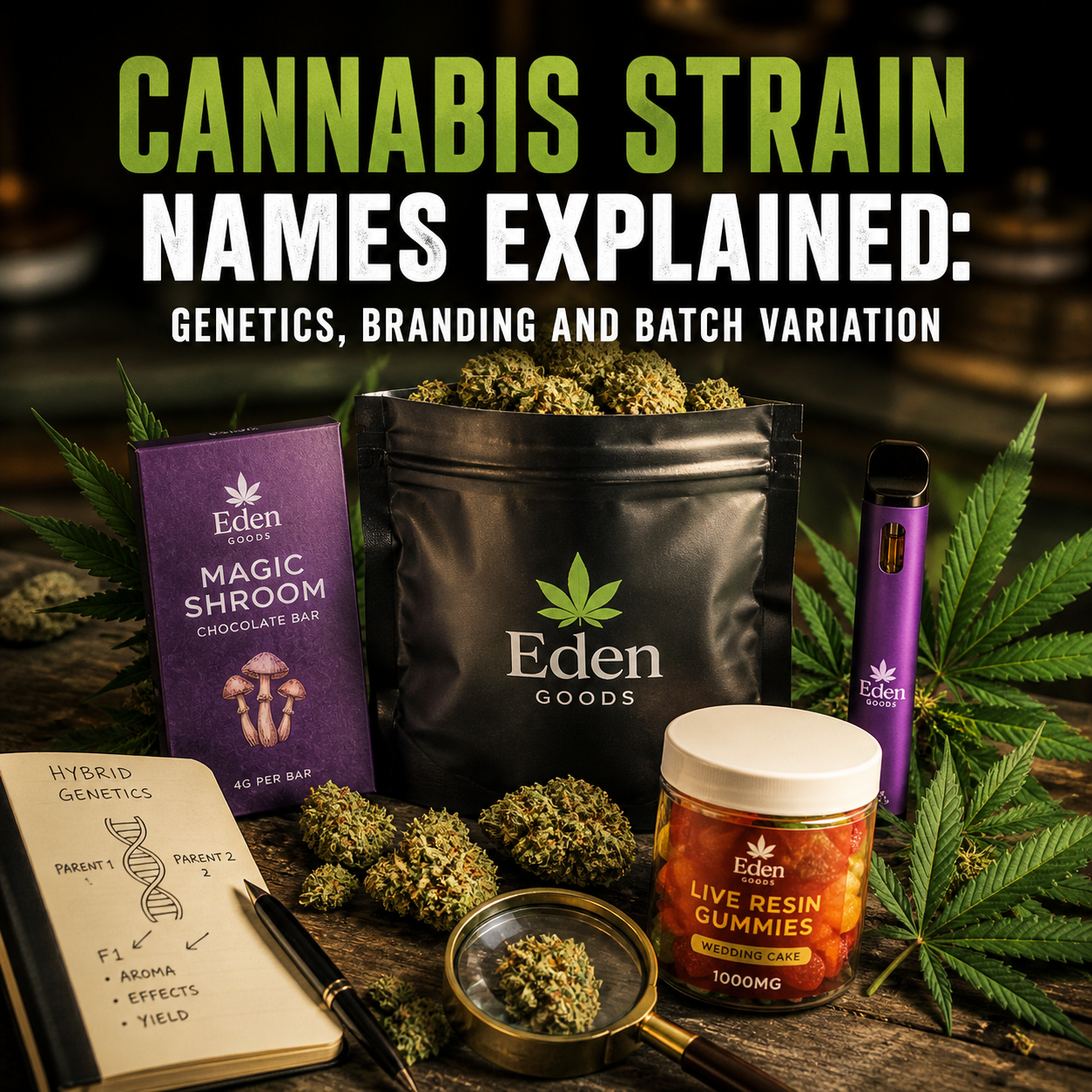
Cannabis Strain Names Explained: Genetics, Branding and Batch Variation
Cannabis names can sound precise, memorable and even scientific. Yet two flower products carrying the same name may differ in aroma, cannabinoid content, appearance and perceived effects. Understanding why requires looking beyond the name printed on the package.
This guide offers cannabis strain names explained through three essential factors: genetics, branding and batch variation. You will learn what a name can reasonably tell you, what it cannot guarantee, and which label details provide more useful information when comparing cannabis flower.
The word strain remains common in stores and everyday conversation. However, cultivar is often the more accurate horticultural term for a cultivated plant variety. Neither term creates a universal standard. A familiar name should therefore serve as a starting point, not as a complete product description.
Cannabis Strain Names Explained: What Does a Name Mean?
A cannabis strain name can refer to a genetic line, a particular breeder’s creation, a selected phenotype, a clone-only plant or a commercial product identity. The meaning depends on who created, grew and labeled the flower.
There is no single worldwide naming authority that verifies every cannabis cultivar. Naming practices also differ between regulated markets. As a result, identical names do not always confirm identical genetics, and similar genetics can appear under different names.
Most names fall into one or more of these broad categories:
- Lineage-based names: These combine or reference parent cultivars.
- Aroma and flavor names: These highlight citrus, fruit, fuel, dessert or spice associations.
- Appearance-based names: Color, trichome coverage or flower structure may inspire the label.
- Effect-oriented names: Some suggest energy, calm or intensity, although these outcomes are not guaranteed.
- Brand names: A producer may rename a selection to distinguish it in the marketplace.
- Geographic names: These may refer to an origin, a regional tradition or simply a marketing theme.
A name may preserve useful history when the breeding records are clear. It may also function mainly as branding. The package, producer information and batch-specific test results often reveal more than the name alone.
How Genetics Influence Cannabis Strain Names
Breeders create new cultivars by crossing selected parent plants and evaluating their offspring. A name may reflect those parents, but genetic inheritance is not a simple average. Seeds from the same cross can produce plants with noticeable differences.
Genotype and phenotype are not the same
A plant’s genotype is its inherited genetic makeup. Its phenotype is the observable expression of those genetics in a particular environment. Phenotype includes traits such as height, flower shape, color, aroma, cannabinoid profile and terpene production.
Several seeds from the same parents are comparable to siblings rather than identical copies. They share a family background, but each may express different traits. Growers often conduct a phenotype selection, sometimes called a pheno hunt, to identify a plant with desirable characteristics.
That selected plant may become the reference version sold under a particular name. Another producer can select a different phenotype from the same cross and use the same or a similar label. Both products may have a valid connection to the stated lineage while remaining meaningfully different.
Seeds, clones and genetic consistency
A clone is a cutting taken from a mother plant. It is genetically very close to that source plant. Clonal propagation can improve consistency compared with growing a fresh group of seeds, but it does not eliminate variation.
Growing conditions still influence plant expression. Light intensity, temperature, humidity, nutrition, harvest timing, drying and curing can all affect the finished flower. Genetic consistency is important, but it is only one part of product consistency.
What hybrid and backcross labels indicate
A hybrid results from crossing genetic lines. Because modern cannabis has undergone extensive breeding, the word hybrid covers a very broad range of products. It does not predict one specific chemical profile or experience.
A backcross occurs when offspring are crossed back with a parent or a genetically similar plant. Breeders may use this method to reinforce selected traits. Labels such as BX1 or BX2 can indicate stages of backcrossing, but the practical meaning depends on the breeder’s records and selection process.
| Term | What it describes | What it does not guarantee |
| Lineage | Reported parent plants or genetic family | An identical chemical profile in every batch |
| Phenotype | One expression selected from a genetic line | The same result under all growing conditions |
| Clone | A cutting propagated from a selected plant | Perfectly uniform finished flower |
| Hybrid | A cross between genetic lines | A predictable balance of effects |
| Backcross | Offspring crossed toward a parent line | Automatic quality or potency |
Cannabis Strain Names Explained Through Branding
Cannabis names must also work in a competitive marketplace. Producers use memorable words, cultural references and sensory descriptions to help products stand out. This can make a label easier to remember, but it can also blur the distinction between genetics and marketing.
A grower may rename a selected phenotype because the original name is already widely used, conflicts with a trademark, does not fit the brand or fails to describe the flower’s aroma. In other cases, different producers may apply a well-known name to plants with uncertain or loosely related origins.
Name similarity can create additional confusion. Related products may share part of a title without sharing the same breeder, parent plants or selected phenotype. Conversely, two differently named products may come from very similar genetics.
Why a famous name is not a quality grade
Popularity does not prove freshness, accurate storage, clean cultivation or careful curing. A celebrated cultivar can be poorly grown, while a less familiar cultivar can be produced to a high standard.
Quality assessment should include:
- The identity and reputation of the licensed producer
- The package and harvest dates, when available
- Batch or lot identification
- Recent, batch-specific laboratory information
- Cannabinoid and terpene details
- Packaging integrity and storage conditions
- Compliance with the rules in your jurisdiction
Branding is not automatically misleading. A responsible producer can use a distinctive commercial name while providing transparent lineage and testing information. The key is to separate the memorable title from the evidence attached to the batch.
Why the Same Cannabis Name Can Vary by Batch
Batch variation means that separate harvests of a named cultivar are not perfectly identical. This is normal in agriculture. Cannabis is a biological product, and its final composition reflects both genetics and the conditions in which it developed.
Growing environment
Light, temperature, humidity, airflow, irrigation and plant nutrition influence growth. Indoor production allows tighter environmental control, but small differences can still occur between rooms, equipment cycles and harvests. Outdoor and greenhouse crops respond to changing weather and seasonal conditions.
Harvest timing
The stage at which flowers are harvested can affect their cannabinoid and aromatic profile. Plants also mature at different rates within the same crop. A producer’s harvest standards can improve repeatability, but natural variation remains possible.
Drying, curing and storage
Post-harvest handling strongly affects flower quality. Drying too quickly or storing flower under unsuitable conditions may reduce aroma and change texture. Heat, light, air and time can contribute to the degradation or loss of some compounds.
A well-preserved batch may therefore smell and feel different from older flower carrying the same name. Package date, seal quality and storage guidance deserve attention.
Sampling and laboratory results
A laboratory result describes the sample submitted for analysis. It may not represent every flower in a large batch with absolute precision. Testing methods, reporting conventions and regulatory requirements also vary by location.
Percentages should not be treated as exact predictions of an individual’s experience. They are most useful for comparing products tested under the same regulatory framework and for understanding the broad chemical profile of a specific lot.
| Source of variation | Possible influence | Useful information to check |
| Genetic selection | Aroma, structure and chemical potential | Breeder, lineage and phenotype details |
| Growing conditions | Plant development and compound production | Producer and cultivation information |
| Harvest timing | Maturity and chemical profile | Harvest date, if disclosed |
| Drying and curing | Moisture, aroma and smoothness | Producer practices and package condition |
| Storage and age | Freshness and terpene retention | Package date and storage instructions |
| Laboratory sampling | Reported potency and profile | Lot-specific certificate or test label |
Chemotype Matters More Than the Name Alone
A chemotype describes a plant through its chemical characteristics. For consumers, this commonly means looking at cannabinoids such as THC and CBD, along with reported terpenes. This information is usually more practical than relying only on a cultivar name.
THC content can help indicate intoxicating potential, but a higher number does not automatically mean a better product or a preferable experience. Individual response can vary with dose, tolerance, method of use, setting, other substances and personal sensitivity.
CBD is non-intoxicating, but its presence does not make a product risk-free or suitable for every person. Cannabis can interact with medicines and may be inappropriate in some health situations. If you use prescription medication, are pregnant or breastfeeding, or have concerns about physical or mental health, speak with a qualified healthcare professional.
What terpene information can tell you
Terpenes are aromatic compounds found in cannabis and many other plants. Common examples reported on labels include myrcene, limonene, pinene, caryophyllene and linalool. They help describe aroma, but terpene names should not be treated as medical promises or guaranteed effect labels.
A terpene profile can still be useful for comparing batches. If you preferred the aroma and overall profile of a previous product, recording its leading terpenes may help you identify a similar option later. It is more informative to compare the whole label than to search by strain name alone.
Are Indica, Sativa and Hybrid Reliable Guides?
Retail labels often divide cannabis into indica, sativa and hybrid categories. Historically, these words relate to plant classification, origin and physical characteristics. In modern retail use, they are frequently presented as shorthand for expected effects.
That shorthand has limits. Extensive crossbreeding and differences in chemical composition make it difficult to predict a person’s response from these categories alone. An indica label does not guarantee sedation, and a sativa label does not guarantee stimulation.
Use these terms as broad merchandising categories rather than precise scientific forecasts. Cannabinoid levels, terpene data, dose and personal response provide more useful context. If you are new to cannabis, avoid assuming that a category makes a high-THC product mild.
How to Compare Flower Beyond Cannabis Strain Names
A structured approach helps you move past attractive packaging and familiar names. Start with the current batch rather than reviews of a version produced years ago by another grower.
- Confirm the producer. The grower or brand helps identify which interpretation of the cultivar you are viewing.
- Check the exact lot. Match any laboratory document to the batch or lot number on the package.
- Review cannabinoids. Look at THC, CBD and other reported cannabinoids instead of focusing on one headline number.
- Read the terpene profile. Compare leading terpenes and total terpene reporting when available.
- Consider freshness. Check package and harvest dates, while remembering that proper curing also takes time.
- Assess transparency. Clear lineage, testing and production details are more valuable than unsupported claims.
- Record your response. Note the producer, batch, dose and profile rather than remembering only the strain name.
If you choose to use cannabis, follow local laws and product directions. Start with a low amount, especially with an unfamiliar batch, and allow enough time to assess its effects before considering more. Do not drive or operate machinery while impaired. Keep all cannabis products away from children and pets.
Common Naming Confusions to Avoid
- Same name means same product: The grower, phenotype and batch may all differ.
- Shared words prove shared genetics: Similar branding does not confirm a genetic relationship.
- High THC means high quality: Quality also involves freshness, aroma, cultivation, handling and suitability.
- Indica or sativa predicts the outcome: These labels provide limited guidance for individual effects.
- A lab result guarantees your experience: Testing describes a sample, not a personal response.
- A natural product is risk-free: Cannabis can cause adverse effects and interact with medication.
Frequently Asked Questions
Why do different cannabis strains have unusual names?
Names may reference parent genetics, aroma, appearance, cultural themes or brand identity. Some describe lineage, while others primarily help market the product.
Can two cannabis products with the same name be different?
Yes. They may come from different breeders, phenotypes, growers or batches. Compare the producer, lot number, cannabinoids and terpene profile.
Is cultivar a better word than strain?
Cultivar is often more accurate for a cultivated plant variety. Strain remains widely used in retail settings, but neither term guarantees standardized genetics.
Do cannabis strain names predict effects?
Not reliably. The chemical profile, amount used, tolerance, setting and individual sensitivity all influence the experience.
Why does my usual strain smell different this time?
Batch variation can result from phenotype, growing conditions, harvest timing, curing, storage and age. Review the batch-specific terpene information when available.
Does a higher THC percentage mean better flower?
No. THC is only one measurement. Freshness, terpene profile, cultivation, storage and personal suitability also matter.
Are indica and sativa labels scientifically reliable?
They offer limited guidance in modern retail markets. They should not replace batch-specific chemical information or careful attention to individual response.
What should I check besides the strain name?
Check the producer, batch number, package date, cannabinoid levels, terpene profile, testing information and required regulatory warnings.
Conclusion: Using Cannabis Names More Wisely
With cannabis strain names explained, the central lesson is simple: a name can suggest history, genetics or branding, but it cannot guarantee an identical product or experience. Genetics provide the foundation, cultivation shapes plant expression, and each batch reflects agricultural and post-harvest variation.
Use the name as an entry point. Then examine the producer, lineage, lot details, cannabinoids, terpenes and freshness. This evidence-based approach makes it easier to compare cannabis flower responsibly while respecting personal differences and the limits of product labels.