


Blog
Cannabis Edible Flavours Explained: From Fruit and Citrus to Chocolate and Spice

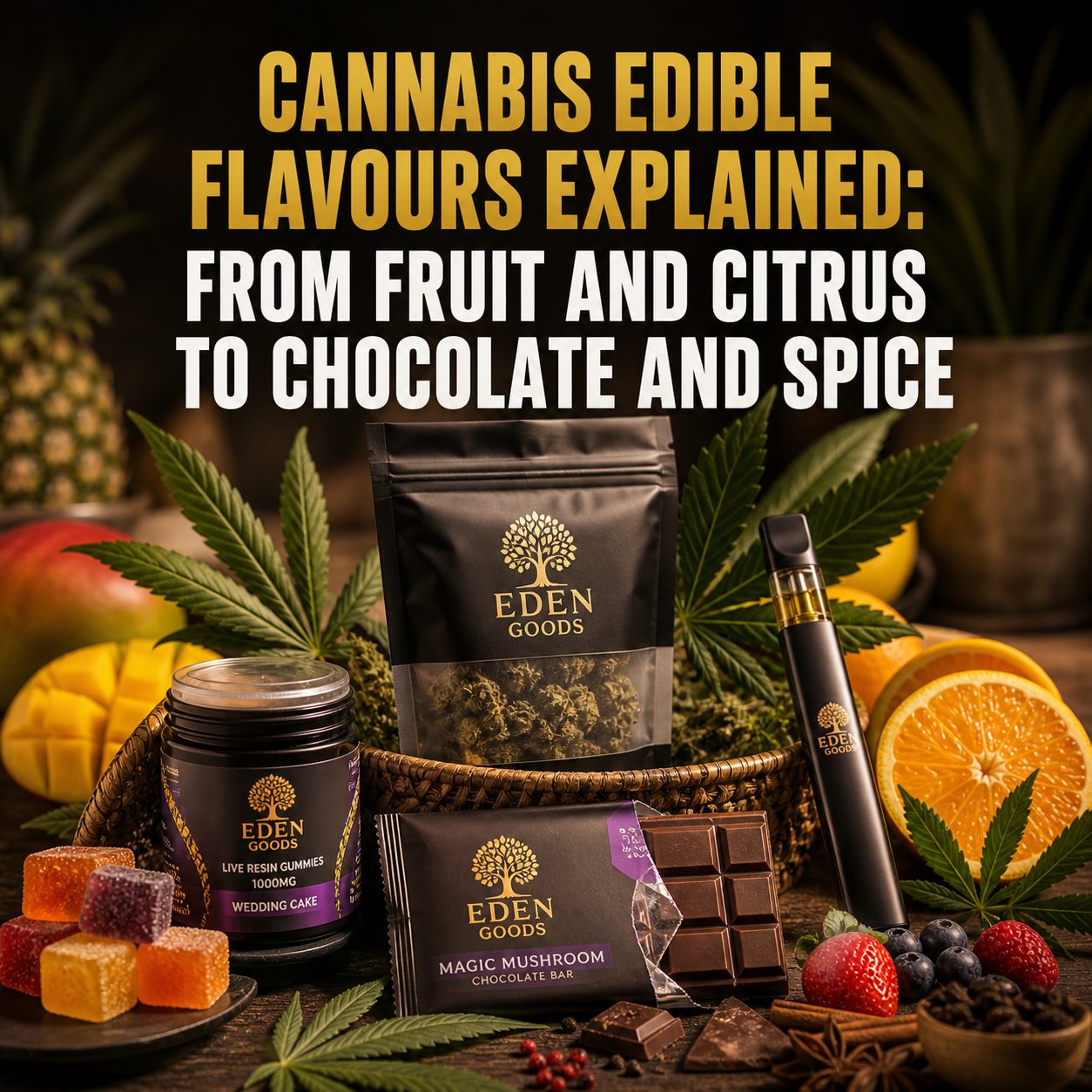
Cannabis Edible Flavours Explained: From Fruit and Citrus to Chocolate and Spice
Cannabis edible flavours range from bright citrus and ripe berries to dark chocolate, cooling mint and warming spice. Some products almost completely mask the taste of cannabis. Others preserve its herbal, earthy or resinous character.
Flavour is more than a matter of preference. It can shape the entire eating experience, affect how noticeable the cannabis extract feels on the palate and help you choose between gummies, chocolates, baked goods and other formats. However, flavour does not indicate strength, quality or expected effects. Those details must come from the product label.
This guide explains the main flavour families, what creates them and how to select an edible that suits your taste. It also covers safe, responsible use of THC- and CBD-containing products where they are legal.
What Creates Cannabis Edible Flavours?
The final taste of an edible comes from several interacting ingredients. These include the cannabis extract, added flavourings, sweeteners, acids, fats and the edible base itself. Manufacturing methods also matter.
A fruit gummy made with a highly refined extract may have little obvious cannabis taste. A baked product made with full-spectrum oil may retain stronger earthy or botanical notes. Neither approach is automatically better. The right choice depends on whether you prefer a familiar confectionery flavour or a more cannabis-forward profile.
The cannabis extract
Manufacturers may use different forms of cannabis extract. These can vary in aroma, taste and cannabinoid composition.
- Highly refined extracts usually have a mild flavour and allow fruit, chocolate or spice to dominate.
- Broad-spectrum extracts may retain several naturally occurring cannabis compounds while excluding a particular cannabinoid, depending on the formulation and local definition.
- Full-spectrum extracts often have a more noticeable herbal, earthy or resinous character.
- Infused oils or butters can add grassy, toasted or nutty notes, especially in baked products.
Terms such as full spectrum and broad spectrum are not always used consistently between markets. Check the ingredient list, cannabinoid panel and available testing information rather than relying on a single phrase.
Terpenes and aromatic compounds
Terpenes are aromatic compounds found in cannabis and many everyday plants. Citrus peel, pine needles, herbs and flowers also contain terpenes. They may contribute lemon-like, woody, floral, peppery or fresh aromas to an edible when they remain in the extract or are added to a formulation.
Terpene names alone cannot tell you exactly how an edible will taste or affect you. The amount used, the other ingredients and your own sensory perception all influence the result. Claims that one terpene guarantees a particular mood or health outcome should be treated cautiously.
Sweeteners, acids and fats
Sugar and other sweeteners soften bitterness. Food acids, such as citric or malic acid, create tartness and make fruit flavours feel brighter. Fats in chocolate, caramel, nut butter and baked goods can round out harsher herbal notes.
Texture changes flavour perception too. A soft gummy releases flavour differently from a hard sweet. Chocolate melts gradually, while a drink may deliver acidity and aroma immediately. This is why the same named flavour can taste very different across edible formats.
The Main Cannabis Edible Flavour Families
Most cannabis edible flavours fall into a few broad families. Understanding them makes it easier to compare products, especially when a brand uses creative names that reveal little about the actual taste.
| Flavour family | Typical notes | Common formats | Useful for |
| Fruit | Berry, cherry, peach, mango, apple | Gummies, chews, drinks | Sweet and familiar profiles |
| Citrus | Lemon, lime, orange, grapefruit | Gummies, hard sweets, beverages | Bright, tart flavours |
| Chocolate | Milk, dark, cocoa, mocha | Bars, bites, truffles | Rich flavours that can soften bitterness |
| Herbal and floral | Mint, lavender, rosemary, tea | Lozenges, chocolates, drinks | Less conventional botanical profiles |
| Spice | Cinnamon, ginger, pepper, chai | Chocolates, baked goods, drinks | Warm and layered flavours |
| Savoury and nutty | Peanut, sesame, toasted grain, cheese | Crackers, nut bites, baked snacks | People who prefer less sweetness |
Fruit Cannabis Edible Flavours
Fruit is one of the most common choices for cannabis gummies and chews. It is familiar, easy to recognise and flexible enough to work with sweet, sour or herbal formulations.
Berry flavours
Strawberry, raspberry, blueberry and mixed berry profiles often combine sweetness with gentle acidity. Darker berry flavours may pair well with an earthy extract because both can have deep, slightly tart notes.
Mixed berry products can taste less precise than single-fruit options, but they may hide botanical bitterness more effectively. If you prefer a clear and recognisable taste, look for a specifically named fruit and read whether the product uses juice, natural flavouring or artificial flavouring.
Tropical fruit
Mango, pineapple, passion fruit and guava create bold, aromatic edibles. Their sweet and tangy profiles can compete with the taste of cannabis extract rather than merely covering it.
Tropical flavours are often layered. A mango edible may include citrus acid or peach notes to make it feel fresher. The name on the front of the package may therefore describe the dominant flavour rather than every flavouring ingredient.
Orchard and stone fruit
Apple, pear, peach and cherry tend to offer softer sweetness. Green apple is usually sharper and more acidic, while peach often feels rounder. Cherry can range from fresh and tart to a flavour closer to confectionery.
These profiles can suit people who find intense citrus too sharp. Products labelled sour may still contain significant food acids, so check the description if you have a sensitive mouth or dislike strongly tart sweets.
Citrus Cannabis Edible Flavours
Lemon, lime, orange and grapefruit bring freshness to cannabis edibles. Their acidity can reduce the perception of sweetness and distract from grassy or bitter notes.
Lemon and lime usually produce the sharpest profiles. Orange is often sweeter and softer. Grapefruit may include a deliberately bitter edge. That bitterness can complement a botanical extract, but it may not suit everyone.
Grapefruit also has known interactions with certain medicines when consumed as fruit or juice. A grapefruit-flavoured product may contain flavouring rather than meaningful grapefruit content, but the ingredient list should be checked. If you take prescription medicine and are unsure, ask a pharmacist or doctor before using the product.
Chocolate, Coffee and Caramel Profiles
Chocolate is particularly effective at integrating the taste of cannabis because cocoa already contains bitter and roasted notes. The fat in chocolate also creates a smooth, lingering texture.
Milk and white chocolate
Milk chocolate is sweet and creamy, making it approachable for people who dislike herbal flavours. White chocolate has no cocoa solids and usually tastes sweeter. It often appears with raspberry, lemon, vanilla or mint.
Because these products can look like ordinary confectionery, secure storage is essential. Keep them in their original, clearly labelled packaging and away from children, teenagers and pets.
Dark chocolate and cocoa
Dark chocolate provides a less sweet, more intense profile. Its natural bitterness can blend with earthy extracts rather than trying to hide them. Cocoa nibs, sea salt or orange may add contrast.
The percentage of cocoa does not reveal the cannabinoid strength. Always compare the labelled amount of THC or CBD per serving and per package separately from the food description.
Coffee, mocha and caramel
Coffee and mocha flavours add roasted depth. Caramel contributes sweetness and buttery notes, while salted caramel uses salt to balance both sugar and bitterness. These flavours are common in chocolates, soft chews and baked goods.
If a product contains real coffee, tea or another source of caffeine, this should appear in the ingredients or product information. Do not assume that every coffee-flavoured edible contains caffeine, or that it is caffeine-free.
Herbal, Floral and Spiced Cannabis Edible Flavours
Some products embrace botanical flavours instead of masking them. These profiles can feel more complex and less like conventional sweets.
Mint and cooling flavours
Peppermint and spearmint provide a clean finish. They work well in chocolate, lozenges and small mints. Mint can reduce the perception of an oily aftertaste, although strong formulations may still retain some cannabis character.
Floral and tea-inspired notes
Lavender, hibiscus, chamomile and tea-inspired flavours appear in drinks, gummies and chocolates. Floral ingredients can become perfumed or soapy when overused, so balanced formulations usually pair them with lemon, berry, honey or vanilla.
A botanical name does not prove that the edible offers the traditional benefits associated with that plant. Treat flavour descriptions as sensory information unless the label provides clear, compliant ingredient and product details.
Warming spices
Ginger, cinnamon, cardamom, clove and chai-style blends bring warmth without requiring intense sweetness. Ginger can add a fresh, peppery edge. Cinnamon works well with apple, chocolate and caramel. Cardamom and clove create a more aromatic result.
Spices may leave a tingling sensation that should not be confused with cannabinoid strength or onset. The taste of an edible cannot confirm how much THC it contains.
Why Some Edibles Taste Strongly of Cannabis
A noticeable cannabis taste is not necessarily a defect. It may reflect the extract type, the concentration used or a deliberate choice to retain botanical compounds. However, an unpleasant rancid, mouldy or chemically harsh taste may indicate poor storage, damaged packaging or a quality problem.
Several factors can make the herbal flavour more obvious:
- A less refined or full-spectrum extract
- A high concentration in a small piece
- A mild base flavour, such as vanilla
- Low sweetness or acidity
- Heat exposure or extended storage
- Natural variation between batches
Check the use-by date and storage instructions. Do not consume an edible if the seal is broken, the product appears contaminated or its smell and texture differ significantly from the manufacturer’s description.
How to Choose Cannabis Edible Flavours
Start with flavours you already enjoy in ordinary food. Then consider the format, sweetness and likely intensity of the extract. Product information should make these features reasonably clear.
- Choose a flavour family. Fruit and citrus suit people who enjoy bright sweets. Chocolate and caramel offer richer profiles. Herbs and spices provide less conventional options.
- Decide whether you want cannabis taste. Look for refined-extract products if you prefer a neutral base. Consider full-spectrum options if you accept a more botanical character.
- Check sweetness and acidity. Sour gummies may be highly tart. Dark chocolate and herbal products may be less sweet but more bitter.
- Read the complete label. Review cannabinoids per serving, serving size, allergens, ingredients, batch details and storage advice.
- Buy from a lawful, accountable seller. Choose properly packaged products with clear cannabinoid information and accessible testing or compliance details.
You can explore different formats through [[LIEN_INTERNE: cannabis edibles]]. When comparing products, focus on both taste and transparent labelling rather than packaging claims alone.
Flavour Does Not Predict Effects or Potency
A strawberry gummy is not inherently milder than a dark chocolate edible. A strong herbal taste does not prove that a product contains more THC. Likewise, a product that tastes like ordinary sweets may still contain an intoxicating amount.
Read the amount per individual piece, not only the total amount in the package. Products may contain several servings. Never estimate potency from size, colour, aroma or flavour.
Edibles can take longer to produce noticeable effects than inhaled cannabis, and their effects may last longer. Taking more before the first serving has had time to act can lead to an unpleasant experience. Follow the product directions and local public-health guidance. People without experience should be especially cautious with THC.
Responsible Use and Important Precautions
Use cannabis edibles only where legal and appropriate for your age. Do not drive, cycle on public roads, operate machinery or perform safety-sensitive tasks after taking an intoxicating product. Avoid combining THC with alcohol or other substances that may increase impairment.
Speak with a doctor or pharmacist before use if you take medicines or have a medical condition. Professional advice is particularly important if you have a history of heart problems, severe anxiety, psychosis or problematic substance use. Cannabis edibles should generally be avoided during pregnancy and breastfeeding unless a qualified healthcare professional advises otherwise.
Store all edibles in their original child-resistant packaging, preferably in a locked place. Keep them separate from ordinary food. If a child, pet or vulnerable adult consumes one accidentally, contact the appropriate poison service or emergency veterinary service promptly. Seek urgent medical help for severe symptoms, breathing difficulty, collapse or loss of consciousness.
Frequently Asked Questions About Cannabis Edible Flavours
What is the most popular cannabis edible flavour?
Fruit flavours such as berry, mango, peach and citrus are widely available, especially in gummies. Popularity varies by market and personal preference.
Which flavour hides the taste of cannabis best?
Strong citrus, sour fruit, dark chocolate, coffee and mint can help cover herbal notes. The extract type and concentration still have a major influence.
Do terpenes change the effects of an edible?
Terpenes affect aroma and flavour. Research into their broader role continues, but a terpene name cannot reliably predict an individual edible’s effects.
Does a stronger cannabis taste mean more THC?
No. Taste does not measure potency. Use the verified amount of THC per serving and per package shown on the label.
Are natural flavours better than artificial flavours?
Not automatically. Both can produce appealing results. Clear ingredients, lawful manufacturing, allergen information and reliable cannabinoid labelling matter more than marketing language.
Why does my edible have a bitter aftertaste?
Cannabis extract, cocoa, citrus oils, sweeteners or botanical ingredients may cause bitterness. An unusual rancid or contaminated taste is a reason not to consume the product.
Can I choose an edible based only on flavour?
No. Also check cannabinoid content, serving size, ingredients, allergens, legality, storage guidance and whether THC is appropriate for your situation.
Conclusion
Cannabis edible flavours cover far more than the familiar fruit gummy. Citrus can taste bright and tart. Chocolate can soften earthy bitterness. Mint, tea and floral notes create botanical profiles, while ginger, cinnamon and cardamom add warmth.
The best flavour is the one that suits your palate while coming in a clearly labelled, lawfully produced format. Remember that taste cannot reveal potency, onset or likely effects. Read every label carefully, use THC products cautiously and ask a doctor or pharmacist for advice when medicines or health conditions may be involved.
For discreet everyday comfort and home-care support beyond this topic, discover the range of Sphère Santé products, including practical solutions selected for dignity, reliability and ease of use.